In Brief:
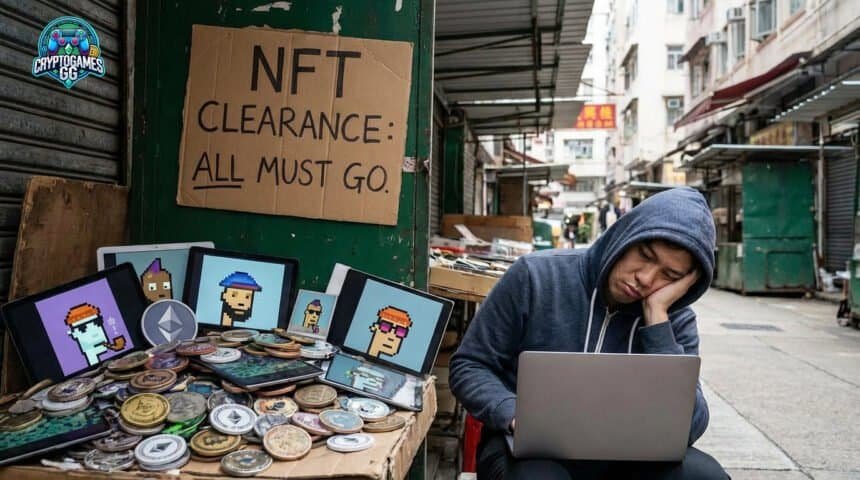
- The NFT market is bifurcating, with a divide between viable projects and stagnant collections.
- Scarcity alone is no longer sufficient to foster demand, shifting focus to utility and gaming.
- Successful projects are now building real businesses beyond NFTs, with an emphasis on revenue models.
The current state of NFTs
The NFT market is evolving amid a harsher climate, where the previous hype is fading. Projects now face pressure to justify their existence. Many are failing to do so.

A clear divide is forming. A select few are becoming established businesses, creating brands and revenue streams, while others continue to drift without direction.
Shift away from scarcity
The traditional notion that limited supply drives value no longer holds. Demand must be present for ownership to matter, and many projects are grappling with this reality. Those relying solely on scarcity are pivoting to other avenues, such as merchandise and content, but lack a solid foundation.
Projects retaining attention are building beyond the NFT itself. They focus on intellectual property, revenue models, and even retail or media ventures. Their NFTs serve as entry points rather than the entire product, a necessary shift for sustainability.
Gaming’s changing landscape
Gaming is also experiencing a transformation. The previous “play-to-earn” model failed due to unsustainable incentives. A new approach, “play-to-own,” is emerging, emphasizing utility and genuine experiences. However, executing this model poses challenges, with few projects successfully making the transition.
Interest is rising in tokenizing NFT intellectual property to enhance liquidity and accessibility. Despite its promise, this brings risks. Increased tradability can attract short-term traders focused on price rather than community building, potentially diluting long-term project value.
While NFTs are not disappearing, the era of hype-driven flips is coming to an end. The remaining projects must cultivate genuine interest beyond speculation. This shift is uncomfortable for many, as the market begins to adapt to this new reality.