
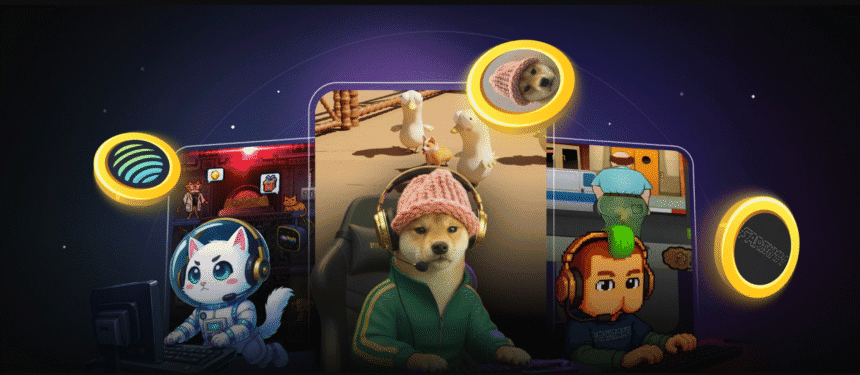
In Brief
- Launch of Open Game Protocol (OGP): Introduced by Justin Waldron, co-founder of Zynga, OGP is a new gaming platform that integrates any token into game economies.
- Gamecoins and Ecosystem: OGP allows communities to stake tokens and create new, tradable ‘gamecoins’ which players can earn by engaging with games.
- Accessibility and Expansion: The platform supports seamless game integration without downloads, works across different blockchains, and aims to make games accessible directly via crypto wallets.
Introduction of Open Game Protocol
The gaming industry witnessed the launch of the Open Game Protocol (OGP) on Wednesday, spearheaded by Zynga co-founder Justin Waldron. This new platform is set to transform web3 gaming by allowing virtually any cryptocurrency token to be utilized within a game’s economy. OGP simplifies the integration of gaming and token economies, enabling players to earn valuable ‘gamecoins’ directly from gameplay.
How OGP Works
OGP operates as a chain-agnostic application layer, making it possible for game developers to link their games with existing tokens. The protocol facilitates the creation of ‘gamecoins’, new assets that represent tradable values linked to various tokens. For instance, if a community stakes a token like $FARTCOIN on OGP and reaches a staking goal, a corresponding gamecoin ($GFARTCOIN) is launched. Gamers can earn these gamecoins by playing connected games, enhancing personal gains and overall token value through increased game interaction.
Simplifying Token Integration in Games
The innovative aspect of OGP lies in its ability to turn standard tokens into practical, in-game assets through the creation of gamecoins. This capability allows token holders to engage with their assets beyond traditional trading or financial staking. For example, staking $WIF could lead to earning $GWIF which then becomes interconnected with a set of games. The system also incorporates a boosting mechanism where staking gamecoins increases their ecosystem value, thereby voting for the game’s growth and reward distribution.
The Vision Behind OGP
Under Waldron’s guidance, the primary aim of OGP is to provide credible rewards to players while enabling developers to attract more players and sustain their livelihoods. Waldron explained in an interview with Blockworks that the initiative seeks to align player and developer incentives more closely than current web3 models, which often see a misalignment due to differing goals like enhancing blockchain transaction volumes and overall traffic.
Addressing Crypto Gaming’s Challenges
One of the longstanding issues in crypto gaming has been the competing objectives between game developers and crypto investors. OGP addresses this by facilitating direct funding of game rewards by token communities, which harmonizes the objectives of engaging gameplay with investment returns. Moreover, being chain-agnostic allows OGP to function across multiple blockchain environments, enhancing its adaptability and potential reach.
Games and Rewards on OGP
Several games have already become active on OGP, including titles such as Network Cities, Fart Cities, and After Egypt (Milady Edition), among others. The platform supports swift addition of new games, from simple AI-generated games to complex AAA titles. Gamecoin-related performance is directly linked to gameplay popularity and community engagement, fostering a dynamic reward system that benefits players, developers, and token holders alike.
Future Prospects and Support
Looking ahead, OGP envisages making game integration even more user-friendly. Waldron mentioned plans to enable crypto wallets to display a “play” button next to tokens, thus integrating direct game access. Currently, OGP is backed by a robust mix of blockchain and gaming sector investors along with notable angel investors, positioning it strongly for expansive growth in the web3 gaming space.
The platform, now accessible at opengameprotocol.com, sets out to redefine the interplay between gaming and cryptocurrency economies, promising a new era of engagement and reward systems in the digital gaming arena.