In Brief:
- DDR4 and DDR5 RAM prices are starting to fall across retailers in Europe, the US and China after months of AI-driven inflation.
- Google’s TurboQuant compression method is reducing DRAM demand from AI datacenters, easing supply pressure on consumer memory.
- A 32GB DDR4 kit that cost roughly $55 in late 2024 now lists at $281 on Corsair’s store, and analysts say buying at current levels risks normalizing inflated pricing.
RAM prices are finally moving in the right direction. After months of relentless increases driven by AI datacenter demand, DDR5 retail prices have started pulling back across multiple markets. But the current prices are still far above where they were before the crisis began, and buying now could do more harm than good.
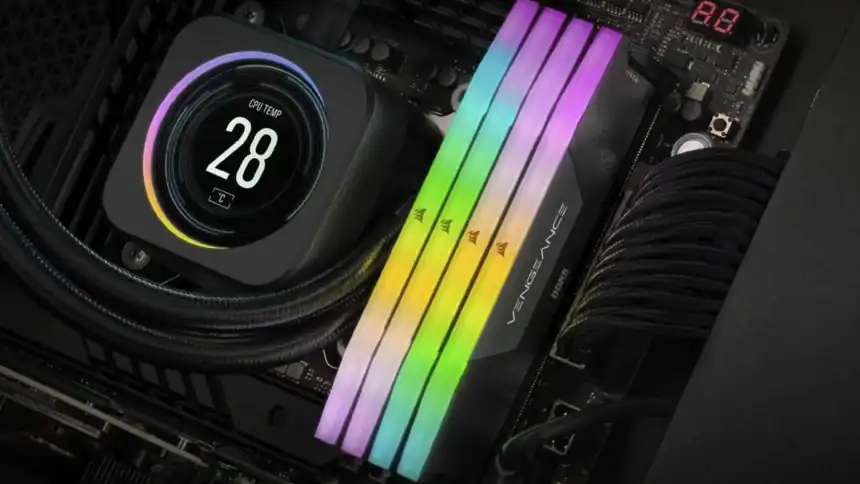
The memory shortage was triggered by companies like Micron shifting production capacity away from consumer products to serve AI infrastructure. That squeeze pushed 32GB and 64GB kits to prices that rivaled entire PC builds. One example: a Corsair Vengeance RGB Pro DDR4 32GB kit purchased in late 2024 for about $55 now lists for $281 on Corsair’s website. That’s more than four times the original price.

Why prices are falling
Two factors are working in consumers’ favor. The first is simple demand destruction. Prices rose so high that buyers stopped buying, leaving retailers with stock they needed to move. The second is a technical development from Google called TurboQuant, a compression method that reduces the amount of DRAM required for AI memory workloads. If AI companies need less memory per server, the chokehold on consumer supply loosens.
A TrendForce report flagged the early signs of a market correction, noting DDR5 retail price pullbacks that suggest the worst of the shortage may be passing.
The case for waiting
The price drops don’t mean it’s time to buy. Current levels remain well above historical norms, and purchasing now sends a signal to retailers that consumers will accept the inflated pricing as a new baseline.
The situation echoes other hardware crises. GPU prices during the crypto mining boom eventually returned to reasonable levels, but only after sustained buyer resistance. The same dynamic applies here. If consumers hold off, the pressure to return to pre-crisis pricing grows.
SK Group’s chairman has warned the RAM shortage could persist until 2030, while MSI’s executive team has called 2026 the most challenging year in the company’s history. The ripple effects extend beyond desktop RAM: laptop prices, handheld gaming PCs and even Raspberry Pi boards have all been hit with increases tied to memory costs.
What could accelerate the recovery
Signs that the broader AI spending bubble may be cooling are also in play. OpenAI shut down its Sora video-generation tool, which some analysts read as an early indicator that AI investment is beginning to contract. If datacenter buildouts slow, DRAM demand from that sector drops and more supply flows back to consumer channels.
For now, the advice from hardware analysts is straightforward: don’t buy RAM at these prices. The trend is heading the right way, but the gap between current and fair pricing is still wide enough to justify waiting.