Sui (SUI) has emerged as one of the more closely followed Layer-1 blockchain projects in the current market cycle, largely due to its high-throughput design and focus on scalable, user-friendly applications. As analysts evaluate its long-term outlook, price predictions for 2026 range from steady growth to more aggressive upside, depending on adoption, ecosystem expansion, and broader market conditions.
At the same time, the conversation around blockchain value is evolving. Increasingly, attention is shifting beyond infrastructure alone toward ecosystems that demonstrate consistent, real-world usage. This trend is beginning to reshape how analysts evaluate both established networks like Sui and emerging platforms such as Playnance, powered by its utility token, G Coin.
Sui Price Prediction: What Analysts Expect
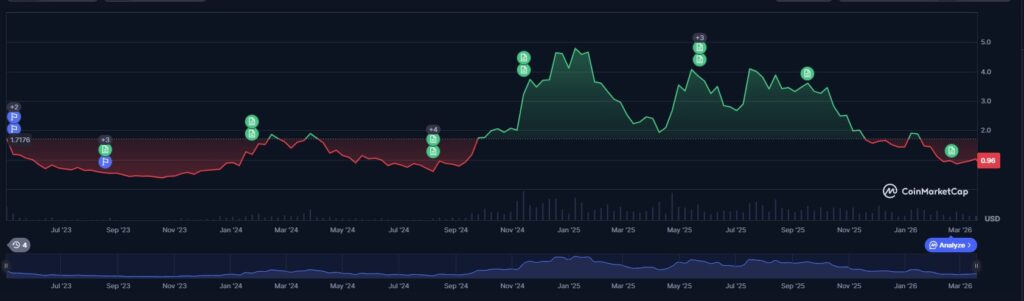
Recent market analyses position Sui as a promising Layer-1 contender, particularly due to its technical architecture and performance capabilities.
Forecasts for 2026 generally fall within a broad range:
- Conservative estimates indicate SUI could trade between $2.50 and $4.00 if adoption grows steadily.
- Moderate bullish scenarios place SUI in the $5 to $8 range, driven by ecosystem expansion.
- More optimistic projections, assuming strong developer growth and mainstream usage, suggest potential highs beyond $10.
These projections are not guarantees, but they reflect increasing confidence in Sui’s long-term positioning as a scalable infrastructure layer.
What Makes Sui Different?
Sui was designed with parallel transaction execution in mind, enabling it to process transactions more efficiently than traditional blockchains.
Key advantages include:
- High throughput and low latency
- Object-based data model for efficient state management
- Strong focus on gaming and consumer applications
- Developer-friendly environment for building scalable dApps
This architecture makes Sui particularly well-suited for high-frequency applications, including gaming, social platforms, and digital asset trading environments.
Key Drivers Behind Sui’s Growth Potential
1. Ecosystem Expansion
Sui’s long-term value depends heavily on the growth of its ecosystem. Increasing developer activity and application launches could significantly boost network usage and demand for the token.
2. Gaming and Consumer Applications
Sui has positioned itself as a strong contender in blockchain gaming, a sector widely viewed as a major driver of Web3 adoption.
3. Scalability Advantage
Its ability to handle large volumes of transactions efficiently could give it an edge as user activity on Web3 platforms increases.
4. Market Conditions
Like all digital assets, Sui remains influenced by macro trends, Bitcoin cycles, and overall market liquidity.
The Bigger Shift: From Infrastructure to Activity
While Sui represents the evolution of blockchain infrastructure, a parallel trend is becoming increasingly important:
The rise of activity-driven ecosystems.
In earlier cycles, projects were valued based on:
- Technology
- Roadmaps
- Future potential
Today, the focus is shifting toward:
- Daily transactions
- Active users
- Real economic activity
This is where the distinction between infrastructure and usage becomes critical.
Playnance and the Emergence of Utility-Driven Economies
Within this evolving landscape, Playnance represents a different approach to Web3 growth, centered on continuous, real-time user engagement rather than future adoption promises.
The ecosystem operates across multiple verticals:
- On-chain gaming
- Prediction markets
- Sports-based interactive environments
- Trading-style entertainment systems
At the core of this ecosystem is G Coin, which functions as the unified economic layer powering all interactions.
Every action within the platform, including entries, predictions, rewards, settlements, and gameplay, is executed through G Coin, making it an active utility token rather than a passive asset.
A Live, High-Activity Economy
One of the defining characteristics of the Playnance ecosystem is that it is already operating at scale.
Current activity includes:
- Around 2 million on-chain transactions per day
- Over 10,000 games running daily
- Approximately 2.5 million sports events annually
- Millions of user interactions across prediction and entertainment formats
This level of activity creates a system where token demand is directly tied to user participation.
Rather than relying on speculative trading, the ecosystem follows a compounding growth model:
More users lead to more activity, which increases G Coin usage, strengthens liquidity, and brings in even more users.
Infrastructure Built for Simplicity
G Coin runs on PlayBlock, Playnance’s blockchain infrastructure, designed to eliminate many of the traditional barriers associated with Web3.
Key features include:
- Gasless transactions
- Fast execution speeds
- Non-custodial ownership
- Seamless, Web2-like user experience
This approach allows users to interact with blockchain applications without needing deep technical knowledge, significantly lowering the barrier to entry.
Tokenomics Designed Around Usage
G Coin’s structure reflects its focus on sustained activity:
- Fixed total supply of 77 billion tokens
- No inflation or additional minting
- A time-based lock mechanism that temporarily removes tokens from circulation
Tokens used within gameplay are locked for a defined period before being reintroduced, creating a dynamic supply model tied directly to ecosystem activity.
Additionally, unsold tokens follow a structured release schedule, designed to limit sudden supply increases and support long-term stability.
Scale, Distribution, and Adoption
The Playnance ecosystem extends beyond a single platform, operating across:
- Thousands of partner platforms
- A large affiliate and creator network
- Integrated game studios and content providers
- Global distribution channels
G Coin acts as the single economic layer connecting all these verticals, enabling a unified system of value exchange across gaming, sports, and interactive markets.
With over 200,000 holders already participating, the ecosystem demonstrates measurable adoption even before its full market launch phase.
Sui vs Activity-Driven Ecosystems
Sui and Playnance highlight two different but increasingly interconnected approaches within Web3:
Sui:
- Focus on high-performance infrastructure.
- Enables developers to build scalable applications
- Growth depends on ecosystem expansion over time
Playnance:
- Focus on existing, high-frequency activity
- Builds demand through real usage
- Scales through entertainment-driven participation
Rather than competing, these models may represent different layers within the same evolving ecosystem.
Sui’s long-term outlook remains promising, with forecasts for 2026 suggesting potential growth driven by scalability, developer adoption, and expansion into gaming and consumer applications.
However, the broader market is increasingly emphasizing real usage and sustained activity as key indicators of value.
In this context, ecosystems like Playnance, powered by G Coin, illustrate a shift toward utility-first, participation-driven economies, where demand is generated through continuous interaction rather than future expectations.
As Web3 continues to mature, the combination of high-performance infrastructure (like Sui) and high-activity ecosystems (like Playnance) may ultimately define the next phase of growth in the digital asset market.