

In Brief:
- Pixie Chess officially launched, blending chess strategy with collectible trading card mechanics.
- The game’s vault holds 82.95 ETH, sourced from piece sales and team contributions for upcoming tournaments.
- A $5.2 million seed funding round led by Paradigm supports its development.
Pixie Chess launches with competitive twist
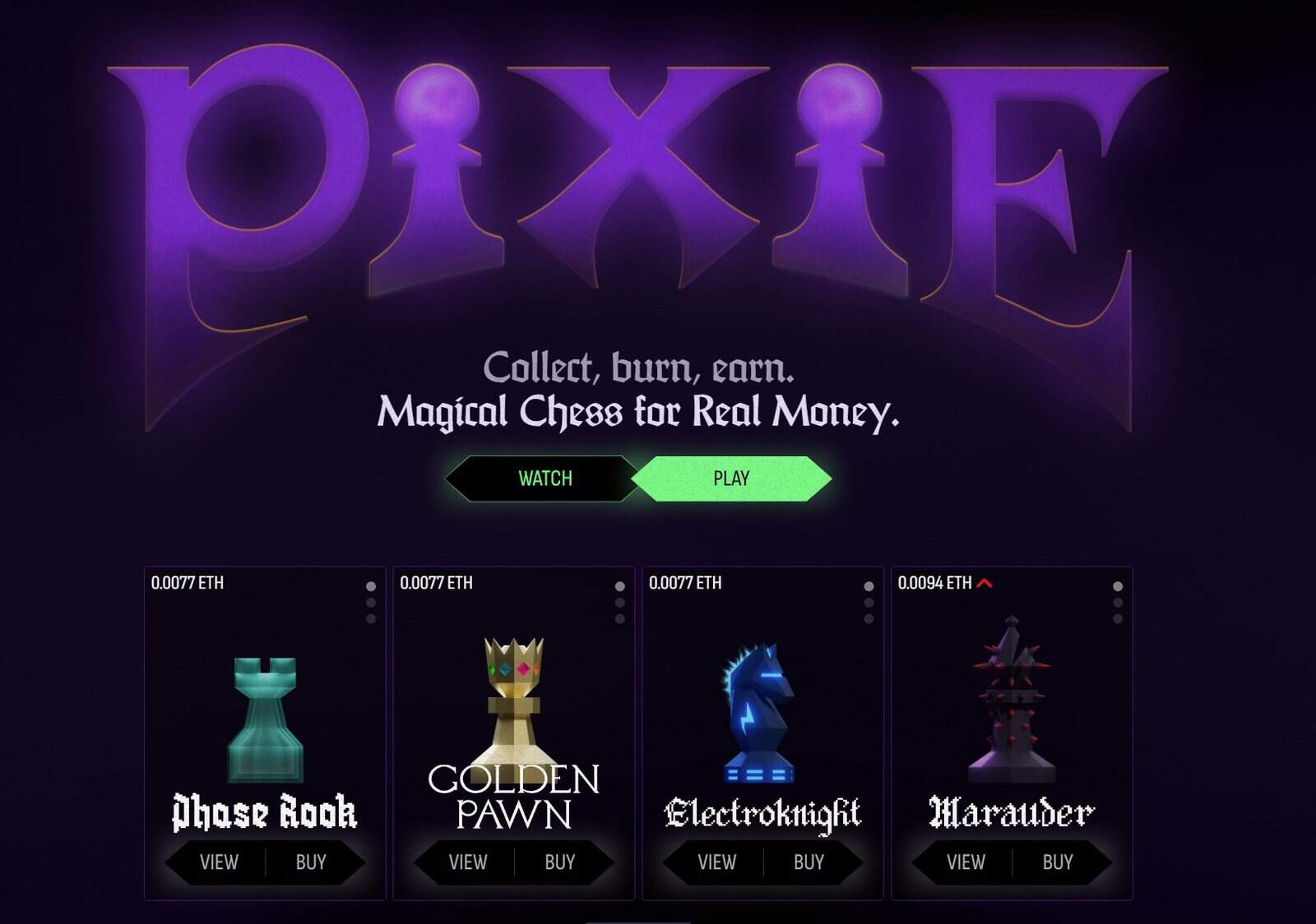
Pixie Chess has launched, offering a unique approach to competitive strategy within the crypto gaming space. The game reinvents chess by integrating collectible, ability-bearing tokens that players can own, trade, and burn to influence both gameplay and prize pools.
At the launch, the game features a vault containing 82.95 ETH, which consists of 34.39 ETH from piece sales and 48.56 ETH contributed by the development team. This prize pool is already active and poised for growth.
Funding details
The launch coincides with a $5.2 million seed funding round led by Paradigm, with SeedClub as an additional institutional backer. Participation also included several angel investors such as Adam, Jordi Hays, and Trevor McFedries, among others.
Josh Harris, founder of Pixie Chess, developed the game through Paradigm’s Entrepreneur in Residence program. He describes the project as a blend of competition, strategy, and economic participation, drawing from chess, trading card dynamics, and governance models like NounsDAO.
Gameplay mechanics
Pixie Chess retains traditional chess rules but replaces standard pieces with collectible tokens that carry unique abilities. New pieces are introduced daily through auctions and packs, enabling players to continuously adapt their collections.
Ownership structure allows players to hold pieces, trade them on open markets, or deploy them in competitive settings. These assets remain player-controlled after the initial sale, aligning with the principles of onchain gaming.
Tournament entry model
A defining feature of Pixie Chess is its tournament entry system, which requires players to burn pieces to participate. Once a piece is burned, it cannot be recovered. This mechanic introduces tangible stakes for competitive play, requiring players to carefully consider the value of their assets before entry.
The prize pool is directly tied to player activity, with every transaction contributing to the vault. The current balance of 82.95 ETH reflects the volume of transactions since launch.
Evolving meta through destruction
Due to the burning mechanic, the game’s meta evolves after each tournament. Frequently used pieces become rarer, altering player strategies and shaping the available competitive landscape.
As pieces are sacrificed, the overall supply diminishes, potentially increasing the value of remaining assets. This interconnected design promotes a seamless relationship between collecting, trading, and competitive play.
What’s next for Pixie Chess?
Created during his time at Paradigm, Josh Harris notes that Pixie Chess is not just a game but serves as a financial experiment as well. The project aims to foster community engagement through a shared prize pool that escalates with participation.
Launched after a beta period, Pixie Chess kicked off with an existing prize pool and active daily auctions. Its design encapsulates elements of strategy, collection, and market influence, establishing a structure that compounds as the player base engages over time.
“Think Pokemon and Magic: The Gathering merged with chess,” Harris said.