


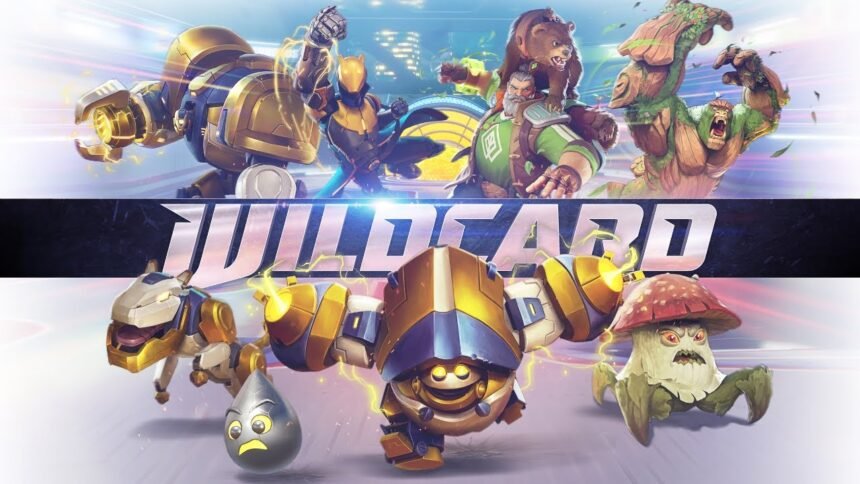
Wildcard is dead. The Wildcard Alliance shut down multiplayer operations on April 27, sunsetting the Wildcard Premier League and the Thousands Network alongside it. Remaining $WC tokens will be burned. Franchise managers in the WPL will receive USDC from whatever’s left in the treasury.
The team’s own words: neither the game nor the protocol was profitable.
That line deserves to sit for a moment. Wildcard raised approximately $55 million. A $46 million Series A in 2022, led by Paradigm with Framework and Benchmark. Then another $9 million in May 2025 from Arbitrum Gaming Ventures and Paradigm again. On top of that, the Thousands Network prediction market pulled roughly $800,000 from its community.

So where did it all go?
What $55M built
Let’s be fair about what Wildcard actually was. This wasn’t a weekend hackathon project. The Wildcard Alliance, operating under Playful Corp, spent six years in design and development. It was a US-based studio with American developers targeting AAA production values. The budget, in that context, isn’t wildly out of line with what a title of that ambition costs in the American games industry, especially once you factor in event marketing, conference presence, and the overhead that comes with shipping on Steam.
The game itself, a 2v2 card-based MOBA, was real software. Nobody’s college capstone project looks like Wildcard. The art was polished. The mechanics were original, if complicated. The infrastructure existed.
But originality and polish don’t matter if the gameplay direction is wrong. And the Steam early access reviews tell that story plainly: Mixed, with 63% positive out of 115 reviews. For a free-to-play title backed by that kind of capital, those numbers are a red flag, not a launch pad. The game shipped in October 2025 with one map and what the team itself estimated was about 40% completion. It entered early access, promising up to a year of community-driven iteration. It lasted six months.
The esports bet
Wildcard was built from the ground up for competitive play. That was the pitch, the product thesis, the reason the Thousands Network and the WPL existed at all.
It’s a thesis with a terrible track record. League of Legends, Dota 2, Counter-Strike: the biggest competitive titles on earth have never made esports profitable as a standalone business. Those games succeed despite their esports costs, not because of them. They can absorb losses because they have millions of concurrent players and deep in-game economies that generate revenue elsewhere.
Wildcard had one map, a fraction of that player base, and no functioning in-game economy. Calling that an esports scene is generous.
The community extraction loop
This is where the story shifts from “an ambitious game that didn’t work out” to something harder to defend.
The Thousands Network was a prediction market built around Wildcard streams. Viewers watched, placed real-money predictions on match outcomes, and earned $WC tokens in return. The platform reported $800,000 in revenue in May 2025 and a 77% viewer-to-payer conversion rate. That conversion number sounds impressive until you remember access was gated. You had to participate to position yourself for a future $WC airdrop that may or may not materialize.
So the loop worked like this: watch streams of one unfinished game. Spend real money predicting outcomes of matches that most people hadn’t played enough to meaningfully predict. Receive $WC tokens tied to a game with no live economy and no confirmed token utility. And then the game shuts down, and the tokens get burned.
The community never got a real in-game economy. Never got meaningful token utility while the game was live. The free Wildpass NFT pumped once. That’s about the extent of what holders walked away with.
Zero crypto integrations ever made it into the actual game.
Not a rug, but what then?
Wildcard wasn’t a rug pull. The development was real, the team was real, and the years of work were real. Calling it a scam ignores the genuine effort and genuine cost of building what they built.
But “not a scam” is a low bar. The harder question is whether it’s acceptable to let your community bankroll the discovery process, hand them vapor tokens for a product that never fully shipped, and then close up shop, citing lack of funds.
$55 million. One map. No economy. A community-facing token that never rewarded its holders in any meaningful way before it was burned.
The Thousands Network will keep its KYC services running until May 7. Season 1 ranked prize payouts begin May 8, with a KYC deadline of May 10. After that, the lights go off.
You can decide what to call it.










[…] co-op action, all dropping at once, all free. That’s not a curated theme. That’s a snapshot of what small developers are making right now when they decide to put something out without a price […]