

In Brief:
- Web3 gaming has lost nearly $15 billion as investor enthusiasm wanes.
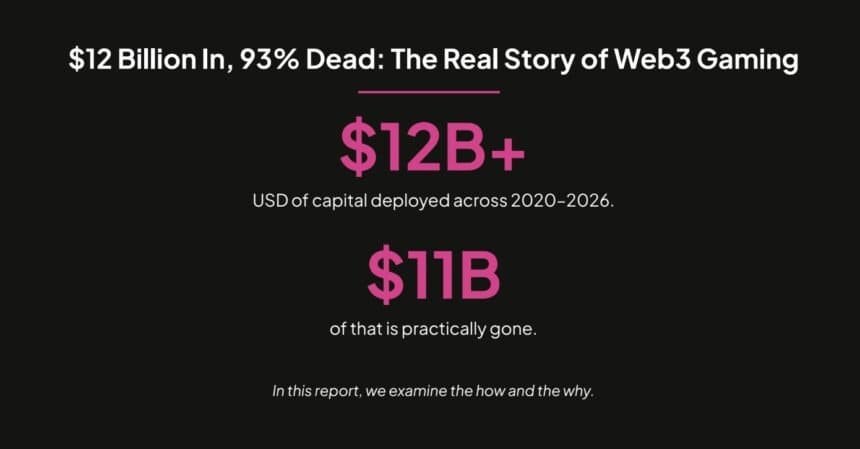
- Approximately 93% of GameFi projects have stalled, with token values plummeting by about 95%.
- Over 300 blockchain games have shut down, revealing a disconnect between financial models and player engagement.
Faltering GameFi ecosystem
Web3 gaming has taken a sharp downturn, with $15 billion evaporating due to dwindling interest in a token-driven model. A report from Caladan reveals that about 93% of GameFi initiatives are effectively inactive, and token values have fallen by roughly 95% from their 2022 highs.

Investment capital has shifted away from gaming, with more than 300 projects closing their doors. This decline stems from a mismatch between financial incentives and gamers’ entertainment preferences. Capital was poured into NFTs and tokens prior to viable game development, resulting in studios like Pixelmon, which raised $70 million in 2022 and has yet to release a game, facing harsh scrutiny.
Death of the model
The GameFi model created a financial feedback loop where players engaged with tokens and NFTs. However, as new participants became scarce, token prices plummeted. Leading projects like Axie Infinity saw daily user counts drop from about 2.7 million to approximately 5,500.
Even at the peak, just 12% of gamers had engaged in crypto gaming, according to Coda Labs. This limited demand did not justify the influx of capital, which was allocated disproportionately, allowing studios to raise substantial funds before launching enough content to retain players.
Investment redirection
Investment in gaming constituted 62.5% of all Web3 venture funding in 2022 but is expected to decline to single digits by 2025. Animoca Brands, a leading investor in the sector, has also slashed its gaming exposure to about 25%, focusing instead on stablecoins and AI.
Development timelines for games stretched to three to five years while tokens required immediate market momentum. By the time many projects were ready, their associated tokens had already lost significant value.
The rapid rise and fall of this sector highlight the pitfalls of prioritizing financial models over genuine player engagement. As the dust settles, it serves as a stark lesson in the complexities of the evolving gaming landscape.