
Play-to-earn gaming lets you earn real cryptocurrency by completing in-game activities. Win a battle, finish a quest, craft a rare item, and receive tokens with actual market value. Those tokens trade on exchanges. You can convert them to other cryptocurrencies or cash out to fiat. The concept sounds too good to be true. For players in the right games with the right approach, it genuinely works. This guide gives you the honest picture, including what the earnings actually look like in 2026, not the 2021 hype.
Quick Answer: Play-to-earn, or P2E, is a blockchain gaming model where players earn cryptocurrency tokens or NFTs through in-game activities. Those tokens have real exchange prices. Earnings depend on the game, your time investment, skill level, and current token prices. It is a real earning opportunity but not a guaranteed income stream. Realistic earnings range from a few dollars to a few hundred per month, depending on approach and market conditions.
How Play-to-Earn Actually Works
Every play-to-earn game has a token economy. The game creates tokens and distributes them to players as rewards for completing qualifying in-game actions. Those tokens exist on a blockchain and trade at real prices on decentralized exchanges.
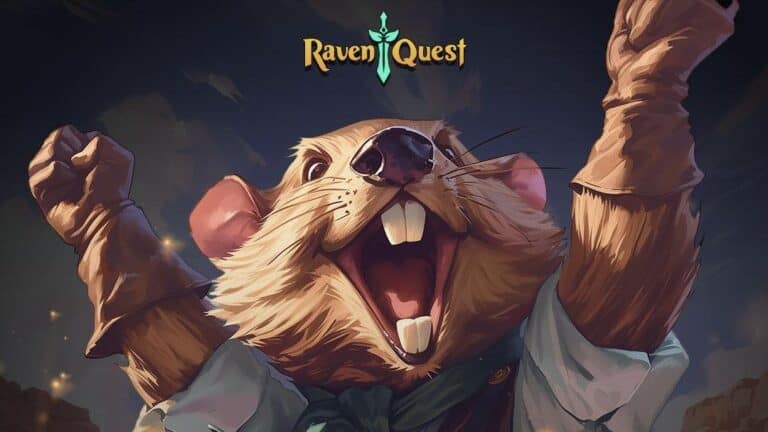
Here is a concrete example. In RavenQuest QUEST $0.0009945 ▼ -5%, players earn QUEST tokens by completing quests, crafting items, and participating in guild activities. QUEST trades on decentralized exchanges. If QUEST is worth $0.05 and you earn 200 tokens in a session, you generated $10 of value. Sustain that daily and you earn $300 a month.
Token prices change constantly, though. If QUEST drops to $0.01, that same session generates $2, not $10. This volatility is the defining characteristic of play-to-earn that most introductory articles underplay. Your earnings in dollar terms fluctuate with market conditions, not just with your effort. That is the core risk every P2E player needs to understand before treating any earnings as reliable income.
The rewards distribution works through smart contracts on the blockchain. When you complete a qualifying action, the contract automatically releases tokens to your wallet. No human approval is needed. The code executes the payment based on rules written permanently into the blockchain.
What You Can Realistically Earn in 2026
The honest answer requires separating the 2021 hype cycle from the 2026 reality.
During the Axie Infinity peak in 2021, some players in the Philippines earned $400 to $1,000 per month. Those figures were real but reflected a specific window of token price conditions that no longer exist. Axie’s SLP token fell from $0.39 to under $0.001 during 2022. The players who made serious money were early, skilled, and strategic about when they sold. Most people who entered later lost money.
In 2025 and 2026, the play-to-earn segment still leads the Web3 gaming market with roughly 42% revenue share. Real player bases exist in games like Gods Unchained, RavenQuest, and Parallel TCG. But earnings vary widely. Casual players in most games generate the equivalent of a few dollars per day at best. Dedicated players who master the economy, trade NFTs strategically, and participate in competitive formats can earn meaningfully more.
According to DappRadar’s Q3 2025 State of Blockchain Gaming report, blockchain gaming attracted 4.66 million daily unique active wallets in Q3 2025. That is a real market with real participants. Some are earning meaningfully. Many are earning little. Your outcome depends on game selection, skill development, and how well you understand token economics before committing time or money.
Pro Tip: Calculate your earnings in token quantity first, then multiply by the 30-day average token price, not today’s price. A single day snapshot often reflects short-term volatility. The 30-day average gives you a realistic baseline for what you are actually generating.
The Five Earning Paths in P2E Games
Active gameplay earnings come directly from playing. Winning battles, completing quests, reaching milestones, and finishing seasonal events generate token rewards in real time. This is the most accessible entry point because it requires no upfront capital in free-to-play titles. It also requires the most time.
NFT trading is often the highest-earning path for experienced players. Buy in-game NFTs when demand is low. Sell them when a new game update, meta shift, or player influx drives demand higher. The best NFT traders understand game mechanics more deeply than casual players. They identify valuable items before the market does.
Staking and passive rewards generate token income without active play. Lock governance tokens or character NFTs in staking contracts and receive daily or weekly rewards. This creates a baseline income that compounds over time without requiring constant engagement.
Scholarship programs let NFT owners lend assets to players who cannot afford the entry cost. The borrowing player earns tokens, splits a percentage with the lender, and both benefit. Gaming guilds built entire businesses on this model during the Axie Infinity AXS $1.05 ▼ -15.7% era and some continue operating successfully in 2025 and 2026.
In-game crafting economies reward players who master supply and demand within the game. If crafted items are scarce and in high demand, skilled crafters earn strong margins. This path requires both deep game knowledge and attention to the marketplace, but creates earnings independent of token price because you are selling to other players who need the items.
Play-to-Earn vs Play-and-Earn: What Changed
Play-and-earn is a newer term that emerged around 2023 and 2024 as the industry tried to distance itself from the excesses of the 2021 P2E bubble. The distinction is more than marketing.
Traditional P2E framing implied that earning was the primary reason to play. Games were built around token generation first and gameplay second. When token prices fell, players left because the financial incentive was gone. The game had no intrinsic value keeping them engaged.
Play-and-earn reframes the model. The game is enjoyable first. Earning is a bonus layer that rewards engagement, not the sole reason to play. Games designed this way retain players through market downturns because the gameplay itself has genuine value. This produces more sustainable economies because demand for in-game assets comes from players who want them for gameplay reasons, not just speculators.
Gods Unchained GODS $0.02135 ▼ -7.3% exemplifies this model. It is a genuinely competitive card game that people play for the strategy and competition. The ability to earn and own your cards as NFTs is a meaningful bonus. But the game retains players even when GODS token prices are low.
How to Choose a P2E Game Worth Your Time
Check daily active wallet trends on DappRadar. A growing wallet count signals a growing economy. Shrinking wallets predict economic trouble before the token price reflects it. Never start playing a game where wallet trends have declined for more than two consecutive months.
Understand the token sinks. What in-game actions require spending tokens? Strong sinks like crafting, breeding, competitive entry fees, and upgrade costs absorb token supply and support prices. Weak sinks like optional cosmetics do not. More natural and varied sinks mean better long-term economic health.
Check the entry cost vs earnings recovery time. If the game requires a $200 NFT to access the best earning mechanics, and you can earn $10 per week, your recovery time is 20 weeks. Factor this into your risk calculation. Market conditions can change dramatically over 20 weeks.
Research the team and security. Is the team public and accountable? Has the smart contract been audited by a reputable firm? Does a playable game actually exist, not just a whitepaper? All three must be true before you invest real money.
Step-by-Step: Getting Started
- Start with a free-to-play game. Gods Unchained gives new players free starter cards. RavenQuest has a no-cost entry mode. Learn the game mechanics and economy without spending anything first.
- Download the correct wallet. MetaMask for Ethereum-based games. Phantom for Solana. Ronin Wallet for Axie Infinity and RavenQuest. Each is free, reputable, and takes under ten minutes to set up.
- Secure your seed phrase immediately. Write your 12-word recovery phrase on paper. Store it somewhere physically secure and offline. This phrase controls your wallet permanently.
- Connect your wallet to the game. Every web3 game has a Connect Wallet button on its website. Click it, approve the connection in your wallet popup, and your game account links to your on-chain wallet address.
- Play for two weeks before spending anything. Learn how tokens are earned. Check the in-game marketplace daily. Track which items are in demand. Only after this learning period consider buying assets.
- Track every token earned from day one. A simple spreadsheet showing tokens earned, token price at time of earning, and cash-out prices gives you your actual return. Without tracking, you have no idea whether you are profitable.
The Best P2E Games in 2026
RavenQuest on Ronin Network is the standout new P2E title of 2025 and 2026. Its QUEST token economy is built on genuine MMORPG gameplay. Crafting, guild systems, and seasonal competitive events create multiple earning paths. The game attracted strong wallet growth on Ronin throughout 2025.
Gods Unchained on Immutable X is the most merit-based P2E game available. Better players earn more card packs through ranked rewards. Cards are tradeable NFTs. The game has maintained consistent trading volume and player engagement through multiple market cycles, with new card set releases in 2025.
Parallel TCG is a competitive sci-fi card game with a strong tournament scene. Its earnings reward skilled players through ranked competition and limited events. One of the more genuinely skill-based P2E systems operating in 2026.
Axie Infinity on Ronin continues to maintain an active player base. The game has evolved significantly since 2022 with new game modes and an improved dual-token economy. The Ronin Network infrastructure it pioneered now hosts multiple strong titles beyond Axie itself.
Pro Tip: Look for P2E games where the best players consistently outperform the biggest spenders. If competitive rankings are dominated by capital-heavy accounts rather than skilled players, the economy tends toward plutocracy and the earnings model becomes unsustainable. Skill-based earning sustains player interest longer than capital-based earning.
Risks Every P2E Player Must Understand
Token inflation erodes earnings over time. When a game mints tokens faster than players spend them through in-game actions, token prices fall and your dollar-equivalent earnings shrink. This is the most common failure mode. Watch daily token emission relative to daily trading volume as your early warning signal.
Game shutdowns eliminate NFT utility completely. Several games closed operations in 2025 after failing to maintain player bases. Your NFTs stay on the blockchain when a game dies, but they lose all practical value. Nobody buys items from a dead game. Avoid concentrating all your gaming NFTs in a single title.
Entry cost recovery is not guaranteed. If the game requires expensive NFTs and token prices fall after you buy in, your recovery timeline extends indefinitely. Calculate worst-case scenarios before any significant investment.
P2E earnings are taxable in most jurisdictions. Tokens earned through gameplay are typically treated as income at the point of receipt. Capital gains tax may apply when you sell. Keep detailed records and consult a tax professional if your earnings become significant. According to Kraken’s play-to-earn guide, tax treatment varies significantly by country and the regulations are actively evolving.
Frequently Asked Questions
Do you need to spend money to start play-to-earn gaming?
Not always. Gods Unchained provides free starter cards that can participate in ranked play. RavenQuest has a free-to-play mode. You will likely need a small amount of cryptocurrency eventually for transaction fees, but you do not need to invest upfront to explore and learn the space.
Are play-to-earn games legit or just scams?
Many are legitimate. Games like Gods Unchained, RavenQuest, and Axie Infinity have real player bases, functional games, and genuine earnings potential. The space also contains scams and poorly designed projects. Research the team, verify smart contract audits exist, and confirm a playable game exists before investing any money.
How much can you earn from play-to-earn games in 2026?
Realistic earnings range from a few dollars to a few hundred dollars per month for most active players. The extremes exist: some dedicated traders and competitive players earn more. Most casual players earn small amounts. Your outcome depends on game selection, skill level, time invested, and market conditions for that game’s specific token.
Is play-to-earn gambling?
No. In skill-based P2E games, earnings depend on strategy, game knowledge, and time investment, not random outcomes. Some games do have speculative elements in NFT trading. The best P2E games reward better players consistently over time, which is a fundamentally different structure from gambling where outcomes are chance-based.
What is the difference between play-to-earn and play-and-earn?
Play-and-earn implies the game is enjoyable first and earning is a bonus. Play-to-earn historically implied earning was the primary reason to play. The distinction matters because play-and-earn games retain players through market downturns because the gameplay itself has intrinsic value. Play-to-earn games lose players when token prices fall.
Play-to-earn is a real model with real opportunities and genuine risks. Choose your game carefully, understand its token economics before committing money, start with free modes, and track your actual returns honestly from day one. That approach gives you the best foundation for earning meaningfully rather than simply donating to the players who understood the economy before you did.