
GameFi projects are blockchain games that combine gameplay with decentralized finance mechanics, letting players earn real cryptocurrency, stake assets for yield, and vote on game decisions. The space has grown from a handful of experimental titles in 2020 to a $37 billion market in 2025. The quality range is enormous. Some projects are genuinely excellent games with sustainable economies. Others are thinly disguised token distribution schemes. This review separates them honestly.
Quick Answer: GameFi projects are blockchain games incorporating DeFi mechanics like earning, staking, and governance. The best ones in 2026 include RavenQuest (MMORPG on Ronin), Gods Unchained (card game on Immutable X), Axie Infinity (Ronin), Illuvium (AAA RPG on Immutable X), and Parallel TCG (sci-fi card game). Each has real player bases, verifiable on-chain activity, and sustainable economic models compared to the 2021 generation of GameFi projects.
How We Evaluated These Projects
Each project was evaluated on four criteria. First, gameplay quality independent of earning mechanics. Second, tokenomics sustainability based on emission rates, sink mechanisms, and player base trends. Third, real player engagement confirmed through DappRadar’s daily active wallet data rather than self-reported metrics. Fourth, team track record and smart contract security audit status.

Projects with declining daily active wallet trends over three or more consecutive months are not on this list. Projects without audited smart contracts are not on this list. Projects with no working game are not on this list. This review covers what is actually worth engaging with in 2026, not what had the most impressive whitepaper in 2021.
RavenQuest: MMORPG GameFi Done Right
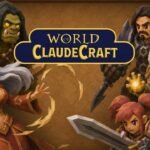
RavenQuest on Ronin Network is the standout new GameFi title of 2025 and 2026. The game is a full-featured MMORPG with quest systems, crafting, guild mechanics, seasonal competitive events, and a player-driven economy. The QUEST token powers the in-game economy as a utility token with multiple genuine sink mechanisms including crafting costs, guild formation fees, and tournament entry.
The critical distinction from most GameFi projects: players report enjoying RavenQuest independently of the earning mechanics. Community sentiment on Discord and Reddit reflects genuine engagement with the game’s content rather than purely financial motivation. This player retention through market downturns is the most reliable indicator of sustainable GameFi economics.
RavenQuest attracted significant wallet growth on Ronin throughout 2025 and consistently appeared in DappRadar’s top 10 blockchain games by daily active wallets. The guild warfare system creates organized community competition that sustains ongoing engagement beyond individual earning sessions.
Token: QUEST | Chain: Ronin | Type: MMORPG | Entry: Free-to-play available
Gods Unchained: Merit-Based GameFi
Gods Unchained on Immutable X is the most merit-based GameFi system available in 2026. The game’s ranked system distributes GODS tokens and NFT card packs to players based on competitive performance. Better players earn more valuable rewards. Spending more money buys you cards but does not directly buy you ranking position if you lack the skill to compete effectively.
The card game format creates natural, organic demand for NFT cards. Players who want to compete effectively at high ranks need specific cards. That demand drives secondary market trading volume on Immutable’s marketplace, with all trading gas-free for users. New card set releases throughout 2025 brought fresh players and renewed trading volume.
GODS token has maintained relevance through governance and staking mechanics. The game’s consistent operational history since 2018 through multiple market cycles demonstrates organizational stability that newer projects cannot match.
Token: GODS | Chain: Immutable X | Type: Trading Card Game | Entry: Free starter cards available
Axie Infinity: The Original, Rebuilt
Axie Infinity’s story is blockchain gaming history. Peak in 2021, catastrophic hack in 2022, token collapse, and rebuilding from 2022 onward. In 2025 and 2026, Axie operates as a significantly evolved product compared to the 2021 version. New game modes, an improved dual-token economy, and the mature Ronin Network infrastructure give Axie a foundation that is genuinely stronger than its 2021 version despite lower token prices.
The Ronin Network’s expansion beyond Axie alone is perhaps Axie’s most valuable evolution. AXS now governs an ecosystem hosting multiple successful games, giving it broader utility and demand than when it was purely an Axie governance token. Players who held AXS through the crash for the network’s long-term value have seen that thesis partially validated as Ronin became one of the most active gaming blockchains.
Tokens: AXS (governance), SLP (utility) | Chain: Ronin | Type: Strategy RPG | Entry: Free starter Axies available
Illuvium: AAA GameFi
Illuvium is the most ambitious GameFi project in terms of production quality. Built by an Australian studio on Immutable X, the game features AAA visual quality, open-world creature capture in Illuvium Overworld, competitive combat in Illuvium Arena, and land-based resource management in Illuvium Zero. Each interconnected experience feeds into the broader ILV token economy.
ILV governance token holders earn a share of protocol fee revenue and vote on game economic parameters. The staking rewards come from real game revenue rather than freshly minted tokens, creating a more sustainable yield mechanism than most GameFi projects. The game’s long development period before public launch reflected a commitment to quality over speed that shows in the finished product.
Illuvium represents where GameFi is heading as production budgets and quality standards rise to match traditional gaming. It is not the most accessible entry point for new players, but it demonstrates that blockchain gaming and AAA production are compatible.
Token: ILV | Chain: Immutable X | Type: Open-world RPG | Entry: Purchasable NFT assets required
Parallel TCG: Competitive GameFi
Parallel TCG is a science fiction trading card game with production values that stand on their own merits. Cards are NFTs on Ethereum and Base, tradeable on open markets. The competitive scene has genuine depth with regular tournaments offering PRIME token prizes and NFT rewards.
The game’s economy is notable for generating demand for cards from multiple sources simultaneously. Competitive players need specific cards for high-level decks. Collectors value the game’s artwork and limited editions. Speculators bet on which cards will become competitively strong. This multi-driver demand gives the card NFT market more resilience than games where cards have only gameplay utility.
Token: PRIME | Chain: Ethereum / Base | Type: Trading Card Game | Entry: Starter packs purchasable
Pixels: Casual GameFi on Ronin
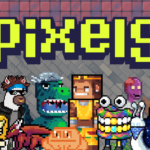
Pixels on Ronin Network occupies the casual gaming segment that more intensive games cannot reach. The farming and pixel-art adventure game attracted massive daily active wallet numbers in 2025, at times leading the Ronin ecosystem ahead of Axie Infinity. The PIXEL token powers a simple but effective in-game economy centered on land ownership, farming, and crafting.
Pixels demonstrates that GameFi engagement does not require complex mechanics or high entry costs. The game’s approachability brought many first-time blockchain gaming users onto the Ronin Network, expanding the ecosystem’s total addressable player base. Free-to-play entry removes the upfront investment barrier that excluded many potential players from earlier GameFi games.
Token: PIXEL | Chain: Ronin | Type: Casual farming/adventure | Entry: Free-to-play
The Sandbox: Metaverse GameFi
The Sandbox is a virtual world where players own land parcels as NFTs, build experiences using the game’s voxel editor, and participate in a player-driven economy. The SAND token governs the platform and serves as the primary medium of exchange for land, assets, and in-world experiences.
The Sandbox has attracted major brands, entertainers, and intellectual property holders to build virtual experiences on its land, giving it mainstream cultural touchpoints that pure gaming projects lack. Warner Music Group, Snoop Dogg, Atari, and hundreds of other partners have built or leased Sandbox land.
The speculative element in The Sandbox is higher than most games on this list. Land prices move significantly with broader crypto market sentiment rather than purely with in-game utility. This makes it one of the more volatile GameFi investments despite the platform’s genuine real-world traction.
Token: SAND | Chain: Ethereum / Polygon | Type: Metaverse/virtual world | Entry: Free to explore, land purchase required to build
Star Atlas: Space MMORPG GameFi
Star Atlas on Solana is one of the most ambitious blockchain gaming projects in development, combining a grand strategy space MMO with a deeply integrated dual-token economy. ATLAS serves as the in-game currency and POLIS governs the meta-political structure of the game universe. The game’s development timeline has been longer than initially projected, but the partial release content available demonstrates the scope of what is being built.
Ship ownership through NFTs creates meaningful stakes for players who build fleets and territories in the game’s space economy. The Solana foundation’s support and significant development team make Star Atlas one of the more credible high-ambition blockchain gaming projects despite its extended development timeline.
Tokens: ATLAS (utility), POLIS (governance) | Chain: Solana | Type: Space MMO | Entry: Ship NFT purchase required
GameFi Projects to Watch in 2026
Off The Grid is a battle royale game with blockchain item ownership that has attracted significant attention for bringing a mainstream FPS format to blockchain gaming. If it delivers on gameplay quality, it could be the crossover title that introduces blockchain gaming to traditional FPS audiences.
Shrapnel is a tactical FPS on Avalanche with modder-owned content as NFTs. The concept of player-created game content as owned assets represents an interesting new angle in blockchain gaming that traditional games have only offered through unofficial markets.
Red Flags: GameFi Projects to Avoid
Knowing what to avoid is as important as knowing what to pursue. Common warning signs for problematic GameFi projects include: anonymous founding teams with no verifiable professional history, daily active wallet counts that have been declining for more than two consecutive months, token emission rates dramatically higher than any visible sink mechanisms, promises of guaranteed returns or fixed APY on in-game staking, no working game available to play despite months of token sales, and smart contracts without public audits from recognized security firms.
According to DappRadar’s blockchain gaming research, the ratio of active games to failed projects launched in a given year has improved significantly since 2021, but the majority of new projects still do not survive their first year of operation. Careful selection remains essential.
Frequently Asked Questions
What are the best GameFi projects in 2026?
By a combination of gameplay quality, player engagement, and economic sustainability, the top GameFi projects in 2026 include RavenQuest, Gods Unchained, Axie Infinity, Illuvium, Parallel TCG, and Pixels. Each has a real player base confirmed by on-chain wallet data and game mechanics that sustain engagement beyond pure financial motivation.
Are GameFi projects safe to invest in?
Established projects with long track records, audited smart contracts, and growing player bases carry manageable risk. Newer projects, pre-launch token sales, and projects with declining player bases carry significantly higher risk. Treat any GameFi investment as potentially losing its entire value and size positions accordingly.
Which GameFi project has the best tokenomics?
RavenQuest’s QUEST token has multiple strong sink mechanisms within a game that players genuinely enjoy. Gods Unchained’s GODS token benefits from consistent secondary market activity creating natural demand. Illuvium’s ILV distributes real protocol revenue to stakers rather than minting new tokens as yield. All three represent more sustainable tokenomics than the 2021 generation of projects.
What is the minimum investment to start with GameFi projects?
Several top GameFi projects have free-to-play options. Gods Unchained provides free starter cards. RavenQuest has a free entry mode. Pixels is entirely free to start. You will eventually need a small amount of cryptocurrency for transaction fees, but you can explore most leading GameFi projects without upfront investment.
The best GameFi projects in 2026 share one characteristic: players engage with them for reasons beyond the earning mechanics. Whether the appeal is competitive card strategy, MMORPG progression, or casual farming, the games with sustained player bases are those where the gameplay itself has genuine value. Identify that first and the financial opportunity follows naturally.