
In Brief:
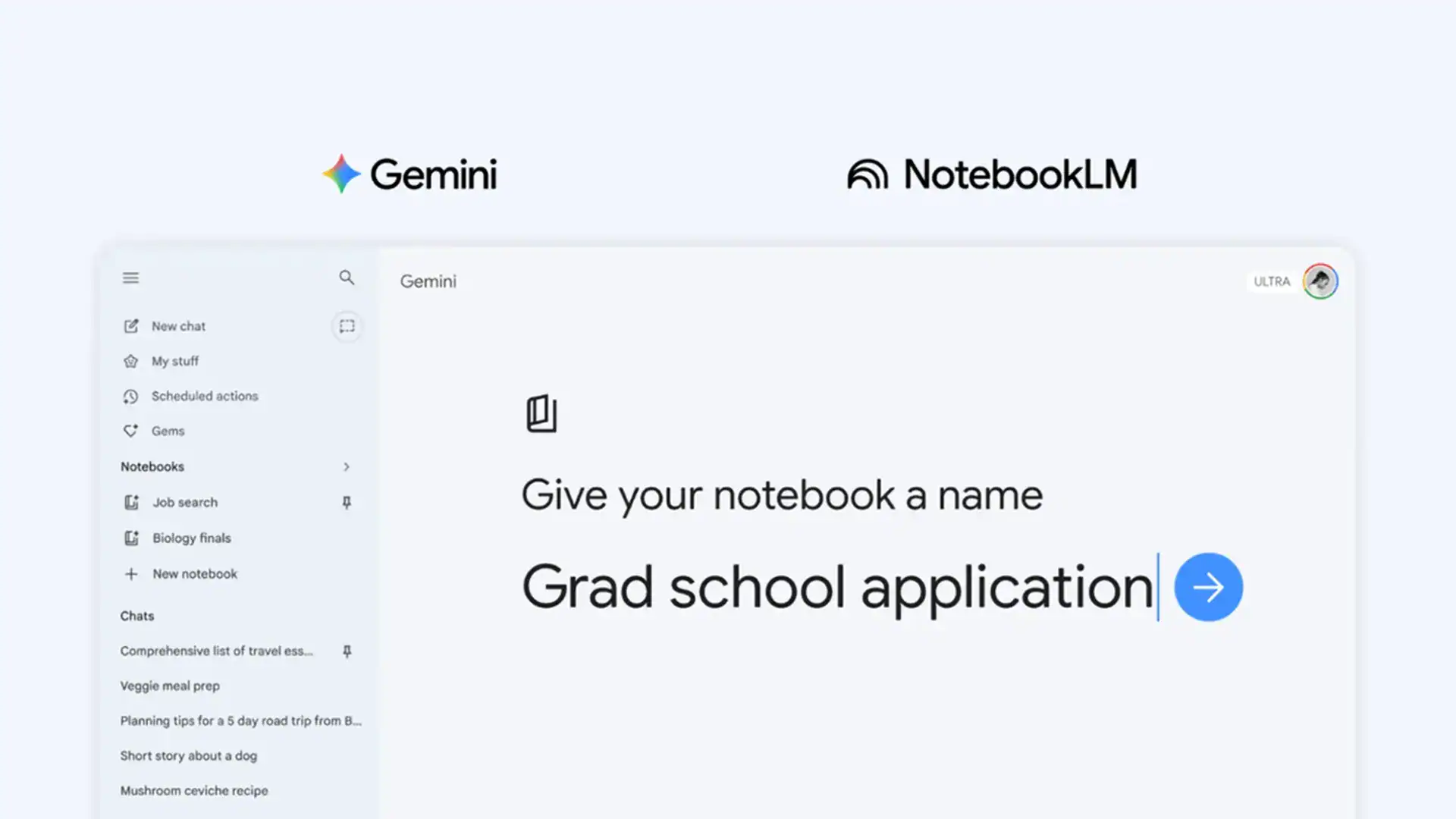
- Google introduced a notebooks feature inside the Gemini app that stores conversations, files and instructions for ongoing projects in one place.
- Notebooks sync with NotebookLM, letting users move between research, podcast-style summaries and structured drafting without losing context.
- The feature is rolling out first to paying Gemini subscribers on the web, with broader access to follow
Google added a notebooks feature to Gemini on April 10, giving the AI chatbot something it has lacked since launch: persistent memory across sessions tied to specific projects.
Notebooks function as what Google calls “personal knowledge bases.” Users create a notebook for a topic, load it with files, chat history and instructions, and Gemini references that material in future conversations.
The idea is to stop users from having to re-explain context every time they open a new chat.How it worksEach notebook holds documents, saved chats and user-defined notes.
When a user asks Gemini a question inside a notebook, the model pulls from those stored sources alongside its standard tools like web search. Google is positioning this as the bridge between a one-off chatbot interaction and an ongoing working relationship with the AI.
The practical use cases are straightforward. A student could load class notes, readings and past exam questions into a notebook, then return days later and ask for a revision plan without restating any background. Someone planning a trip could dump destinations, booking details and itinerary ideas into a notebook and ask Gemini to organize them later.
The notebooks sync bidirectionally with NotebookLM, Google’s separate AI research tool. Sources added in Gemini appear in NotebookLM, and vice versa.
A user could start by collecting research in a notebook, switch to NotebookLM to generate a podcast-style audio summary, and return to Gemini to draft a structured document from the same material.NotebookLM had already built a following as a document summarization tool capable of producing AI-generated podcasts, videos and presentations.
The sync means that workflow now connects directly to Gemini’s broader capabilities. The feature is available now for paying Gemini subscribers on the web. Google hasn’t announced a specific timeline for free tier access or mobile availability.