
In Brief:
- ApeChain’s Vibecode Camp is a five-week program that teaches users how to create interactive experiences with AI tools.
- No prior experience is required; participants will deploy live scenes from the first session.
- The initiative aims to shift focus from theory to active creation in the Otherside metaverse.
ApeChain launches Vibecode Camp
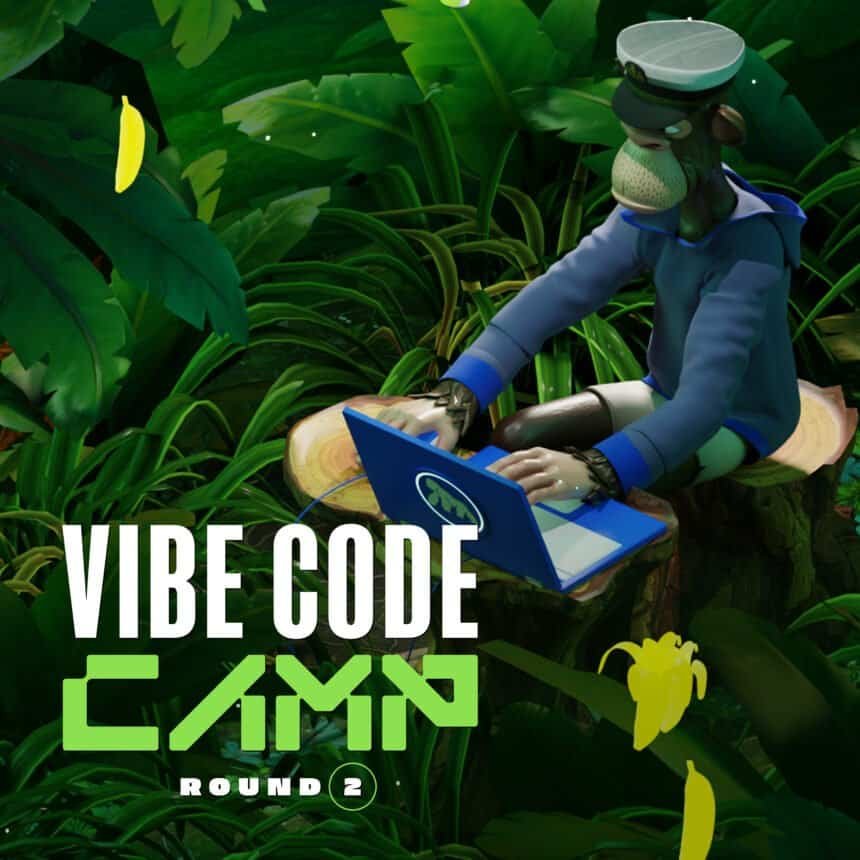
ApeChain has launched Vibecode Camp, a five-week program to onboard builders to the Otherside metaverse. The initiative emphasizes hands-on learning, allowing participants to create and deploy interactive environments immediately, without needing prior experience.

Participants dive into creating from day one. They set up their development environment, learn Metaverse Markup Language (MML), and deploy live scenes—all within the first session. This approach transforms individuals from passive spectators into active builders almost instantaneously
Leadership and structure
The camp is led by ApeChain’s Ryan Smith along with experienced builders and guest mentors who provide guidance throughout the program. Unlike traditional courses, the camp encourages collaborative learning, with participants troubleshooting issues as they arise.
Importance of MML
MML is central to the program, enabling users to describe their desired experiences, generate them using AI, and make adjustments before deploying them in the virtual world. This workflow significantly lowers barriers, making it accessible to those without any background in game development.
Proof of concept
Community members have already used these tools to build games and interactive spaces, demonstrating that the methodology is effective. Vibecode Camp seeks to scale this process, broadening access to these tools and structured support.
Engagement over infrastructure
The camp addresses a key challenge faced by metaverse platforms: engaging users to build content and remain active in the ecosystem. By transitioning participants from learners to creators, Vibecode Camp aims to foster an environment that encourages sustained activity.
Focus on participation
The program prioritizes participation over perfection. By its conclusion, participants should not only grasp the tools but also have created tangible projects. If implemented at scale, this model could help turn virtual worlds from vacant spaces into vibrant environments driven by community participation.