
In Brief:
- Onchain Heroes published an explainer on MoG 2.0, a ground-up rebuild of Maze of Gains that the team describes as “Not a patch – a whole new game.”
- The rebuild changes combat, progression and rooms, and has run through two playtests since July 1, with the second dropping the NFT gate that limited the first.
- The studio says MoG is handling roughly 10 times the traffic it planned for, and its CTO is designing a new backend to carry the load.
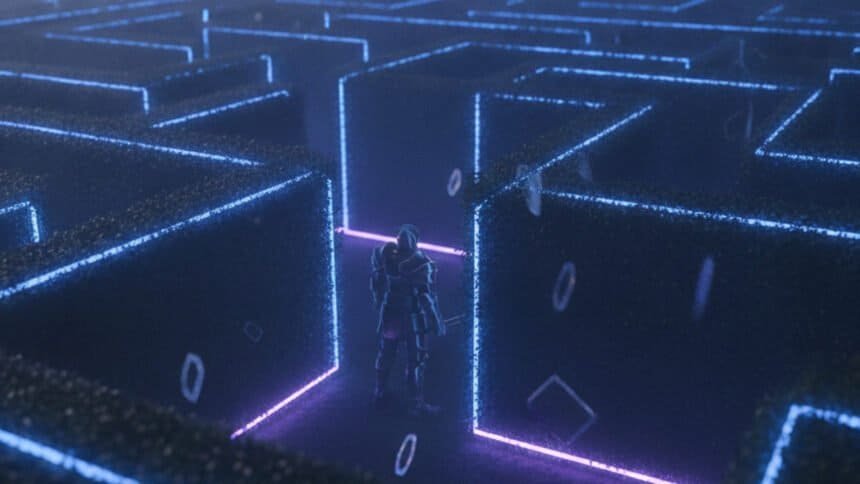
Onchain Heroes rebuilt Maze of Gains from the ground up and posted a thread walking through what changed in the version it calls MoG 2.0.
“Not a patch – a whole new game,” the team said. “New combat, new progression, new rooms.”

Curious about what's in store for DoM 2.0?
The OCH team recently wrote an explainer thread going through everything that's changed, and you can expect all the learnings along the way to go into DoM 2.0Axie: Den of MysteriesView on X ↗
What changed
Combat was reworked so runs turn on reading enemy patterns rather than on chance. Progression now carries persistent upgrades that stay with a player through a run, so early picks compound the deeper anyone pushes. The team also added biomes, one-off rooms and items.
The core loop is unchanged. Players drop into a maze, fight, collect upgrades and decide when to walk out with the loot instead of pressing on for more.
Two playtests, one gate removed
The first MoG 2.0 playtest opened July 1 with a pool of 250 Arcade Keys. Entry required a Ringbearer NFT or an Expedition Pass.
The second round scrapped that requirement. Anyone can play and earn keys by sending back feedback. Onchain Heroes hasn’t given a date for the full release.
Traffic outran the plan
In its fourth devlog, headlined “MoG Momentum & What’s Next,” the team said MoG is carrying about 10 times the traffic it originally built for. Its CTO is designing a new backend architecture meant to scale the game and run it faster.
Two partnerships are under discussion and could land within weeks, the team said. It also wants to push MoG past its existing crypto audience and eventually to web2 players.
MoG is the first title slated to plug into OCH World, which Onchain Heroes describes as the economic center of its universe: a persistent, player-driven world built on resource production, crafting and markets. A shared economy between the two is in the works. Every future OCH game is meant to connect to it.
The Ronin reskin
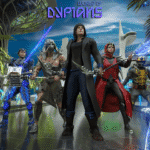
The same engine already runs a second game. Axie: Den of Mysteries, built by the Onchain Heroes team and launched on Ronin on April 30, is a reskin of Maze of Gains.
Its economics are separate. Keys cost about $2 and can be bought with ETH, AXS, RON or USDC, with 90% of key revenue routed back to players through prize pools. Onchain Heroes seeded the pool with $20,000 in bAXS. Treasures accumulate weekly and pay out in USDC, Shards are scored separately with a bonus pool for the first four weeks, and Blessings pay instant USDC for killing the rare Werewolf boss.
Runs there last three to five minutes. Each starts with 100 Stamina and every move spends one; at zero the run ends. Players control a character named Buba. On June 1 the game picked up eight bounties on the App.axie Bounty Board across four rarity tiers, making it the fifth Axie title on the board.
The Den of Mysteries account said the MoG 2.0 work feeds its own next version. “The OCH team recently wrote an explainer thread going through everything that’s changed, and you can expect all the learnings along the way to go into DoM 2.0,” it said.
Background
Maze of Gains sits alongside the Onchain Heroes idle RPG, which is built around Genesis Hero NFTs and $HERO rewards. It runs on Abstract and uses $HERO, an ERC-20 deployed on Abstract Mainnet, for in-game transactions. In April the studio added Valor, a stablecoin bought with USDC on Abstract Mainnet, to steady its economic design.
Skarly, previously a designer at Wolf Game, created the game.
The rebuild follows a broader retreat from the studio’s original architecture. Onchain Heroes started out running most actions through contracts, then moved to a hybrid model after finding it slow and expensive to maintain, with longer development cycles, harder updates and rising audit costs. Payments stayed onchain. Gameplay logic went off it. A rewrite of the indexing system cut indexing time from four hours to about 20 minutes.