
The Coachman gets away with it.
That’s the part of Pinocchio that curdles when you watch it as an adult. Pinocchio escapes Pleasure Island. The Coachman does not get caught, does not get punished, does not get a comeuppance scene. He just keeps running his operation, presumably forever, while the movie moves on to a whale.
Disney has spent the last stretch of years handing its bad guys reasons. Syndrome had a grudge. Doris had a purpose. Scar got a whole backstory in Mufasa arguing that his cruelty was manufactured by how he was raised. The moral gray area is the house style now, at Disney and across the industry.

But there’s a specific pleasure in a villain with nothing underneath. No wound, no excuse, no scene where the score softens and you’re asked to reconsider. Just rot. And you get to sit there wanting them destroyed, guilt free.
The one who never got what was coming to him
Back to the Coachman, because he’s the benchmark.
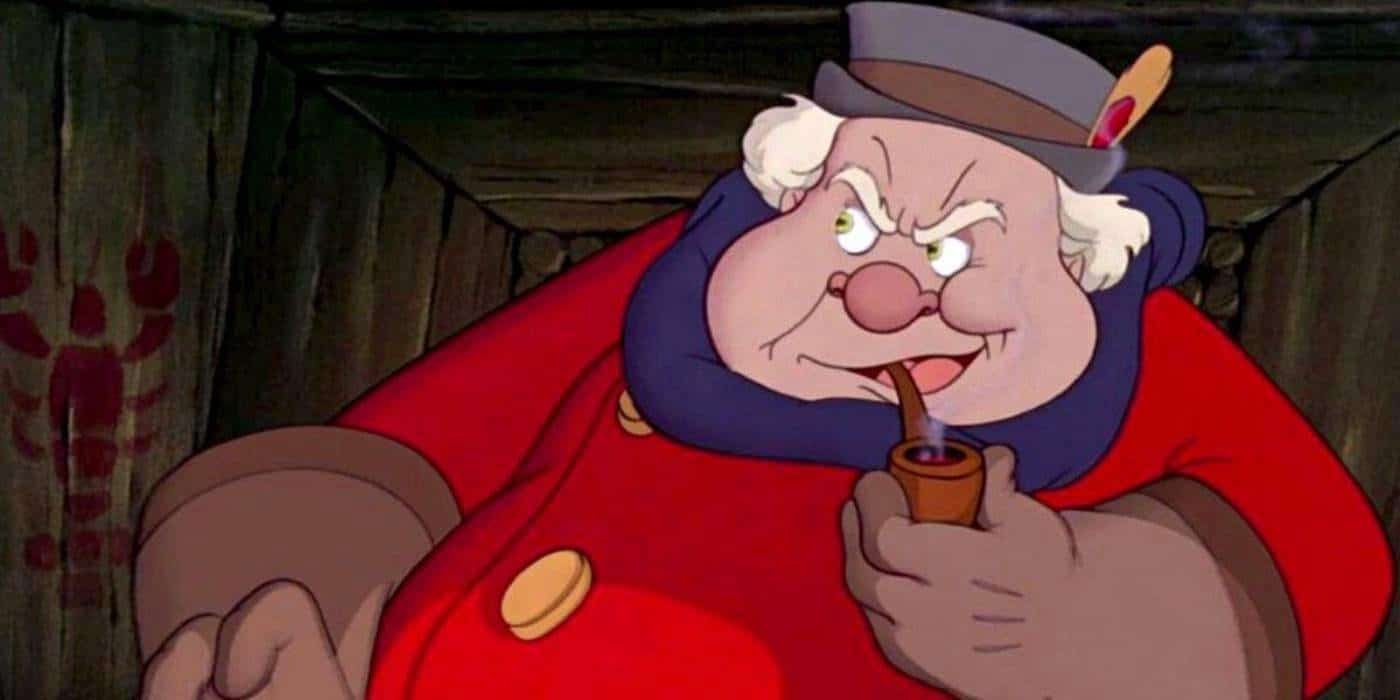
He has no real name, which somehow makes him worse. He runs Pleasure Island, promises kids unlimited fun, then abducts them, strips them of their humanity, lets them turn into donkeys and sells them into slavery. It’s an allegory for child exploitation and trafficking, and the movie is not subtle about it.
What sells him is the cheerfulness. He’s a con man wearing a grin, and he feels nothing. Not a flicker of empathy anywhere in the performance.
Then there are the loose threads that nobody ever tied off. How does he know about the island’s curse? Why doesn’t it touch him? And why, exactly, does he have four fingers? Eight decades later those questions still sit there, unanswered, doing quiet damage.
The rat who fed a guy to a cat over a word
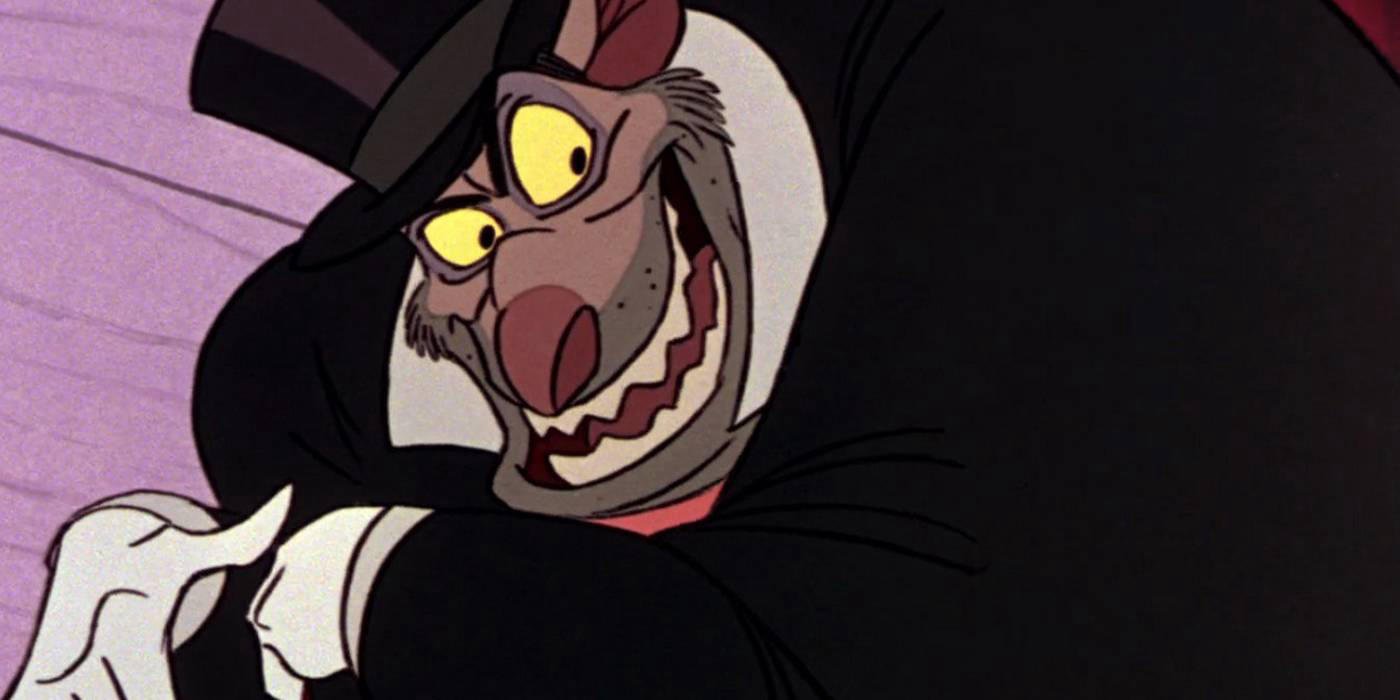
Ratigan from The Great Mouse Detective is the most underrated villain on this list, and it’s not close.
He calls himself the “world’s greatest criminal mind.” Basil of Baker Street calls him the “Napoleon of Crime.” Ratigan himself proudly cops to drowning widows and orphans, which is the kind of resume line most animated villains would at least have the decency to imply.
He feeds one of his own henchmen to a cat because the minion called him a “rat.” Which he is. But the word punctures the refined image he’s built, and his ego can’t survive the correction.
He wanted to rule Mousedom through manipulation and kidnapping and whatever else was handy, and the power was only ever a means to commit more evil with it.
The tell is in his own song, where his henchmen sing at him: “You’re more evil than even you.” He is his own high-water mark for wickedness. Nobody else on this list can say that.
Jafar wanted the lamp, not the throne
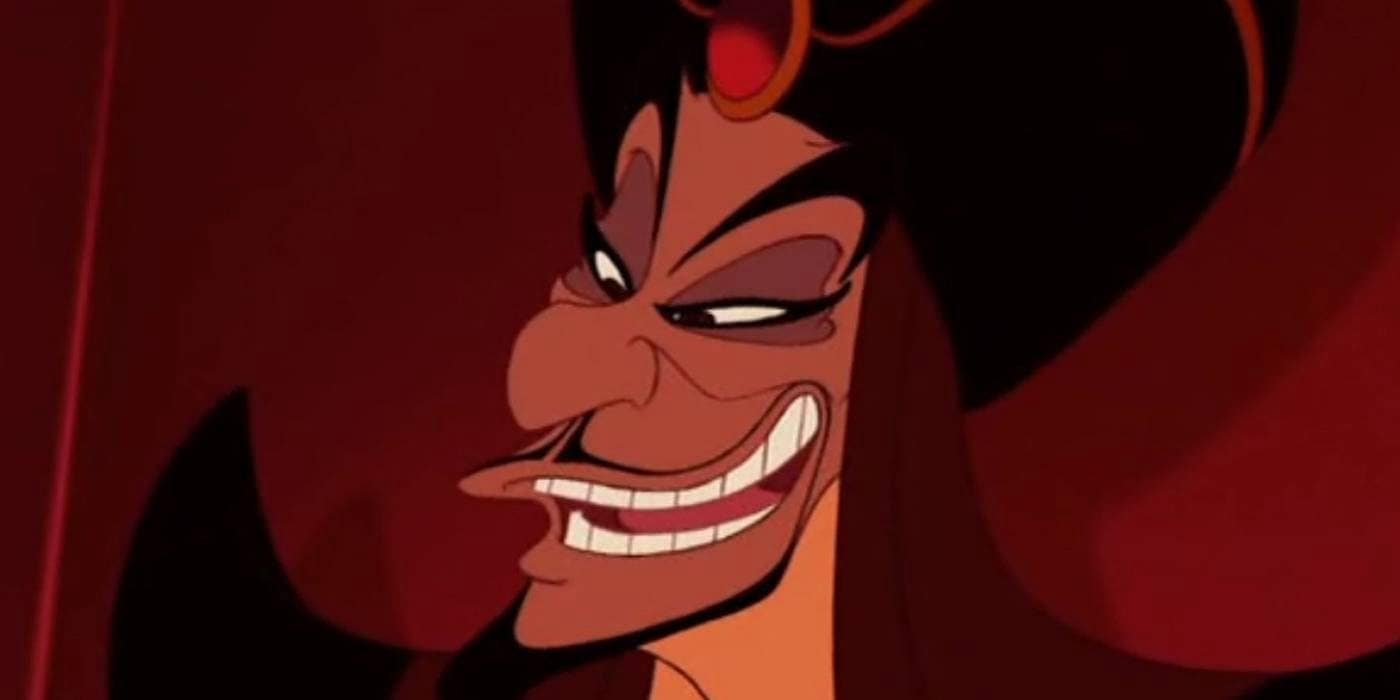
The Sultan in Aladdin is genuinely incompetent, and that gives Jafar’s frustration some texture. As grand vizier and advisor, he already ran Agrabah from the shadows. He could hypnotize the Sultan directly with his staff.
So the crown was never the point. Unlimited power was, which is why everything routes through the Genie’s lamp.
His body count and attempted body count tell you everything. Gazeem the thief dies in the Cave of Wonders because of him. He leaves Aladdin to die, then tries to kill him again on several occasions. People are pawns and nothing else.
Even after he gets the Genie, he doesn’t ease up. He mocks the Sultan like a puppet, imprisons Jasmine and intends to take her as his wife to satisfy his own lust and assert dominance, then tries to kill her when it doesn’t go his way.
His defeat is the most satisfying in the Disney catalog because his hunger for omnipotence is the thing that eats him.
No magic, still the worst of them
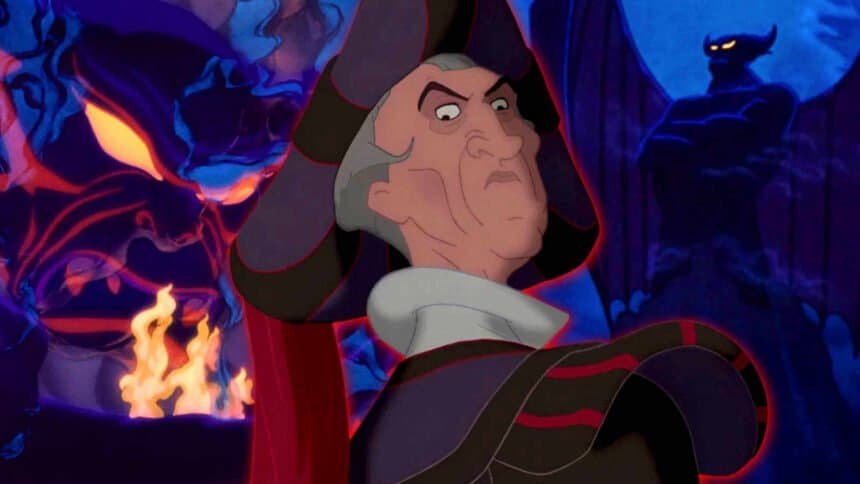
Judge Claude Frollo doesn’t have powers. That’s the whole argument for him being one of Disney’s greatest villains ever.
He came out of Victor Hugo’s novel and into an animated musical, and he still gets compared to antagonists with formidable supernatural abilities, because what he does lays bare the worst traits human beings are capable of.
He murdered Quasimodo’s mother. He trampled the boy for his entire life. He abuses his influence to commit genocide, running a systematic hunt for the Romani people, and he hides all of it behind his standing as a religious figure, invoking “divine will” and believing himself righteous the whole way.
Then there’s Esmeralda. He wants her, hates himself for wanting her, and resolves the contradiction by deciding to destroy her.
He could exist. That’s the horror. And The Hunchback of Notre Dame never once tries to justify him, which is why his ending lands as poetic justice and one of the grimmest deaths Disney has ever animated.
Kidnapping, mass murder and child slavery all turn up in Disney’s animated movies. The villains are darker than the reputation suggests.
The king from Disney’s biggest flop
The Black Cauldron was one of Disney’s biggest box-office failures, and it produced the purest distillation of evil in the library.
The Horned King has no backstory. None. Just a raw appetite for conquering the world, wrapped in a design that isn’t remotely human.
He tyrannizes his own goons and throws anyone who crosses him into his dungeon, from a wandering minstrel to a princess whose power turned out to be no use to him. He turns to forbidden dark arts and sacrifice to raise an army of invincible undead warriors, all so he can become “a god among mortal men” and be worshiped.
The Spanish dub just calls him “El Rey Del Mal.” The King of Evil. No notes.
His actual onscreen crime list is shorter than you’d think: the implied seizure of the castle he occupies, a kidnapped princess and a kidnapped pig, the hunt for a human sacrifice for the Cauldron Born, and repeated attempts on Taran and company. The ambition alone does the work. So does his death, which is genuinely disturbing.
The one Disney had to seal away
Chernabog barely does anything in Fantasia, and he’s still the darkest thing the company has ever put on a screen.
In the Night on Bald Mountain segment he doesn’t commit crimes in any conventional sense. He summons evil spirits. That’s the demonstration, and it’s enough. He’s since been recognized as a villain in both Mickey’s House of Villains and Kingdom Hearts.
He’s based on a deity from Slavic mythology tied to evil and darkness, which explains the demonic bearing. An immortal god with dominion over the forces of evil, calling up witches and ghosts and forcing them to dance in a pit of fire during his one waking night.
Here’s the detail that should keep you up: he’s sealed. Something decided he had to be contained. If Disney ever built a feature around him, it would be the most frightening thing in the vault.