
Instagram will start throttling accounts that show off AI-generated people without admitting it. That’s the part of Monday’s announcement that carries actual weight, because a label nobody has to use is just decoration.
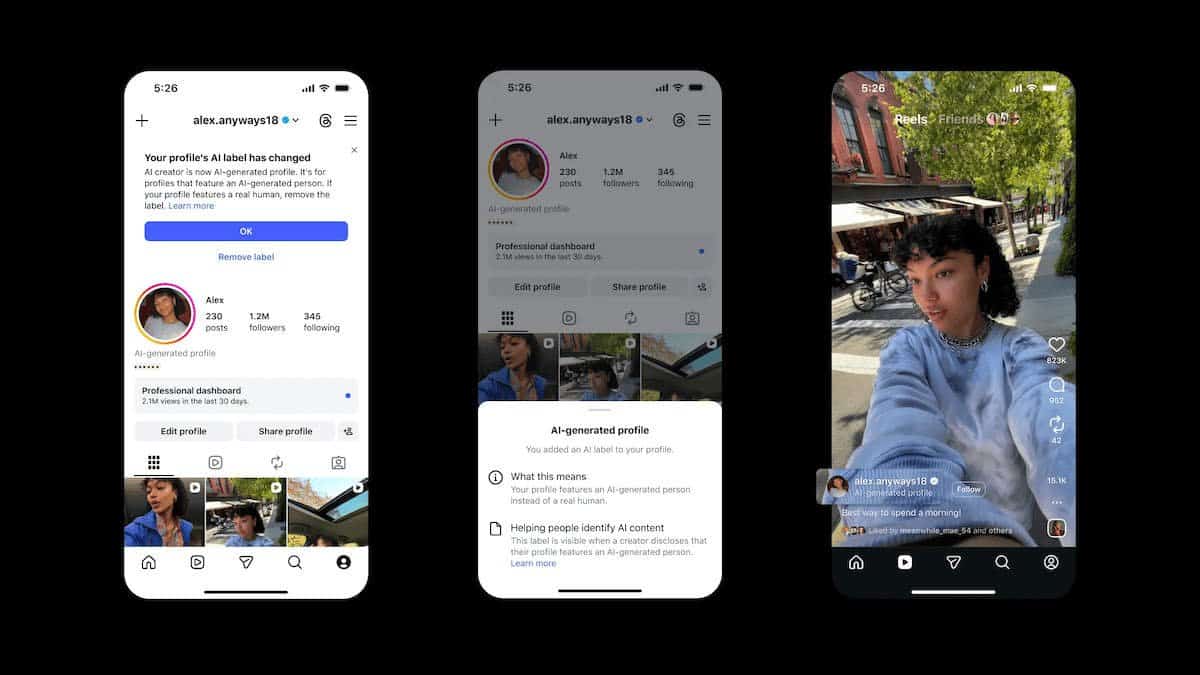
The company is renaming its “AI creator” label to “AI-generated profile.” Instagram says the new wording should make the disclosure easier to understand, and it’s meant to tell you that the person on the profile was generated or substantially created with AI.
Here’s the enforcement half. Creators who don’t properly label an AI-generated profile could see their reach reduced. Creators who do use the label won’t be penalized just for having an AI-generated person as their subject.
The label isn’t for everything you do with AI
Instagram is drawing a line between synthetic people and synthetic touch-ups. If you use AI to edit photos, polish captions, build graphics or make other creative tweaks, you don’t need the AI-generated profile label.
That distinction matters more than it sounds. Almost every phone camera on the market already runs computational processing on your shots, and a rule that swept all of that in would have collapsed into meaninglessness within a week.
Users found out the hard way first
Instagram says the change comes partly in response to people who stumbled onto profiles that looked like they belonged to real humans, then learned later the person was entirely AI-generated.
“As generative AI becomes a bigger part of how people create, we’ve heard that people don’t like seeing a profile that seems human, only to find out later that the person featured is AI-generated,” Instagram wrote. “They want to know when a profile features an AI-generated person.”
Note the framing. The company is describing a problem its users identified and complained about, not one it got ahead of.
The cases that made this unavoidable
Earlier this year, the gay dating app Goose became the subject of a Wired investigation after a network of apparently AI-generated male influencers promoted the app on Instagram. Wired found more than two dozen accounts that appeared to feature AI influencers, and some reportedly slid into potential users’ direct messages to push signups.
Health content is the uglier version of the same problem. The New York Times reported in July that it found hundreds of AI-generated doctors, healers and wellness personalities on social media promoting supplements or making health claims.
A fake fitness influencer costs you an ad impression. A fake doctor costs you something else.
Meta’s timing is doing a lot of work here
This announcement lands after Instagram took a beating over an AI tool that let users generate images using other people’s likenesses. Users objected to their public Instagram content being used without an explicit opt-in, and Meta pulled the feature.
And last week, Meta reached an $18 billion settlement with U.S. states over allegations about how Facebook and Instagram affect children and teenagers. The agreement brings a default two-hour daily usage limit for teens across both apps, a “Night Mode” block, muted notifications during school hours and other restrictions.
So the AI-profile policy arrives in the middle of a stretch where Meta is settling and reversing rather than shipping.
What to watch once it’s live
The policy’s credibility rests entirely on detection. Instagram hasn’t said how it identifies an unlabeled AI profile, and the accounts in the Goose network weren’t caught by a platform system, they were caught by reporters.
When you next hit a suspiciously flawless account in your recommendations, check for the “AI-generated profile” tag. If it isn’t there and the person still doesn’t look real, you’ve learned something about how well the reach penalty is working.