
LG says its new OLED panels can run 1.6 times brighter and last 2.4 times as long, while drawing 13 percent less power. The interesting part isn’t the numbers. It’s what LG had to throw out to get them.
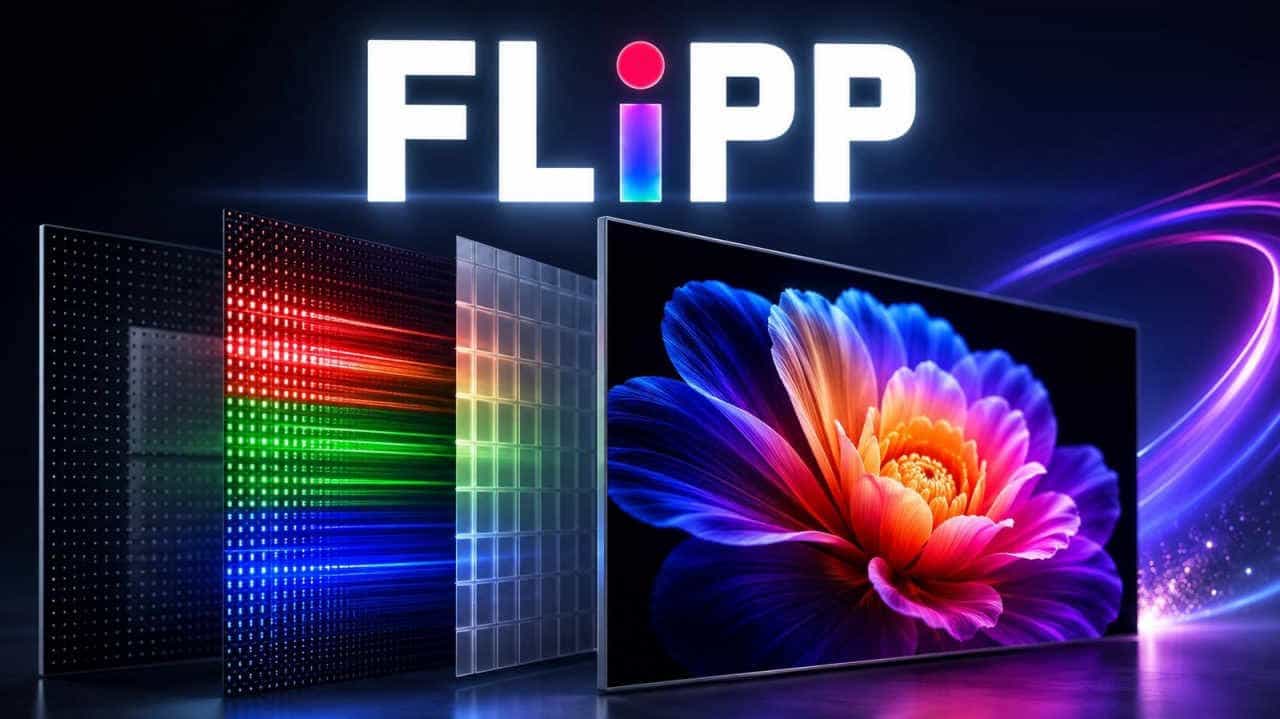
The company just unveiled a manufacturing method called FLiPP, short for FMM-less Innovative Pixel Patterning. It removes the metal masks that OLED production has leaned on for years, and it’s a reminder that a mature display technology can still have room left in it.
What a fine metal mask actually does
Normally, OLED panels are made using metal plates punched with tiny holes, called fine metal masks. Light passes through those holes to stencil organic LEDs into a pixel pattern. Think of it as a very small, very expensive spray paint template.
The problem is the template itself. Those masks are tricky and expensive to fabricate. And the bigger ones, the sizes you’d need for a TV panel, can sag, which makes them difficult to align.
That sag is a real ceiling, not a rounding error. It’s part of why scaling this kind of patterning up has been such a grind.
Photolithography instead of a stencil
FLiPP stencils RGB pixels PIXEL $0.005089 ▼ -16.3% directly onto panels in a precise order. Then it uses photolithography and UV light to “erase unnecessary areas during OLED pixel patterning,” LG explains.
No mask means no sagging mask. Which is how LG gets to its other claim: the technique is “free from panel size and resolution constraints.”
So the same process is meant to cover big-screen TVs and VR display panels, two categories that normally sit at opposite ends of the pixel density spectrum.
The mother glass test is the one to watch
Brightness and lifespan numbers are what get quoted. The yield figure is what changes prices.
In tests, LG said it was able to manufacture an OLED laptop panel on a single piece of mother glass, with up to 64 percent better utilization of that glass than previous tech.
“As a result, less substrate material is wasted and FLiPP directly translates into higher productivity and lower manufacturing costs,” the company said.
That’s LG’s framing, and it’s worth holding it at arm’s length until panels ship. But substrate utilization is one of the least hand-wavy metrics in display manufacturing. You either fit the panel on the glass or you don’t.
Tablets and monitors first, wearables and TVs later
This isn’t staying in a lab. LG said it will start using the tech in tablets and monitors, then expand to “cover a range of products from 1-inch wearable devices to ultra-large TVs… tailoring products to customer needs.”
A 1-inch wearable display and an ultra-large TV coming off related process tech is the whole pitch for dropping the mask.
The catch: there’s no word on when the first FLiPP-enabled OLED products actually reach the market. Until LG puts a date on that, the 1.6x brightness and 2.4x lifespan figures are lab claims on a process, not specs on a product you can buy.
If you’re shopping for an OLED monitor or tablet right now, none of this should change what you do this year. Watch for the first tablet or monitor LG announces with FLiPP inside, and check whether that 13 percent power reduction shows up in the battery rating.