
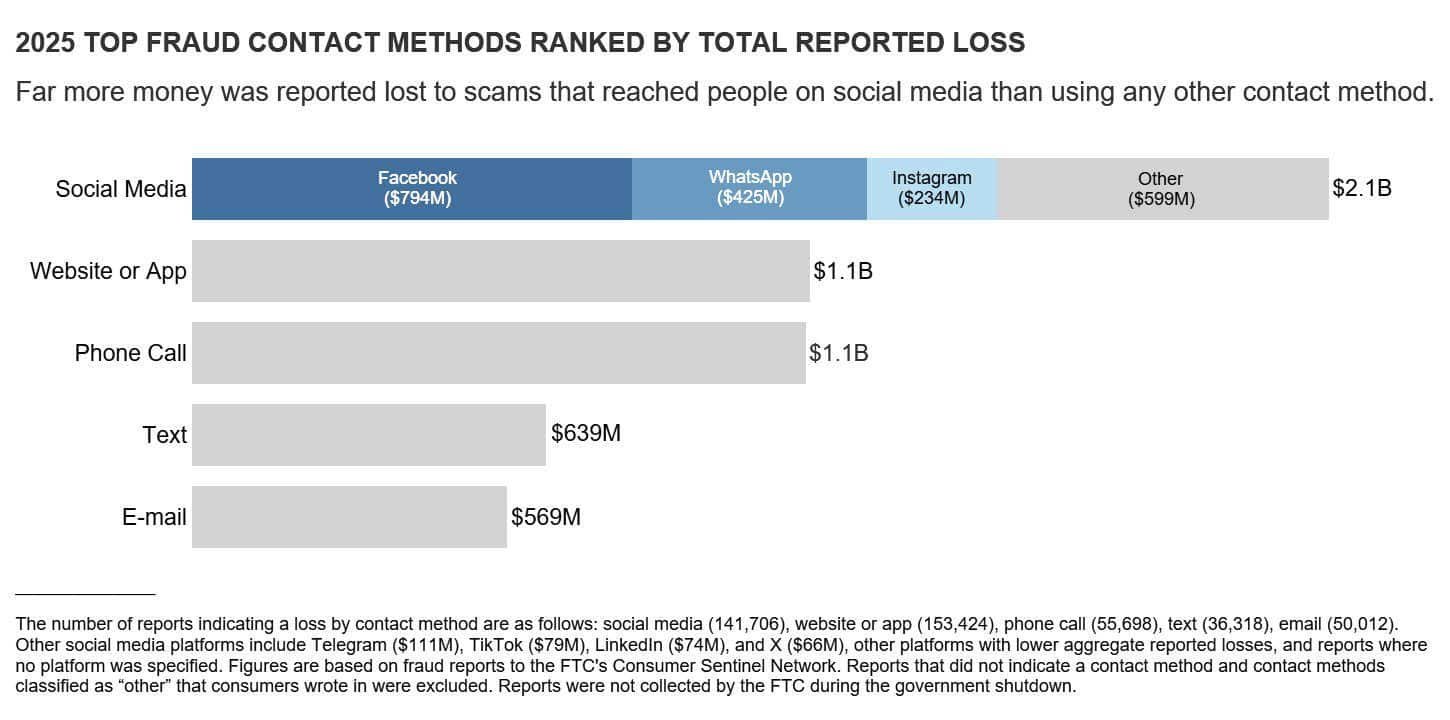
WhatsApp has more than 3 billion users, which makes it one of the biggest hunting grounds for scammers on the internet. The FTC said victims reported losing $425 million to scams via WhatsApp alone, out of more than $2.1 billion lost to social media scams in 2025.
Meta’s answer is a warning label. The company is launching an optional Scam Alert feature on WhatsApp that uses on-device machine learning to flag suspicious messages, rolling out in a limited beta.
What you’ll see when it fires
If the model identifies a message as a likely scam attempt, you see a warning inside the chat. The other person doesn’t see it.
From there it’s your call: block, report, or keep talking. That last option matters more than it sounds, because a classifier running on a phone is going to get things wrong.
Meta built an escape hatch for exactly that. If you decide a warning is incorrectly flagged, you can mark the chat as trusted. The warning disappears and Scam Alert won’t flag that chat again.
The part where you feed the model
Marking a chat as trusted also opens a second door. You can opt in to share the last 5 messages received with WhatsApp to help improve the feature’s accuracy.
It’s opt-in, and it’s tied to the moment you’ve already decided the conversation is harmless. Still worth understanding what you’re agreeing to before you tap it.
Meta’s privacy claims, in its own words
Meta says “no message content leaves the user device for classification” when its scam detection feature is turned on, and that nothing is “auto-reported to WhatsApp, Meta, or anyone else.”
That’s a narrower promise than it first reads. Classification stays local. The sharing is a separate, deliberate action you take.
You can also turn Scam Alert off at any time.
Not Meta’s first pass at this
Earlier this year, Meta launched scam detection for device linking requests on WhatsApp. Scam Alert extends the same idea from account takeover attempts into the chat window itself.
The scams in question aren’t subtle in hindsight: wire transfer requests, pig butchering setups that build trust over weeks before the ask. They’re devastating in the moment because they arrive as ordinary conversation.
An on-device model that reads suspicion into a message thread is a reasonable line of defense against that, and it’s also the kind of thing that will annoy you when it misfires on a message from a contractor you’ve never texted before. Turn it on when it reaches you, see how often it cries wolf, and remember the trusted-chat toggle is one tap away.