
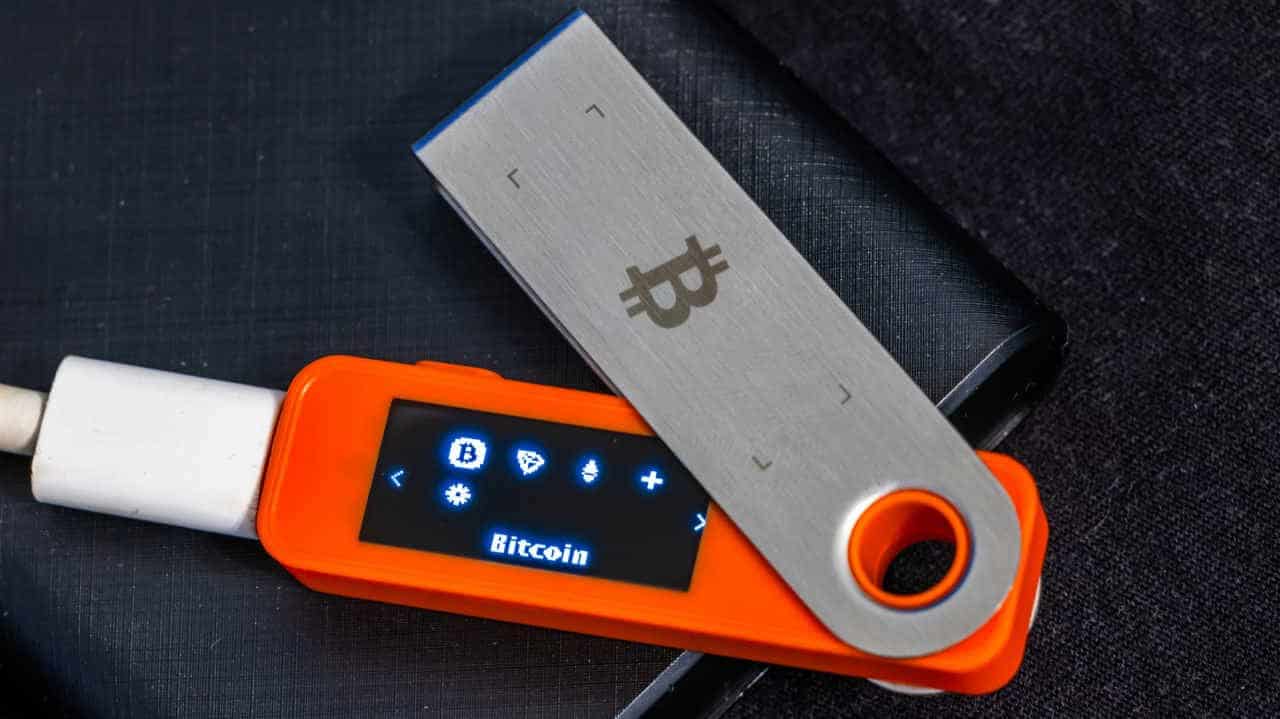

Thousands of Bitcoin walked out the door in July 2026 because of a software bug written in 2021. The wallets involved were cold. Offline. Air-gapped in the way the marketing promises. And they got drained anyway.
That’s the part nobody puts on the box, so let’s start there and work backward to what a cold wallet is, what it does well, and where the whole model has cracks.
The Coldcard bug is the best argument for and against cold storage
The exploit came down to randomness. Some Coldcard devices were generating weak or predictable private keys instead of pulling in true randomness. Generating a unique set of keys is step one for every wallet you’ll ever set up, and the entire security model rests on those keys being impossible to guess.
They were guessable. Attackers combed through the known list of potential wallets that Coldcard users had created, then initiated transactions remotely and emptied them. The devices stayed cold the whole time. Isolation didn’t matter, because the attackers never needed to touch the hardware.
Users scrambled. Update the device, generate a new wallet with genuinely random keys, move the assets before someone else did. Thousands of wallets were emptied before the race finished.
Your wallet doesn’t hold your crypto
Here’s the thing that trips up most people on day one. Despite the name, a cryptocurrency wallet doesn’t hold any funds inside it.
Think of your crypto as a balance recorded on a blockchain network like Bitcoin or Ethereum. Your wallet holds the cryptographic keys that prove you own that balance. It’s closer to an online bank account you sign into to manage your money than to the leather thing in your pocket.
Which is why the phrase gets chanted so often in online communities: not your keys, not your coins. Self-custody cuts out third-party risk, and given how many high-profile trading platforms have lost customer assets to security breaches over the years, that argument has aged well. The catch is that you’re now the entire security department.
Hot versus cold is one distinction, and it’s simple
A hot wallet lives on a device that can connect to the internet. A cold wallet stays offline. That’s it.
The isolation is the point. Keeping private keys away from anything an attacker can reach over a network raises the security floor for everything you own.
The most basic version is a paper wallet, which is what it sounds like: a physical piece of paper holding the private keys that unlock your crypto on the blockchain, usually written out as a list of 12 or 24 words. You still need an app or a program to authorize transactions through a process called signing. Paper stores, it doesn’t sign.
What the hardware is actually doing when you plug it in
Software wallets, the smartphone and desktop apps, are built around convenience. Sign from anywhere, do it fast.
Hardware wallets take the opposite approach and keep your private keys isolated on a dedicated device. You still open an app to start a transaction, but the signing happens entirely on the hardware, which is why you connect the thing over USB, Bluetooth or NFC.
Modern hardware wallets use tamper-resistant chips and other security features to make those keys as hard to extract as possible. The device never hands your private keys to whatever it’s plugged into. If the app on your phone or laptop is compromised, your balance is still fine.
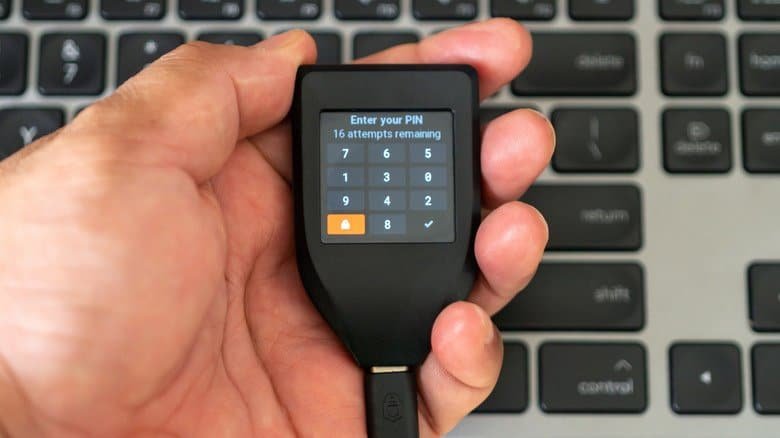
In practice the companion app can only pass along what’s needed to sign: the amount, the destination. Those details show up on the device’s own screen and you confirm the transaction by hand. The signed data goes back to the app, which broadcasts it to the network.
That separation is the whole definition of “cold.” Malware can’t siphon a key that never leaves the device. Someone with physical access to your phone and the companion app still can’t initiate anything. And if the wallet itself gets stolen, these devices typically require a PIN and will wipe their storage after a handful of wrong attempts.
Your phone already does a version of this
Cold storage isn’t exclusive to crypto hardware. Your smartphone has a tamper-resistant, encrypted chip that your PIN unlocks. Apple calls it the Secure Element.
Its role got wider when Apple opened up NFC to third-party developers in iOS 18.1, but it’s still reserved for specific sensitive data like your biometrics and Apple Pay transactions. A hardware wallet adds a layer the phone can’t: the keys aren’t on the phone at all.
None of which makes them untouchable, as July 2026 demonstrated.
Two habits worth more than the device you buy
No cold wallet is impenetrable. Companies like Trezor or Ledger publish their code publicly and are popular in the crypto community for exactly that reason, but publishing code isn’t a guarantee and you should still be careful.
The easiest measure is a passphrase, which locks your wallet behind a password only you know. Cheap, fast, and it means a stolen device is a brick.
Then write down your keys. Every hardware wallet gives you a way to export them as 12 or 24 words. Don’t store that backup electronically on your phone or computer, because doing so hands back everything the cold wallet was protecting. Some people etch the words into fire-resistant steel. A piece of paper works too, and a piece of paper in a drawer beats a screenshot in your camera roll every single time.





[…] No private keys were stolen. A legacy approveAndCall function let the attacker take over LayerZero delegate rights and mint unbacked SAND with no matching Ethereum deposit. […]