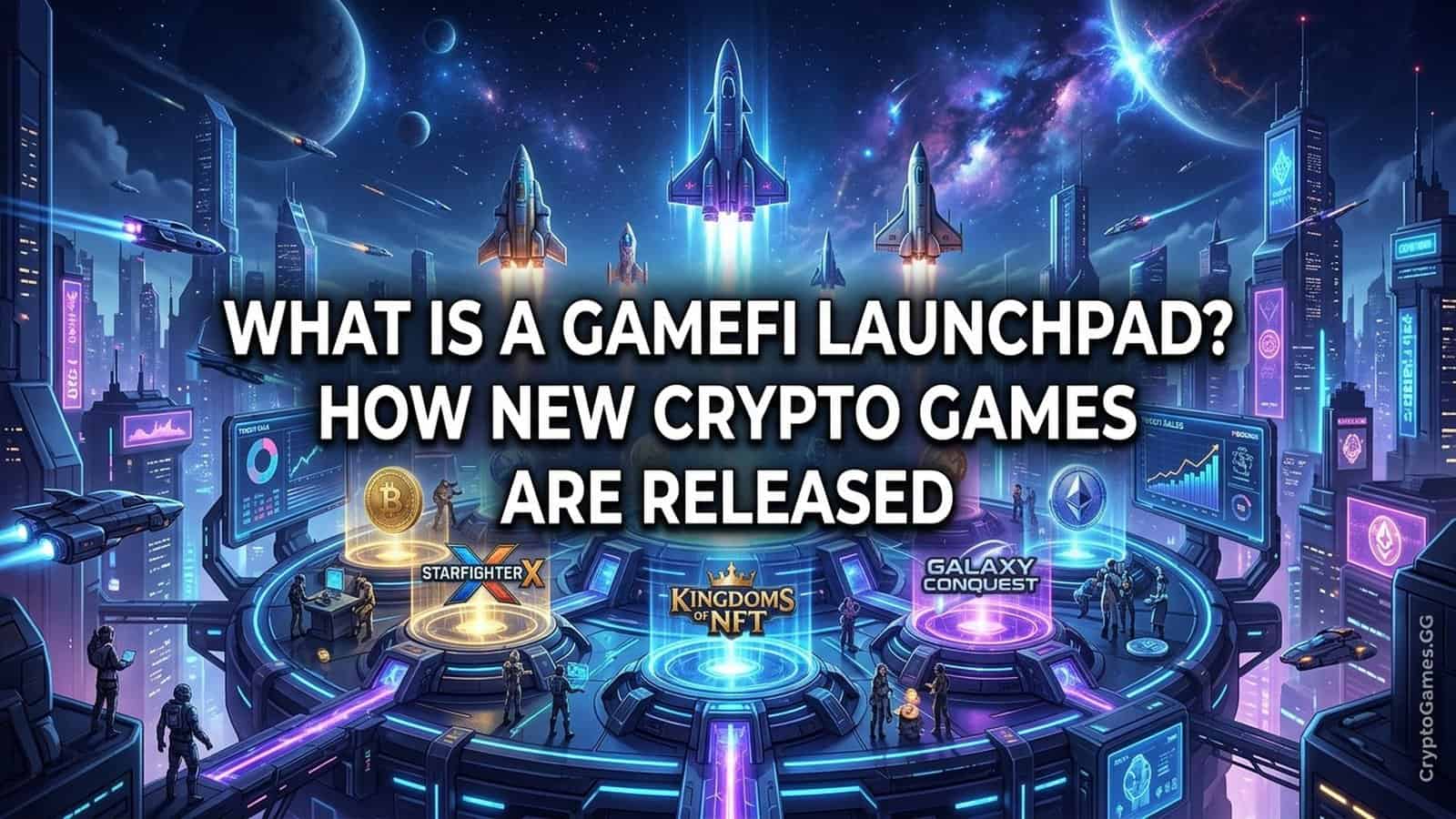

Every major blockchain game needs to fund development and distribute its initial tokens or NFTs to the community. GameFi launchpads are the platforms built for exactly this purpose. They connect early-stage blockchain game projects with investors and community members who want in at the earliest stage, often before the game is publicly playable. Understanding how launchpads work, what they guarantee, and what risks they carry is essential before committing any capital to a launchpad project.
Quick Answer: A GameFi launchpad is a platform where new blockchain games raise initial funding and distribute early tokens or NFTs to supporters. Games launch through Initial DEX Offerings (IDOs) or Initial Game Offerings (IGOs) on these platforms. Supporters stake platform governance tokens to get allocation rights. Early investors receive tokens or game NFTs before public launch, often at lower prices. The risk is that many early-stage projects fail to deliver working games.
What a GameFi Launchpad Actually Does
A GameFi launchpad serves several functions simultaneously. For the game developer, it provides early fundraising, community building, and credibility. Being accepted onto an established launchpad signals that the project passed at least some level of due diligence. For the investor, it provides early access to tokens or NFTs before they hit the open market, often at lower initial prices.
The launchpad itself earns fees from the projects it hosts, typically a percentage of the funds raised. Better launchpads also take an equity or token allocation in the projects they accept, aligning their economic interests with project success. A launchpad with meaningful token positions in every game it hosts has financial incentive to curate quality rather than simply host anything willing to pay listing fees.
Not all launchpads apply serious due diligence. In the 2021 boom, many platforms accepted virtually any project willing to pay fees. The reputation damage from failed projects launched through poorly curated platforms was significant. The more established launchpads in 2025 and 2026 have invested in more rigorous project evaluation to protect their own brand value.
IDO vs IGO vs INO: The Different Launch Types
IDO, or Initial DEX Offering, is the most common launch format. The project sells tokens through a decentralized exchange at a fixed or auction price. Participants who qualify through the launchpad’s staking system buy tokens before public trading begins. Token prices typically start lower than market price at launch, rewarding early participants.
IGO, or Initial Game Offering, is specific to gaming. Instead of tokens, the game offers early access rights, NFT packages, or in-game assets to supporters. An IGO might give supporters exclusive in-game items, founder status in the game’s community, or priority access to the game’s beta. IGOs are often combined with IDOs for game launches.
INO, or Initial NFT Offering, specifically offers NFT assets rather than fungible tokens. A game might launch its initial land parcels, character classes, or equipment sets through an INO before the game itself opens. INOs create early collectors who have a stake in the game’s success because their NFTs gain value if the game attracts a large player base.
How Staking for Allocation Works
Most GameFi launchpads require participants to stake the launchpad’s own governance token to qualify for allocation in new launches. The process typically works like this.
The launchpad has its own token, for example GAFI for GameFi.org or BSCPAD for BSCPad. To participate in upcoming launches, you must hold and stake a minimum amount of the launchpad’s token for a defined period, typically 7 to 30 days before the launch date.
Your tier level, based on how many tokens you stake, determines your allocation size. Higher staking tiers get larger guaranteed allocations. Lower tiers may participate in lottery-based allocation, where a random selection of eligible participants receives spots in the launch.
After a launch, there is usually an unlock schedule for purchased tokens. Receiving all tokens immediately at launch would create instant selling pressure and crash prices. Responsible launches spread token unlocks over months with an initial cliff period where no tokens can be sold at all.
The Major GameFi Launchpads in 2026
GameFi.org is one of the oldest dedicated gaming launchpads, with a reputation built on hosting multiple significant launches. The platform combines IDO, IGO, and NFT staking functions with a game aggregator that lets players find and track games regardless of which chain they are on. Their portfolio includes projects across multiple blockchains and game genres.
Seedify specializes in blockchain game and metaverse project launches. The SFUND token governs allocation rights across their platform. Seedify has launched over 100 projects and has developed a reputation for more rigorous project evaluation than some competitors.
Enjinstarter focuses specifically on blockchain gaming and metaverse projects built on Ethereum-compatible chains. The platform has a strong presence in Southeast Asia markets where blockchain gaming adoption is particularly high.
Polkastarter has expanded beyond its initial cross-chain focus to include gaming projects specifically. With a broad user base and established infrastructure, it offers gaming project launches with significant reach into the wider crypto community beyond gaming-specific audiences.
Note: The launchpad landscape evolves rapidly. Always verify current platform status and recent launch track records before staking capital. Several launchpads that were prominent in 2021 and 2022 have scaled back operations or closed entirely.
How to Evaluate a Launchpad Project Before Investing
The most important decision in launchpad participation is not which launchpad to use. It is which specific project to invest in. Here is the research process.
Does a playable game exist? The single most important question. If the launchpad project has no working game, you are buying tokens for a game that may never ship. Check whether a beta, alpha, or demo is publicly available. If not, assess whether the team’s credentials justify confidence in future delivery.
Who built the team? Research every named team member. Verify LinkedIn profiles and work history. Does the team have actual game development experience, or only crypto experience? A team that has shipped traditional games before has a track record of completing products. A crypto-only team has a track record of shipping tokens.
What do the tokenomics look like? Check total token supply, the project allocation percentage (team and investors), vesting schedules, and the unlock timeline. Heavy team allocations with short vesting periods create selling pressure. Ask specifically what mechanisms remove tokens from circulation once players earn them.
What has the launchpad accepted before? Research the track record of previous projects from this specific launchpad. How many delivered a working game? How many tokens from their launches still have value six months post-launch? A launchpad with a strong success rate on past projects is a better signal than a launchpad with impressive marketing but a history of failed launches.
The Risks of GameFi Launchpad Participation
Project failure. Many projects that raise capital through launchpads fail to deliver working games. Some teams disappear after raising funds. Others build incomplete products and abandon development when enthusiasm wanes. Entry into any launchpad project should assume the possibility of total loss.
Token price collapse at launch. Even for projects that deliver working games, immediate selling pressure after token unlock can crater prices below the launchpad purchase price. Early VCs, team members, and launchpad participants with short unlock periods all sell into market simultaneously. Your allocation may be worth less shortly after trading begins than what you paid at launch.
Launchpad token risk. To participate in launches, you must hold and stake launchpad tokens. If the launchpad itself declines in reputation or user base, those tokens lose value independent of any individual launch outcome. You are taking on two layers of risk simultaneously.
Smart contract exploits. Early-stage projects with new, often unaudited smart contracts are higher risk for security vulnerabilities. Always check whether a project’s contracts have been audited before sending funds to any launchpad offering.
Launchpad vs Direct Market Purchase: Which Is Better
Launchpad participation gives you early access at lower prices, but requires capital locked in launchpad staking tokens and exposure to early unlock selling pressure. Direct market purchase is available to anyone after listing, at market prices, but without the lock-up requirements and with better information about how the project has performed since launch.
For most non-professional investors, direct market purchase after launch is safer. You can see how the game is actually performing, whether the player base is growing, and whether the token price has stabilized after the initial unlock pressure. Launchpad participation makes most sense for experienced investors with high conviction in specific projects who understand how to size positions given the binary outcomes involved.
Frequently Asked Questions
What is an IGO in gaming crypto?
IGO stands for Initial Game Offering. It is a fundraising format where a blockchain game sells early access rights, NFT assets, or tokens to supporters before the game’s public launch. An IGO is similar to an IDO but specifically structured around game-related assets rather than purely financial tokens.
Are GameFi launchpads safe?
The launchpad infrastructure itself is generally safe when using established platforms. The risk is in the individual projects they host. Many projects launched on GameFi platforms in 2021 and 2022 failed to deliver games, and their tokens became worthless. Research each project independently before participating, regardless of which launchpad hosts it.
How much do I need to participate in a GameFi launchpad?
Entry amounts vary significantly by launchpad and tier. Some platforms allow lottery participation with smaller holdings of the launchpad’s governance token. Higher-tier guaranteed allocations typically require thousands of dollars equivalent in staked launchpad tokens. Research the specific platform’s tier requirements before planning any participation.
Can I lose money on a GameFi launchpad?
Yes, absolutely. Tokens bought through launchpads can become worthless if the project fails to build a real game or if selling pressure collapses the token price after launch. Always invest only amounts you can afford to lose entirely. The early-access discount from launchpad participation does not eliminate the investment risk.
GameFi launchpads are a real part of the blockchain gaming ecosystem and have helped fund some successful games. They have also facilitated significant capital losses when projects failed. The discipline to research projects deeply before participating, combined with position sizing that reflects the binary outcome risk, is what separates successful launchpad participants from those who repeatedly lose capital on promising-sounding projects that never ship.