

In Brief:
- Saga has sold operational control of its crypto network to Alapin Holdings and launched Saga AI Labs.
- The new focus is on persistent AI characters across various platforms, moving beyond traditional gaming interactions.
- Despite over 23 million transactions since early 2024, the network struggles to attract developers.
Saga shifts to AI focus
Saga is reorienting itself from blockchain operations to focus on AI. The company has handed over control of its network to Alapin Holdings, part of dao5, while establishing Saga AI Labs to spearhead new initiatives.
This pivot follows significant growth in Saga’s AI agent business. The new strategy allows for a concentration on AI-driven digital characters and autonomous software agents. Saga reports over 23 million transactions processed on its blockchain since its launch in early 2024, with more than $2 billion in total value moving through the network.
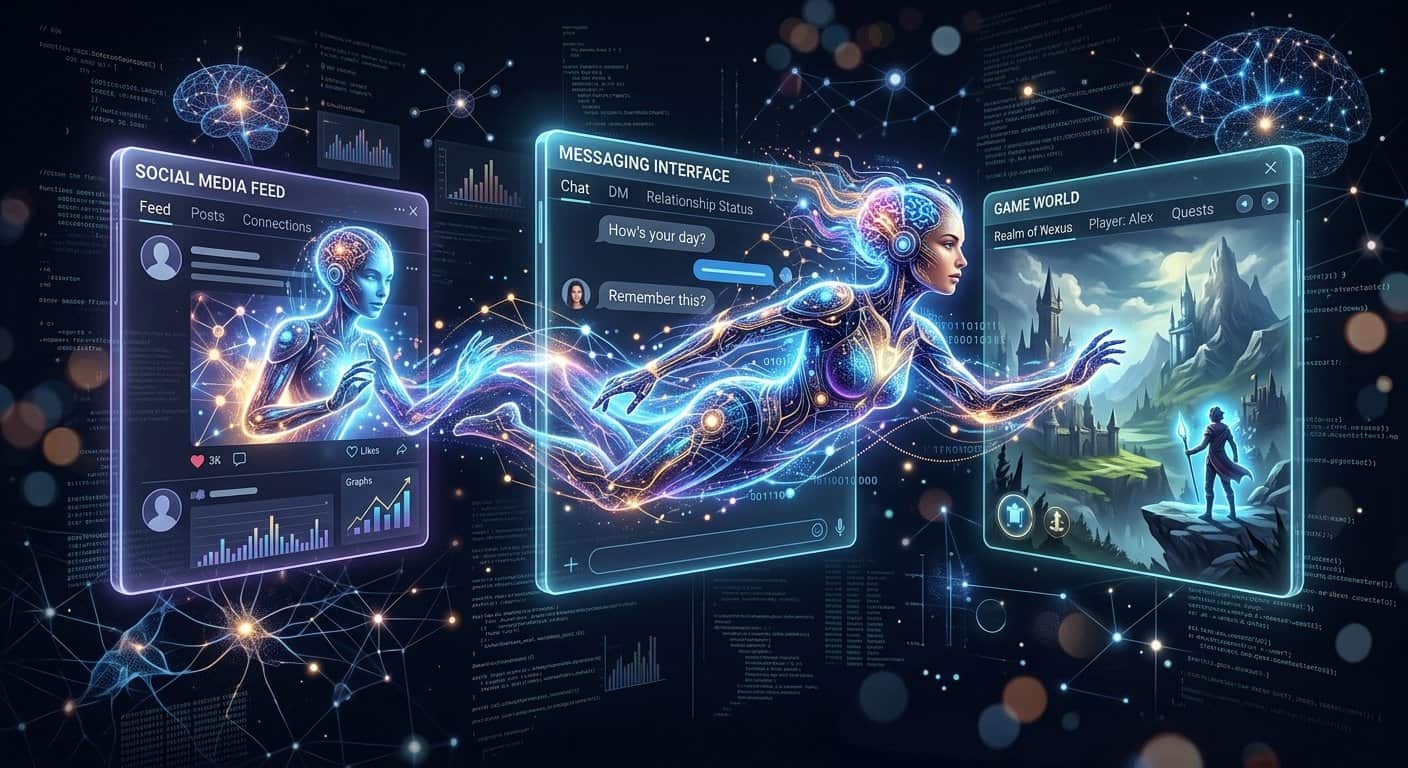
But the blockchain has had difficulty attracting developers, particularly in the gaming sector. To address this, Saga AI Labs will investigate “synthetic relationships,” aiming to create persistent AI characters that engage users across social media, messaging apps, and digital marketplaces. This approach seeks to transform characters from static assets into dynamic personas capable of interaction.
Saga is already testing this concept through collaborations with gaming partners. Notably, it has developed an AI version of Willy, the host from Trivia Crack, in partnership with Etermax. Other projects include Crystal Beaumont, an influencer-style AI tied to Diamond Jewels, created with GFAL, and an AI community manager for BONOXS Arena in collaboration with BONOXS.
This strategy leverages familiar concepts, allowing publishers to enhance engagement without reinventing gameplay. AI agents can expand a game’s interaction potential, making them easier to market than abstract blockchain concepts.
While blockchain may continue to serve as a transaction layer, the focus is shifting to the consumer experience, where AI adds tangible value. Saga’s transition signals a new phase in digital entertainment, emphasizing characters that engage and maintain audience interest beyond the initial gaming experience.