
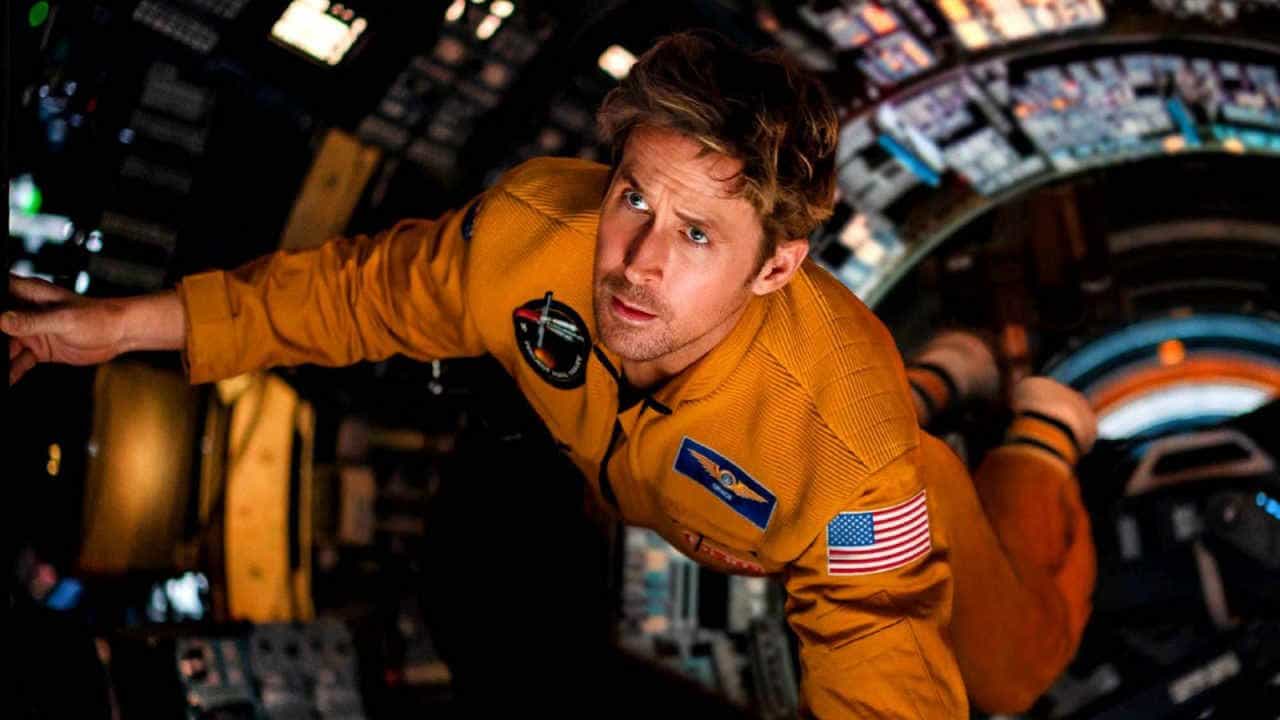

Ryland Grace wakes up on a spacecraft with no memory of boarding it, no idea who he is, and a dead crew for company. Then he does math. A lot of math. And somehow that’s the best part.
Project Hail Mary has already locked in its place as one of 2026’s standout science-fiction movies, with Ryan Gosling playing a man who discovers that solving an astronomical crisis may be humanity’s last chance. Like Andy Weir’s earlier The Martian, it makes experiments, calculations and scientific problem-solving genuinely exciting.
That lands it squarely in hard science fiction, the branch of the genre that cares more about scientific plausibility and technical detail than laser fights. The definition gets fuzzy at the edges, especially once alien life and theoretical physics enter the picture, but there’s still a real difference between this stuff and the fantastical space opera crowd.
Plenty of sci-fi movies make fine Project Hail Mary double features. This isn’t that list. The bar here is higher: generations of filmmakers got there first with movies that are more rigorous, stranger or simply more ambitious about the questions science can raise.
Calling any of them “better” is subjective, particularly given how well Project Hail Mary balances dense scientific ideas with blockbuster entertainment. Each of these makes its case anyway.
The one that started this whole conversation
You can’t talk about Project Hail Mary without circling back to Weir’s breakout story. Ridley Scott’s The Martian stars Matt Damon as Mark Watney, an astronaut accidentally left behind on Mars after his crew believes he’s died. Survival becomes a sequence of problems to solve: food, water, a way to reach NASA.
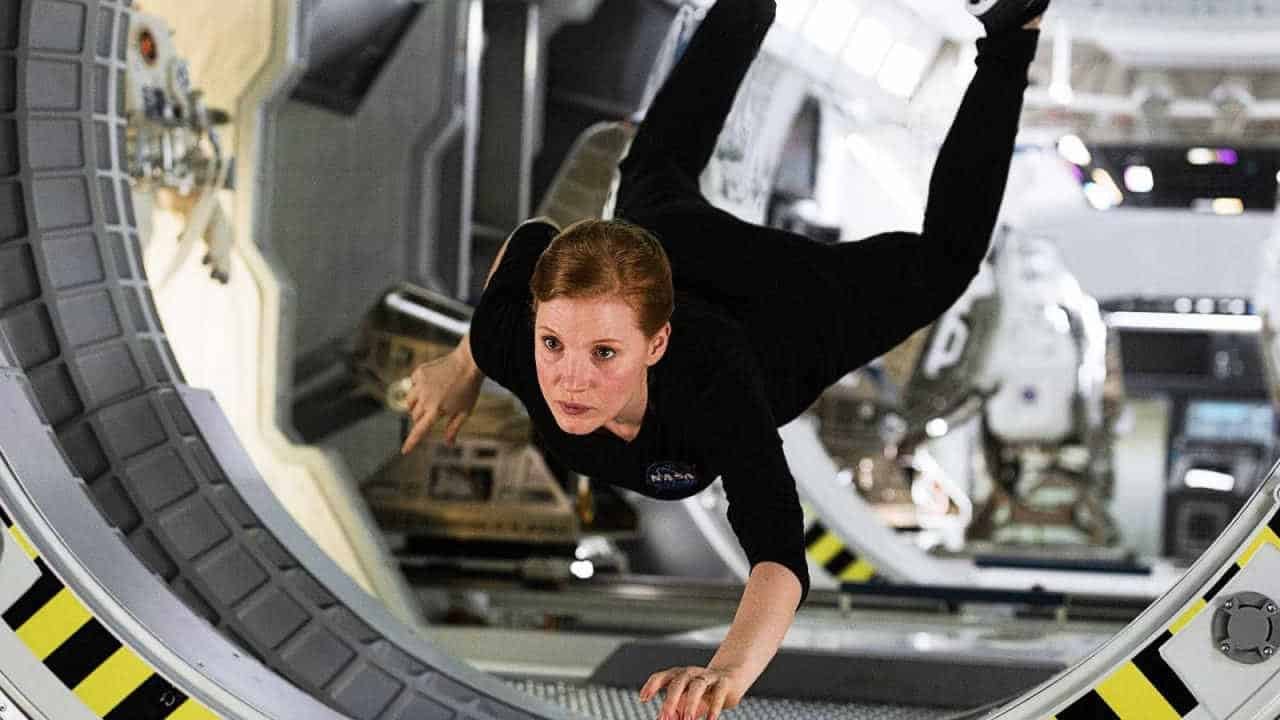
Yes, it takes liberties. That Martian windstorm is famously exaggerated. But the pleasure is watching Watney think his way out of impossible corners, and every breakthrough feels earned.
Project Hail Mary is the bigger production, with a reported budget nearly twice that of The Martian. Scott’s movie is arguably the more disciplined one. Smaller scale, tighter focus on ingenuity.
Three years alone is its own kind of physics
Duncan Jones’ Moon (official site) goes the opposite direction from Project Hail Mary’s vastness. Sam Rockwell plays Sam Bell, the only worker at a lunar mining facility nearing the end of a three-year contract. His regular companion is GERTY, an artificial intelligence voiced by Kevin Spacey. As Sam’s health starts to fail, he learns his straightforward assignment is hiding something disturbing.
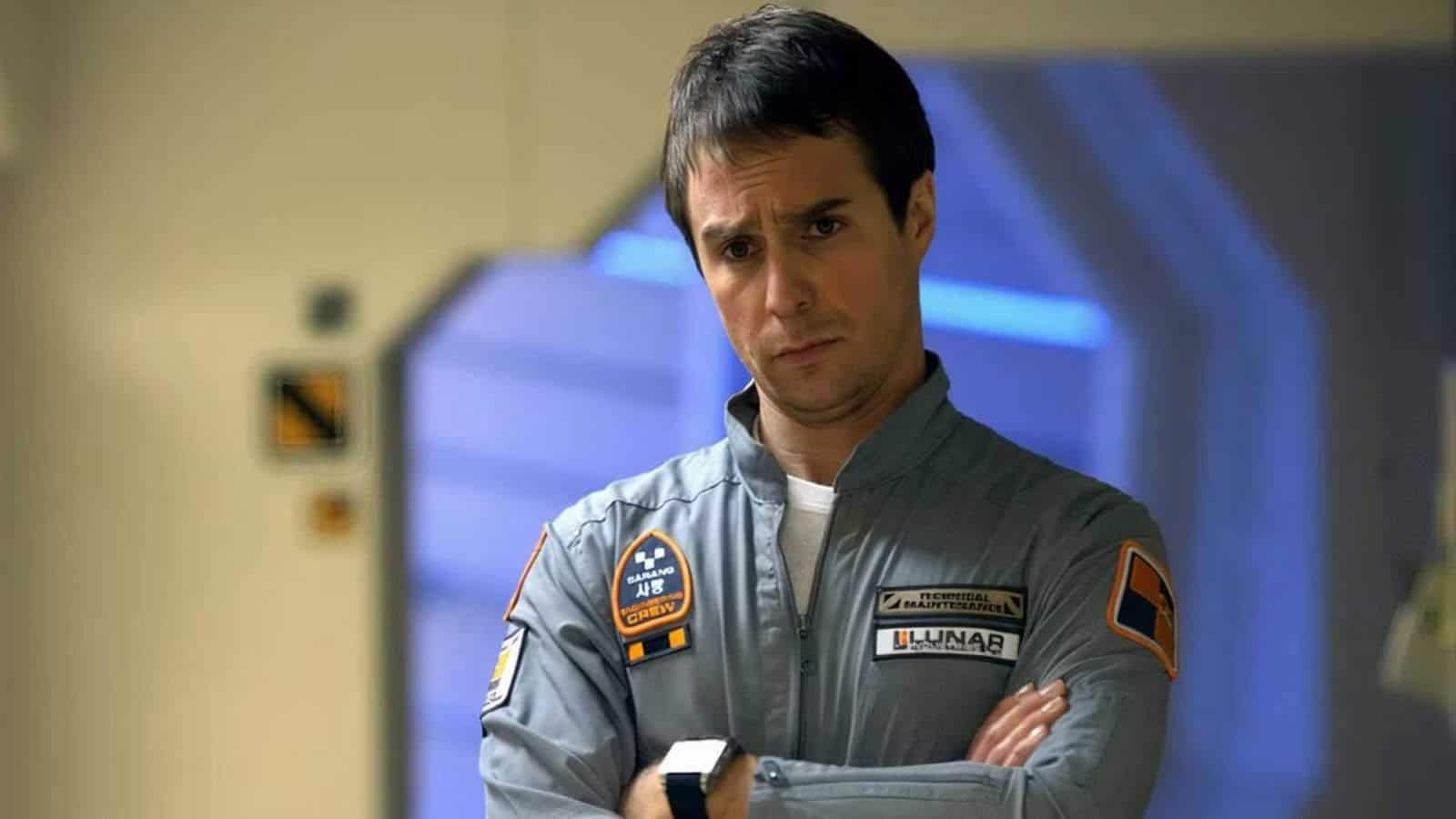
The technology stays speculative, but the stripped-down setting makes the whole thing feel unnervingly plausible. Isolation matters as much as engineering here, and the economics of exploiting workers in space give the story an edge Project Hail Mary never goes looking for.
Rockwell carries nearly the entire movie by himself. What could’ve been a clever puzzle becomes something personal and deeply unsettling.
What if first contact wrecked us instead of saving us
Adapted from Carl Sagan’s novel, Robert Zemeckis’ Contact treats discovering alien life as the greatest scientific breakthrough in human history rather than an action beat. Jodie Foster stars as SETI astronomer Ellie Arroway, who detects a signal from Vega. Buried inside it are instructions for building a mysterious machine, which sets off an international fight over what humanity does next.
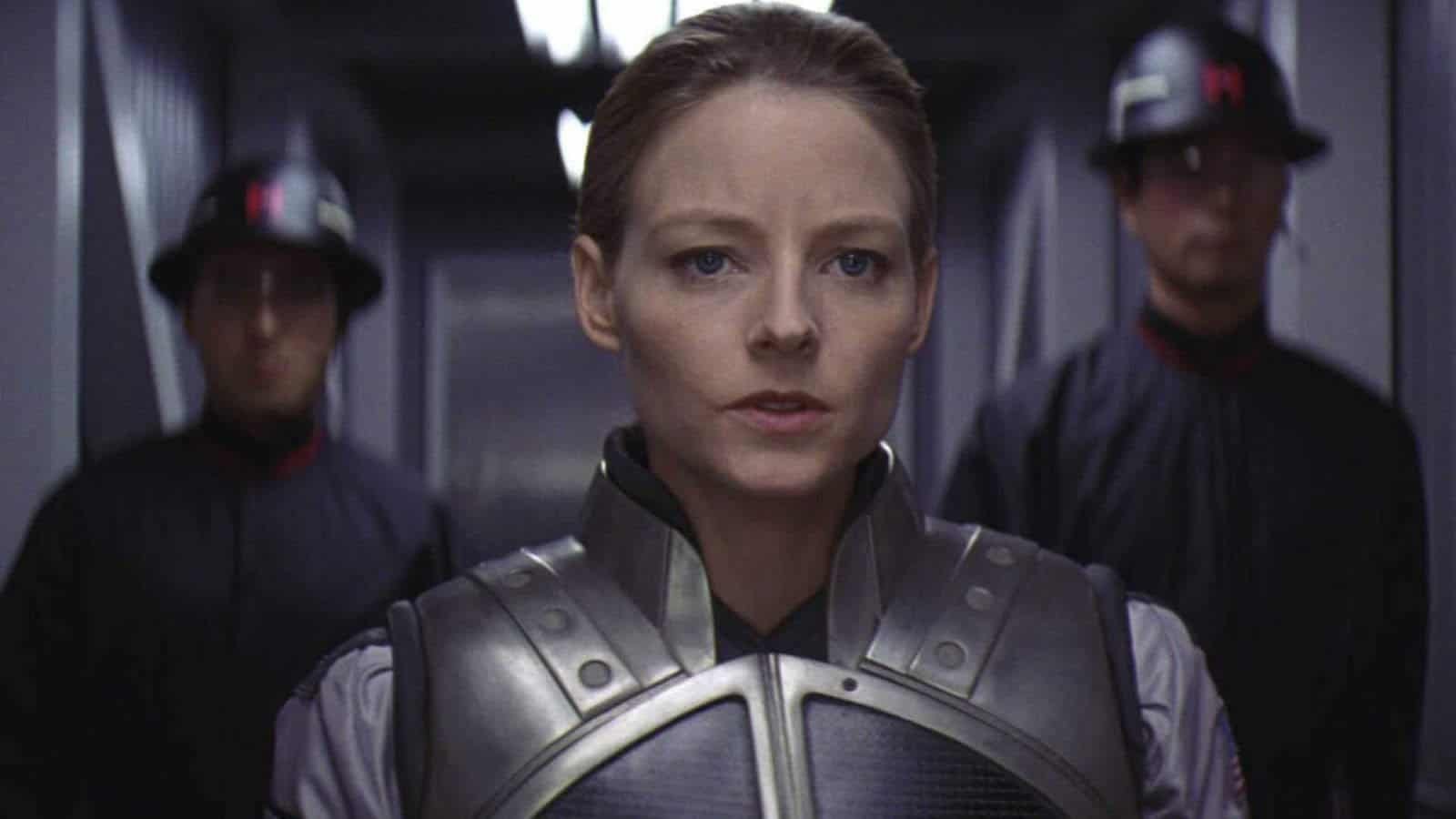
Project Hail Mary finds enormous heart in first contact. Contact asks the harder question of what such a discovery would do back on Earth, where science runs headlong into government bureaucracy and religious belief and Ellie keeps slamming into the limits of proof.
It’s less immediately crowd-pleasing than Weir’s story. It’s far more curious about the people waiting at home.
The alien movie where nobody fires anything
Denis Villeneuve’s Arrival also opens with extraterrestrial visitors, but its scientific problem is language. Amy Adams plays linguist Louise Banks, recruited after 12 alien spacecraft appear around the world. No weapons, no reverse-engineered gadgets. Louise has to build a shared language with beings whose entire concept of communication is radically different from ours.
The film borrows from linguistic relativity, then pushes well past established science, especially in how language reshapes Louise’s perception of time. That leap earns its keep emotionally.
Project Hail Mary makes cross-species communication charming and ingenious. Arrival works the same territory through a much stranger lens, and its final revelation rewrites everything you thought you’d been watching.
The movie that refuses to explain itself
Shane Carruth’s Primer has less interest in simplifying its science than almost any film ever made. Engineers Aaron and Abe build something in a garage that turns out to manipulate time. What starts as a technical problem spirals as the consequences get harder to control.
Carruth trained as an engineer, and he lets his characters talk like technically-minded people instead of pausing to brief the audience. The result is bewildering, and Primer is still notorious for how tangled its time travel gets.
Where Project Hail Mary makes hard science wonderfully accessible, Primer won’t translate a word of it. If you’re willing to do the work, that’s the whole appeal.
Blockbuster money, actual physics
Christopher Nolan’s Interstellar scales hard sci-fi concepts up to tentpole size. Crop failures threaten Earth’s future, so former NASA pilot Cooper (Matthew McConaughey) joins a mission through a wormhole hunting for another habitable world. The crew runs into gravitational time dilation and the enormous black hole Gargantua.
Nolan worked closely with theoretical physicist Kip Thorne, and the film’s approach to space science became an unusually significant part of its development. Astrophysicists have praised the accuracy of its black hole visuals, even as other elements drift into pure speculation.
Project Hail Mary is easier to follow. Interstellar takes bigger intellectual risks, and Miller’s planet alone turns relativity into a devastating dramatic device.
The mission where nobody saves the day
Europa Report imagines a privately funded trip to Jupiter’s moon Europa, where evidence suggests an ocean may exist under the ice. Told largely through footage recovered from the spacecraft, it follows an international crew traveling farther than any humans have gone, hoping to find signs of extraterrestrial life.
The found-footage approach could’ve been a gimmick. Instead it gives the mission a documentary texture. Procedures matter, equipment fails and talking to Earth is never conveniently instant.
There’s no resident genius here pulling the right answer out at the right moment. Europa Report is colder and much less sentimental than Project Hail Mary, and letting scientific curiosity walk smart people straight into danger gives it an eerie authenticity.
Hard sci-fi without a single spaceship
Robert Wise’s The Andromeda Strain, adapted from Michael Crichton’s novel, proves you don’t need to leave the ground. A military satellite crashes near a small New Mexico town, nearly every resident dies, and scientists get sealed into an underground laboratory to figure out what killed them. The trail leads to a lethal extraterrestrial microorganism the satellite brought back.
This plays like an investigation, not a disaster thriller. Microscopes and containment procedures over explosions, with the scientists spending most of the runtime just trying to understand what’s in front of them.
Project Hail Mary has far more warmth. The Andromeda Strain is more committed to the grinding reality of scientific discovery, and more than 50 years on, its clinical approach still makes the danger feel disturbingly credible.
The dystopia built entirely out of blood tests
Andrew Niccol’s Gattaca drags hard science fiction back to Earth. Ethan Hawke plays Vincent Freeman, born without genetic selection in a future where DNA determines social status and career prospects. Desperate to get into space, Vincent assumes the genetic identity of Jerome Morrow (Jude Law) to infiltrate the elite aerospace corporation Gattaca.
No spectacular futuristic machinery. The dystopia runs on genetic screening and the temptation to reduce human potential to biological data, which is exactly why Gattaca is still praised for how plausible its world feels.
Project Hail Mary celebrates science as the thing that beats impossible odds. Gattaca is suspicious of it, asking what happens when scientific progress turns into one more way to decide who gets a shot.
Kubrick got there in 1968 and we’re still catching up
Stanley Kubrick’s 2001: A Space Odyssey is the benchmark serious cinematic science fiction gets measured against. Co-written with Arthur C. Clarke and released a year before the Apollo 11 moon landing, it tracks humanity from prehistoric origins into a spacefaring future, eventually joining the crew of Discovery One on a mission toward Jupiter under the supervision of HAL 9000.
Its weightlessness, its spacecraft movement, its silence: all of it still holds up more than half a century later. But Kubrick was just as interested in artificial intelligence and the possibility that our evolution might be tied to forces we can’t comprehend.
Project Hail Mary is warmer and much easier to love. 2001 is playing a different game entirely.
Modern hard sci-fi is still wrestling with the questions Kubrick put on screen in 1968, and Gosling waking up alone on that ship is one more attempt at an answer.



[…] own suggestions are modest: travel alerts tied to an upcoming trip, or a notification when new movies and shows land on the streaming services you use. A morning summary of the day’s headlines from your preferred news site works too, though […]