
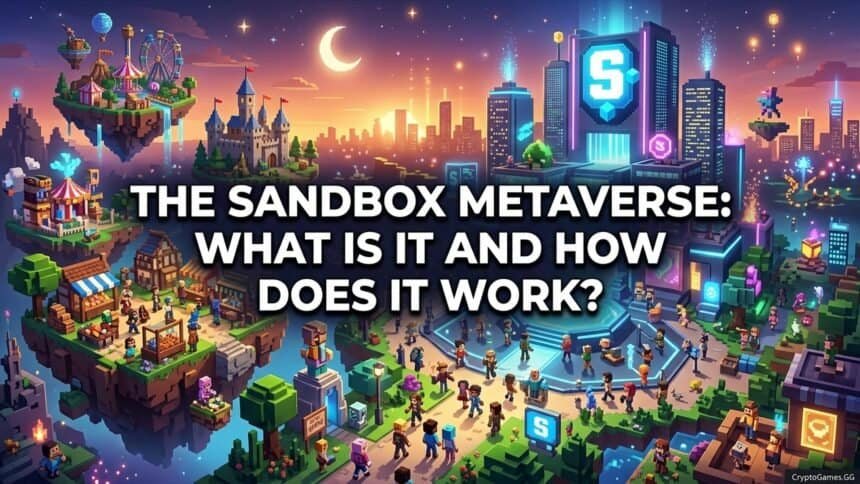
The Sandbox Metaverse: What Is It and How Does It Work?
The sandbox metaverse is a blockchain-based virtual world where everything of value, the land parcels, the in-game assets, and the currency, is owned by players rather than a central company. Built by Animoca Brands subsidiary The Sandbox team, it is one of the most ambitious implementations of player-owned virtual worlds in existence. Hundreds of major brands, entertainers, and gaming IPs have established presences on The Sandbox’s virtual map. Here is an honest explanation of how it works and what it actually is in 2026.
Quick Answer: The Sandbox is a virtual gaming metaverse built on Ethereum where players purchase virtual land parcels as NFTs, build and monetize games and experiences using a voxel-based game maker, and use the SAND token for all economic activity. Land is permanently scarce at 166,464 total parcels on the virtual map. Notable brands including Snoop Dogg, Warner Music Group, Atari, and hundreds of others have purchased Sandbox land. The SAND token governs the platform and serves as the primary in-world currency.
Table of Contents
- What The Sandbox Actually Is
- How Land Ownership Works
- The SAND Token: Utility and Governance
- Game Maker: How Players Build Experiences
- Major Brand Presences in The Sandbox
- How to Earn in The Sandbox
- LAND Price History and Speculation
- The Honest Assessment: Strengths and Weaknesses
- Frequently Asked Questions
What The Sandbox Actually Is
The Sandbox started as a mobile and PC game where players built with voxel blocks. The French studio Pixowl built the original game. Animoca Brands acquired Pixowl in 2018 and rebuilt The Sandbox with blockchain-based land ownership and the SAND token economy at its core.

The platform has three interconnected products. First, The Sandbox Game, which is the virtual world itself where players explore, play games built by other creators, and interact with branded experiences. Second, Game Maker, the free tool that lets players and creators build games and experiences on their land using voxel assets. Third, VoxEdit, the tool for creating wearables, avatars, and in-world assets that can be sold in The Sandbox marketplace.
The vision is a user-generated virtual world where all content creation is done by the community rather than a central studio. Players build the games. Players create the assets. Players run the events. The platform provides the technical infrastructure, and the SAND token and NFT land parcels provide the economic layer that gives creators ownership of what they build.
How Land Ownership Works
The Sandbox map is a fixed grid of 166,464 LAND parcels. Each parcel is an ERC-721 NFT on Ethereum. The total number of parcels is fixed and encoded in the smart contract. No additional land can ever be created. This fixed supply is the fundamental scarcity mechanism behind LAND value.
LAND parcels come in different sizes and configurations. A single LAND is the base unit. An ESTATE is a group of adjacent LAND parcels that can be managed as a unit. ESTATEs enable larger, more complex experiences than single LANDs allow. Premium LANDs near high-traffic neighbor plots or central hub areas command higher prices than parcels in less-traveled areas of the map.
LAND ownership gives creators a permanent address in the virtual world. Whatever you build on your LAND belongs to you. If The Sandbox platform ever shut down, the LAND NFT would remain in your wallet permanently. Whether it would retain value depends on whether other platforms emerge to serve as clients for the same on-chain land records.
LAND owners can monetize their parcels in several ways. They can build and charge admission to experiences. They can host sponsored events for brands. They can lease their LAND to other creators who want a Sandbox presence without purchasing land outright. They can simply hold and speculate on land value appreciation.
The SAND Token: Utility and Governance
SAND is the ERC-20 utility and governance token of The Sandbox ecosystem. All economic activity in the platform uses SAND. Purchasing LAND requires SAND. Buying assets in the marketplace uses SAND. Game creators charge admission in SAND. Event tickets sell for SAND.
SAND holders can stake their tokens to earn additional SAND rewards through The Sandbox’s staking program. Staking also grants voting rights in The Sandbox DAO, where major platform decisions are put to token holder governance votes.
The SAND token has experienced dramatic price cycles. SAND reached over $8 during the metaverse hype peak of late 2021 and early 2022. The 2022 crypto market crash drove SAND well below $1. Recovery has been partial and correlated with broader crypto market conditions rather than purely with Sandbox platform activity metrics.
For players engaging with The Sandbox primarily to participate in games and experiences rather than for investment, SAND’s price volatility matters less. You spend SAND to buy things you want within the platform. For those treating SAND as an investment in the platform’s growth, the price history demonstrates the significant volatility involved.
Game Maker: How Players Build Experiences
Game Maker is The Sandbox’s free development tool available to any LAND owner. It uses a visual scripting system that does not require traditional programming knowledge to create basic games and interactive experiences. More complex experiences benefit from scripting knowledge but the barrier to entry for basic content creation is lower than most blockchain game development tools.
Creators build games using voxel assets, which can be created in VoxEdit or purchased in The Sandbox marketplace. The voxel art style gives The Sandbox a consistent visual identity and keeps asset creation accessible without requiring professional 3D modeling expertise.
Games built in Game Maker are deployed to the creator’s LAND and become playable by other Sandbox users who visit. Creators set their own monetization through admission fees, in-experience purchases, or sponsorship arrangements. The Sandbox takes a percentage of all transactions, with LAND owners and creators receiving the remainder.
Major Brand Presences in The Sandbox
The Sandbox’s brand partnership roster is one of its most distinctive features. Over 200 major brands, IP holders, and celebrities have purchased or licensed LAND in The Sandbox as of 2025 and 2026. The variety spans entertainment, gaming, music, sports, fashion, and finance.
Notable Sandbox presences include Snoop Dogg’s SNOOPVERSE with wearables, a mansion experience, and regular events. Warner Music Group holds LAND where musical events and fan experiences connect artists with Sandbox users. Atari operates a gaming district celebrating its history in the video game industry. The Smurfs, Care Bears, The Walking Dead, and dozens of other entertainment IPs have virtual experiences on Sandbox LAND.
According to The Sandbox’s official platform, the world map shows all current LAND holders and partner presences in an interactive format. The concentration of major brands in specific areas of the map creates natural visitor traffic patterns that affect adjacent LAND values.
Brand partnerships generate two distinct values. First, they validate the platform to mainstream audiences unfamiliar with blockchain gaming, potentially expanding the player base. Second, they create traffic to specific map areas, benefiting neighboring LAND owners through increased visitor volume.
How to Earn in The Sandbox
LAND ownership and development. Building engaging experiences on owned LAND can generate SAND through admission fees. The quality and popularity of the experience determines earning potential. This is the most direct earning path for creators and developers.
LAND appreciation trading. Buying LAND at lower prices and selling when demand increases is a speculative strategy that has worked for early buyers during peak market conditions. LAND prices correlate significantly with broader crypto market conditions, making timing critical and unpredictable.
LAND leasing. LAND owners who do not want to develop their parcels can lease them to creators or brands who want a Sandbox presence without purchasing land. Lease terms and SAND payments are negotiated directly between LAND owner and lessee.
Asset creation and trading. Creating and selling wearables, avatars, and in-game items in The Sandbox marketplace generates SAND for talented voxel artists. Rare and desirable items from established creators maintain secondary market value.
SAND staking. Staking SAND tokens generates additional SAND as yield. Staking APY varies with platform conditions and total staked amounts. Staking also grants governance voting rights for token holders who want to participate in platform decisions.
LAND Price History and Speculation
Sandbox LAND prices have experienced dramatic cycles tied to broader crypto market conditions and metaverse hype cycles. Floor prices for LAND parcels peaked at multiple ETH equivalent values during late 2021 and early 2022. The 2022 crypto crash dropped floor prices significantly. Recovery since has been partial and correlated with broader market recovery rather than standalone Sandbox growth metrics.
The most valuable LAND parcels are those adjacent to major brand presences and in high-traffic map areas. Single LAND parcels adjacent to Snoop Dogg’s SNOOPVERSE have sold for multiples of the floor price because the traffic from the celebrity presence creates ongoing visitor value for neighboring experiences.
LAND as an investment carries the same risks as any real estate speculation plus the additional risks of cryptocurrency market volatility and platform dependency. If The Sandbox platform fails to grow its user base, LAND values decline regardless of blockchain ownership permanence.
The Honest Assessment: Strengths and Weaknesses
Strengths: The Sandbox has genuine brand partnerships that give it mainstream credibility no competitor has matched. The fixed LAND supply creates real scarcity. The Game Maker tool is more accessible than most blockchain game development environments. The platform has continuous development investment from Animoca Brands. Brand partner events regularly bring mainstream audiences into the platform.
Weaknesses: Daily active user counts have not matched the scale of the brand partnership roster or the land prices seen at peak. The gaming experience quality in most Sandbox games lags significantly behind traditional gaming. The SAND token price and LAND values are heavily correlated with broader crypto market cycles rather than standalone platform metrics. Competing metaverse platforms including Decentraland and newer blockchain virtual world projects compete for the same audience and brand partnership attention.
The Sandbox is a legitimate and well-funded project with genuine mainstream traction. It is also significantly more speculative than games with clearer play-to-earn mechanics and more active daily player bases. Whether it is worth your time or investment depends heavily on whether you believe the metaverse virtual world concept will grow to the scale its price levels imply, or whether the mainstream gaming audience will ultimately migrate to blockchain-based worlds in meaningful numbers.
Frequently Asked Questions
What is The Sandbox metaverse?
The Sandbox is a blockchain-based virtual world on Ethereum where players own land parcels as NFTs, build games and experiences using free tools, and use the SAND token for all economic activity. It has partnerships with over 200 brands and celebrities and features a player-created content model where all in-world experiences are built by the community rather than a central development team.
Is The Sandbox still active in 2026?
Yes. The Sandbox continues active development with regular new events, brand partnerships, and platform updates in 2026. Animoca Brands continues funding development and expanding the partner ecosystem. Active user numbers remain lower than the platform’s brand partnership roster might suggest, but the project continues operating with ongoing development commitment.
How much does Sandbox LAND cost?
LAND prices vary significantly by location and broader market conditions. Floor prices for standard LAND parcels fluctuate with crypto market cycles. Premium LAND adjacent to major brand presences commands multiples of the floor price. Check The Sandbox marketplace or OpenSea for current pricing. Historical prices ranged from under $100 to over $50,000 per parcel during peak periods.
Is investing in Sandbox LAND a good investment?
This is a financial decision requiring individual assessment. LAND investment benefits from real scarcity and genuine brand partnerships that support the platform. Risks include platform dependency, crypto market correlation, lower than projected active user counts, and competition from other virtual world platforms. Treat it as high-risk speculative investment rather than reliable store of value.
What can you do in The Sandbox?
Explore player-created games and experiences on LAND parcels. Attend branded events hosted by celebrities and entertainment companies. Build your own games and experiences using the free Game Maker tool if you own LAND. Buy, sell, and trade LAND and in-game assets. Participate in seasonal events and competitions. Stake SAND tokens for yield and governance voting rights.
The Sandbox represents one of the most serious attempts to build a sustainable blockchain-based virtual world. The brand partnership roster is real, the technology works, and the LAND scarcity mechanism is genuinely built into the smart contract. Whether the platform reaches the user scale needed to justify its ambitions depends on factors that blockchain technology alone cannot determine: game quality, user experience, and whether the mainstream gaming audience decides that owning virtual land in a blockchain world is something they want to do. In 2026, that question remains open.