

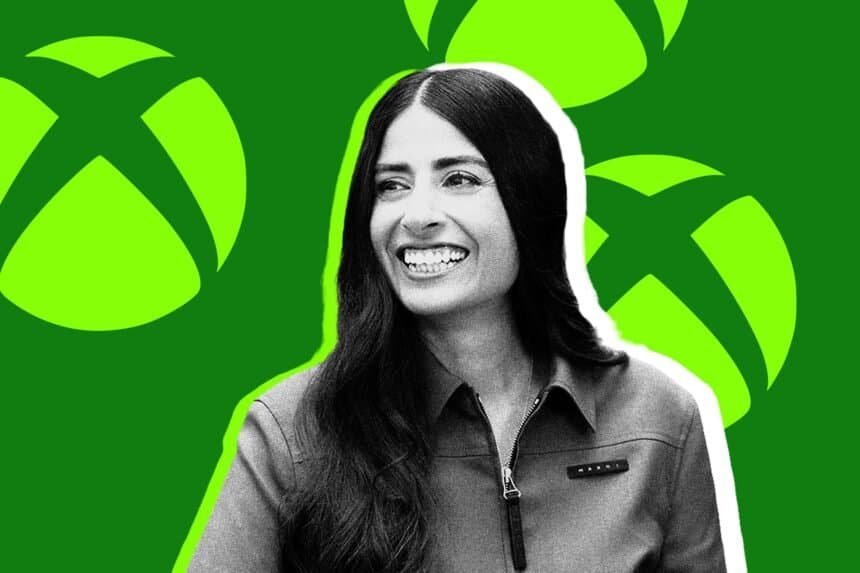
Xbox says more than 100 million people play something on its platform every day. That’s the number Asha Sharma chose to lead with in a memo to staff, and it’s also the number that shows how far the company still has to go, because her stated ambition is to be one of the few companies that entertains more than a billion people each day.
Do the math on that gap and you understand why the memo reads the way it does.
Sharma, who took over as Xbox CEO in February, told employees that by the end of fiscal year 2027, which runs through next June, “we will return XBOX to player and revenue growth.” Xbox will also “improve profits back in line with industry averages,” she said. “Every function and studio will own part of that outcome.”

That last sentence is the one people inside the company will reread. It’s a growth target with names attached.

The reset came first, the plan came after
The context here matters more than the slogans. Xbox laid off thousands of employees and spun off four studios in what the company called a reset, and only now is a growth plan arriving to explain what all of that was for.
Sharma has been blunt about the diagnosis. She’s previously cited a low accountability margin, rising component costs for hardware, an “over extended” slate of studios and platform infrastructure that’s “not built for the battle ahead.”
Structural changes weren’t the only move. Xbox made Gears of War: E-Day and Clockwork Revolution Xbox console exclusives and is planning to do more, which is a notable reversal in tone for a company that spent recent years telling everyone its games belonged everywhere.
Four priorities, alliterated
Thursday’s memo lays out four priorities for fiscal year 2027, and they all start with the letter C, which tells you something about how this document was built. Core means strengthening the platform, led by console. Content means growing great games into global franchises. Creation means making Minecraft the world’s creator platform. Connection means extending the worlds that fans love.
Progress gets measured in three stages. Stage one is the return to growth by the end of fiscal 2027. Stage two turns bets into growth: “In FY28 and FY29, our Four C’s and roadmap must move into businesses producing meaningful player value and revenue acceleration.”
Stage three is to “scale what works.” By fiscal year 2030, Sharma wrote, “our ambition is to be halfway to our long-term daily-player goal with sustained double-digit growth in players and engagement and industry leading margins.”
Halfway to a billion daily players by 2030. From a bit over 100 million today. That’s the bar Sharma set for herself in writing.

The playerbase numbers are deliberately soft
Here’s how Sharma framed the audience: “XBOX is one of the largest stadiums in the world, bringing together more than 100 million people every day, more than 500 million each month, and nearly one billion each year.”
Note the shape of that. More than, more than, nearly. Annual reach doing the heavy lifting at the top of the funnel while the daily number sits at a tenth of it.
She also confirmed something the console-is-dead crowd keeps skipping past: console “generates the majority of XBOX revenue and remains the foundation of our fandom,” and it’s still the “flagship experience.” Xbox’s OS, Game Pass, Windows and streaming “become our platform for new players and developers.”
So the box still pays the bills. Everything else is the growth story.
Fewer independent studios, more franchise machinery
The studio system is shifting from a decentralized model to one that’s “more focused around our strongest franchises and biggest new ideas,” Sharma said. That direction was already visible in the big new Fallout push.
What follows is the part that will decide whether this works. Xbox plans to build “long-term plans” for its biggest franchises “across film, television, consumer products, sponsorship, live experiences, and form new partnerships globally, including China.”
Three Xbox franchises “already generate more than $1 billion annually,” Sharma wrote. She doesn’t say which three. That omission is doing a lot of work in a memo otherwise full of targets, and it’s the single most useful number the company could have shared.
Candy Crush is part of the billion-player math
To grow its share in casual games, Xbox plans to lean on King, the Candy Crush maker, as well as Microsoft Causal Games, Sharma said. And Xbox is planning to invest in Minecraft “more than ever before.”
That’s the honest read on the billion-daily-players ambition. It isn’t going to come from Gears of War. It comes from mobile match-three and a 2011 sandbox game that Sharma wants recast as the world’s creator platform.
Watch the fiscal 2027 deadline, not the 2030 one. Sharma gave herself until next June to show player and revenue growth after cutting thousands of jobs and shedding four studios, and she wrote down that every function and studio owns part of it. If June comes and the growth line is still flat, the reset will have cost Xbox its people and bought it nothing.