


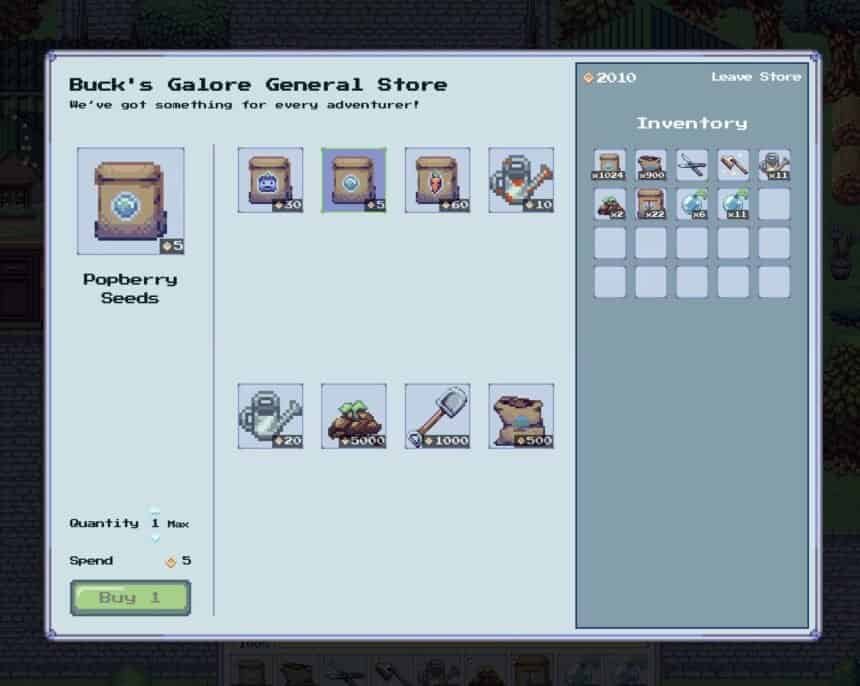
In Brief:
- Ronin said Pixels (official site) is entering its next chapter after the game earned multiple awards, giving no date, no feature list and no chapter number.
- Pixels moved to Ronin in February 2024, and its developer later said the game passed 1 million daily active users.
- The post lands three months after Ronin completed its move from an Ethereum sidechain to an OP Stack layer 2.
Ronin said Pixels is entering its next chapter, pinning the teaser to the game’s awards record.
“After earning multiple Game Awards, Pixels is entering its next chapter!” the network posted on X.

After earning multiple Game Awards, Pixels is entering its next chapter!
@RoninView on X ↗
That’s the whole announcement. Ronin didn’t name the chapter, didn’t give a date and didn’t list a single feature. No accompanying blog post went up alongside it.
What a chapter has meant so far
Pixels ships in numbered chapters, and each one has rewritten a large part of the economy rather than bolting on content.
Chapter 2 went live June 17, 2024. It changed how resources are generated and how players earn, pushed the loop toward skill-based play, added a tiered rewards system and introduced tiering across industries including farming, cooking, woodworking, metalworking, stone shaping, mining and lumberjacking. It also reworked Specks, the personal land plots, giving every player a starting plot with a Tier 1 house, trees, soil and a mine, upgradable five times.
Chapter 2.5 was a correction, not a content drop. The studio said it cut daily coin inflation by nearly 84%.
CEO Luke Barwikowski framed that phase around the balance sheet, saying the priority was “building strong systems and sustainable economics first.” He said the team had been refining around one metric, return on reward spend, which had gone above one for the first time.
Chapter 3, called Bountyfall, added Unions, a lighter social layer than guilds. Players pick one of three factions, Wildgroves, Seedwrights or Reapers, with no gating, and the three compete for seasonal $PIXEL prize pools. Each union has its own yieldstone resource, Verdant, Flint or Hollow, split across five tiers and earned through taskboard tasks or crafting on NFT lands.
The studio has been building outside the game
In March, the Pixels team launched Stacked on Ronin, a rewards app that lets players run missions across multiple games, build streaks, earn and withdraw from one place. On the studio side it sells event tracking, targeting, reward logic, fraud controls and automated payouts, plus an AI game economist that analyzes cohorts and flags churn patterns.
Barwikowski has described Pixels as a user-acquisition engine for other titles, with a platform of roughly five or six experimental games around the flagship.
In July, Pixels ran an integration with Kanstar. All 4,444 KANSTAR NFTs got pixelated animated versions with unique traits, marked by an in-game party at the Rave Cave on July 3.
The chain moved first
Ronin migrated from an Ethereum sidechain to a full layer 2 on the OP Stack on May 12, with about 10 hours of mainnet downtime during which games were unavailable. The network has since said the move is complete.
Ronin’s own framing has shifted with it. The team wrote that gaming got it this far but the next chapter of growth “will ask more of our movement,” and that it intends to become “the gamification engine of Ethereum.”
Pixels is written into the new tokenomics. Under Proof of Distribution, $RON staking rewards move from passive validators to Governing Validators and Contributors, and Pixels is listed as a Contributor alongside Moku, Compound, Ronkeverse and Axie Infinity (official site). Contribution tracking started May 13, with reward periods running in roughly month-long seasons.
Pixels arrived on Ronin in February 2024 and its developer said it hit 1 million daily active users, a figure almost no other crypto game has claimed. Ronin’s daily active users later topped 2 million, according to Token Terminal data.
The network has kept the credit in writing. When the community rallied, Ronin said in a May post, it was “when Pixels brought Web3 gaming back in 2024.”










[…] Pixels has unveiled a new community development website aimed at consolidating player-created projects, feature requests, and development bounties. This initiative follows the release of the game’s client and backend as open-source software. […]