You start with an island you’ve never seen before, eight weeks on the clock, and a hunter’s hut you have to squeeze next to as many forest tiles as possible. That’s it. That’s the whole opening move, and it’s already a math problem.
Plenty of developers have tried to bottle whatever LocalThunk did with Balatro. Some miss the point of why Balatro works. Others are just flat-out unethical about it.
Combolands: Roguelike Citybuilder, from Crux Games, is neither.
It takes Balatro’s roguelike structure and combo chains, welds them to the kind of tile placement Cities: Skylines demands, and based on the Steam demo, the result is absorbing in a way I didn’t expect from a game whose core loop is putting squares near other squares.
Adjacency bonuses, but they’re the entire game
Most city builders treat adjacency as a nice bonus. Civilization 7 nudges you to stack production and food so your metropoles grow fattest and fastest. Cities: Skylines and its sequel decide how happy and ignorant your citizens are based on access to libraries and parks. Anno 117 lets you balloon a population with porridge, among other things.
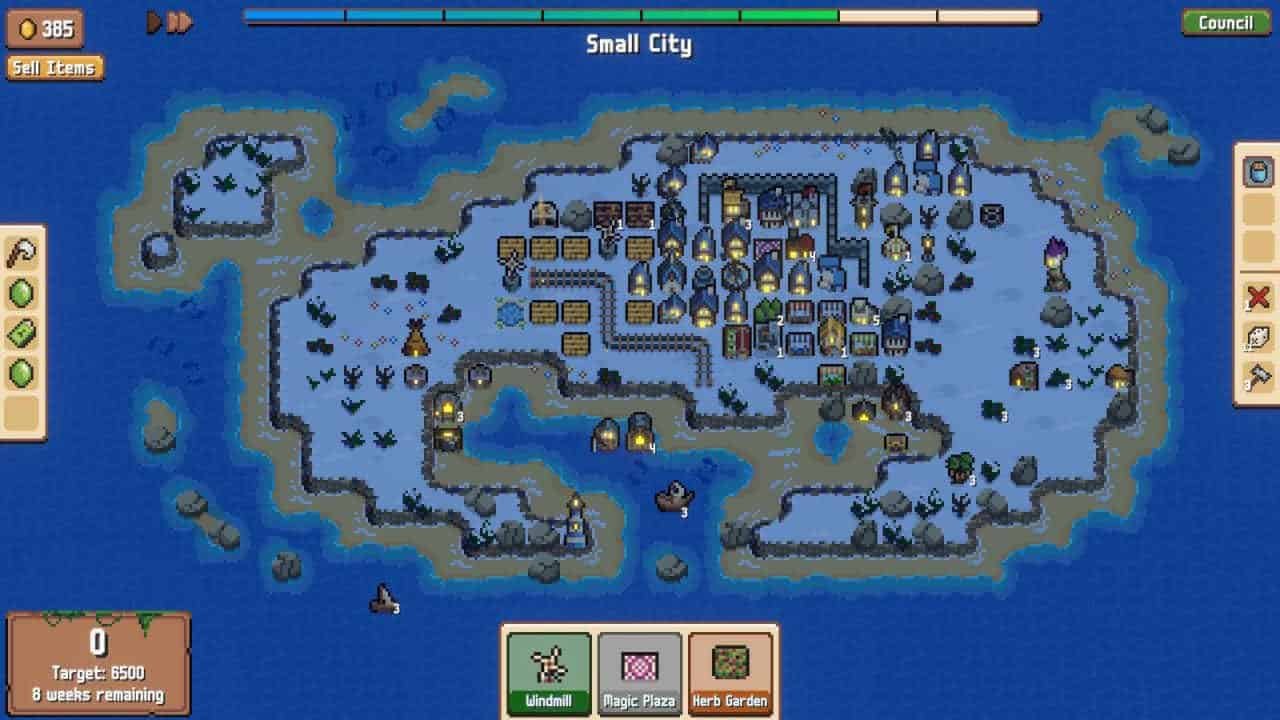
In Combolands, adjacency bonuses are everything. Literally everything.
The island is procedurally generated at the start of each run, so terrain and resource layouts never repeat. You get eight weeks to hit a new population milestone, a handful of actions, a limited number of action rerolls, and each action burns one week.
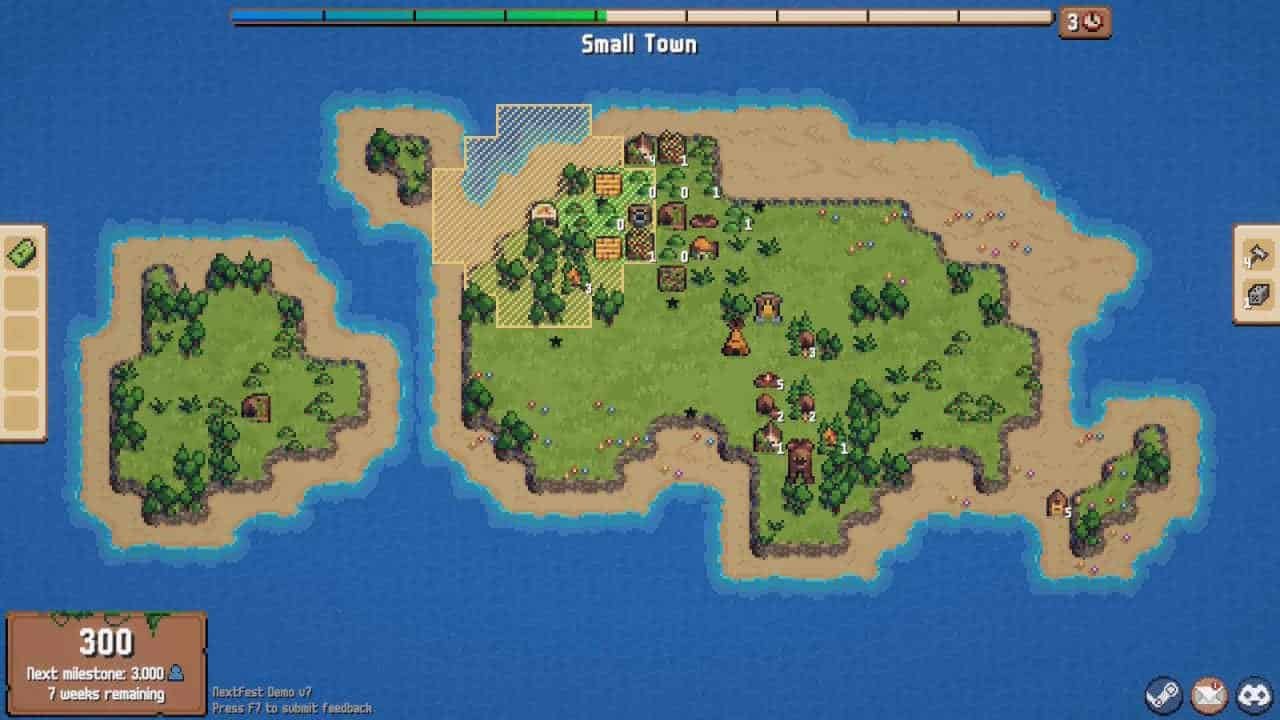
Your opening pool is foundational stuff, the economic backbone: hunter’s huts in forests, apiary networks near flowers. The more resource nodes a building touches, the bigger the population jump every time that building’s effect fires.
No, that’s not how honey works. You do not produce a jar and gain 100 residents by Friday. It’s a video game. Roll with it.
The complexity sneaks up on you
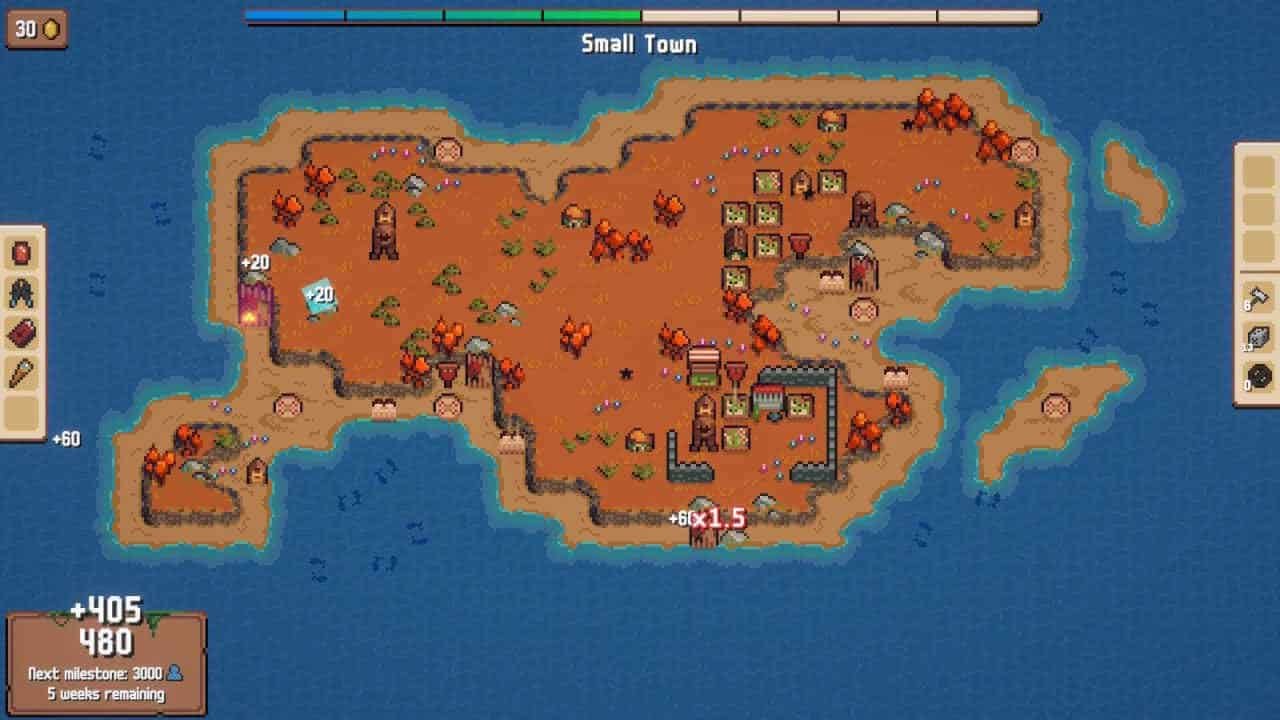
Higher population tiers unlock new building options, and those options force strategy shifts. Some hand you multipliers on specific productions. Others shorten the time before a building’s effect triggers.
Then there are the ones that feed off proximity to a broad category like “nature” tiles, meaning anything not human-made. Sounds generous. So much nature!
But those are the hardest to fold into a combo chain, and combo chains are where this game stops being casual.
Your early sloppiness will come back for you
Like Balatro, the clear threshold climbs every round, and layout planning is the only thing that saves you. Scattering huts and berry-picking stations wherever they seemed to score best carries you through the first few rounds just fine.
Then you need walls, whose multipliers only activate when tiles are fully enclosed. Or railroads. And that improvised sprawl becomes a cage.
Maybe you got greedy with forestry camps, stripped the woodland tiles early, and left your hunter’s huts nothing to work with.
Luck cuts both ways, though. Clear the woods and you might draw a run of turns stacked with buildings that specifically reward cleared ground.
You have a limited number of rerolls to shuffle a week’s hand, a few demolition chances, and once per run, the option to take three extra turns to reach your goal.
You’ll lose. Repeatedly. That’s the good part
Even with all that, you’re going to lose a lot. Losing is when the game opens up.
In the demo, at least, Combolands is more generous than Balatro, handing out new buildings and between-run progress with fewer dry spells.
Start a run after your first failure and you get to pick your guilds. Or you will, eventually; the demo only has two.
Guilds control which building types can show up each turn. The agricultural guild leans hard into farms and farm-adjacent structures, exactly as advertised. Crux Games promises seven guilds at launch, which is a lot of combination space.
The shop is where runs get decided
More unlocks arrive as you progress, including an in-game shop, also Balatro-inspired, where you dump gold between rounds on new modifiers. There are chests too, which may hold modifiers or free rerolls.
Some modifiers genuinely change the math. One gives every building a free multiplier during the final week of a round. Picking the right one, or the wrong one, is frequently the difference between a successful run and a wasted eight weeks.
Turning traffic logistics into an art form
The strategy the demo asks for lands in a good spot: enough to chew on, never enough to drown in. The pacing is brisk, so it doesn’t devour an evening before you notice.
I want more of it. Conveniently, there isn’t long to wait. The full version of Combolands lands Aug. 24 on Windows PC via Steam.