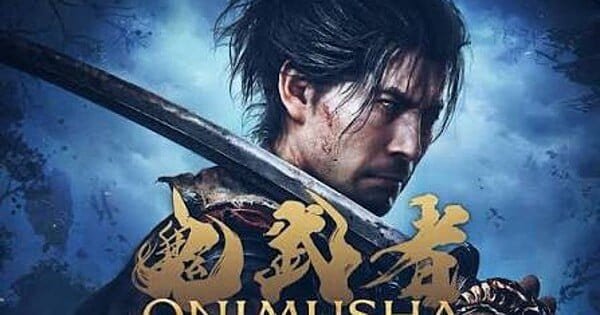

Pick one word for Way of the Sword and it’s “cinematic.” This game will throw you into gorgeously rendered and directed animated cutscenes every chance it gets, and part of me kept wondering whether the whole thing would work better as a samurai action movie than a game.
The heavily traditional Japanese soundtrack pushes me further in that direction. So do the locations, all of them recognizably Japanese-inspired and staged for maximum scale.
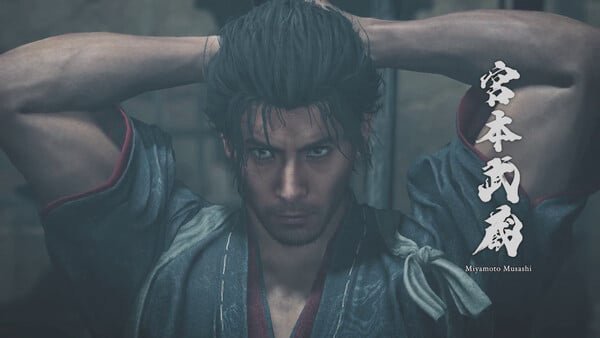
The gap between pre-rendered cutscenes and in-game cutscenes is noticeably different, and facial animation dips into the uncanny more than once, especially in how the mouths move or the teeth get shown. Still, by Switch 2 standards it’s very impressive. The game is locked at 30 FPS, and everything in frame is built to feel as large and intimidating as possible.
The oni are the best thing here
The action set pieces and oni designs are effective at pulling a strong base reaction out of you, whether that’s disgust or fear. Every boss is designed with a twisted body horror style, like they were ripped right out of a traditional Japanese painting.
The way you handle a lot of them gets samey (more on that shortly), but all of them left a strong lasting impression. Discovering a new enemy, sizing up a new intimidating threat, testing my skills against different attack patterns and working out fresh ways of countering: those were the highlights.
Dozens of cutscenes, almost no story
For a game trying this hard to build a seamless cinematic experience and drop you into the middle of the action, the story is shallow.
There are dozens upon dozens of cutscenes and a parade of new characters Musashi meets to aid him on his journey. Step back and look at how it all progresses, though, and it amounts to Musashi running into a bunch of people who tell him what to do.
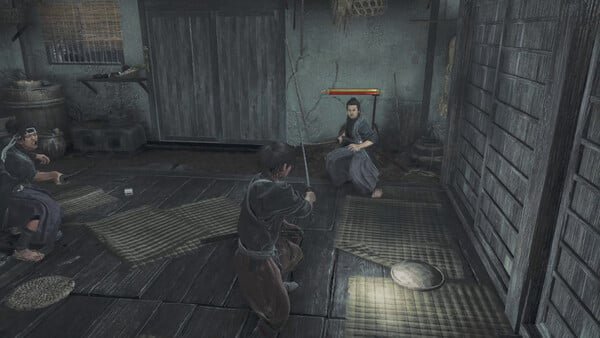
Break it down and you get a set of mini stories, each one Musashi engaging with a different character or a different unique threat. There’s no buildup to who these people are or why they suddenly matter, as if the game is banking on a lot of them referencing traditional Japanese historical figures. That’s a fine way to introduce players to some of Japan’s history they can look up later. It should never be a crutch for automatically instilling importance in characters who don’t contribute much beyond handing out the next mission.
The pattern: a new character shows up, I run a bunch of fetch quests or complete a mission on their behalf, and a specific threat ends up tying directly back to that character. Some of these missions are tragic. Others are as basic as “you need to kill the enemies in this area to continue”.
The game gets graphic enough that it’s easy to feel bad about the atrocities that befall these characters or the people they care about. But the emotional moments amount to watching the bad guy kick a puppy. I feel something for a moment, and then nothing sticks, which is a waste given how much the cutscenes, voice acting and directing are all putting in.
Musashi doesn’t change
None of these horrific events land on Musashi in an interesting way. He has no character arc across the game, aside from maybe taking some responsibility for the role he was forced into.
The closest thing to a theme is breaking down the true meaning of strength. Is strength about helping other people, or about using them as a means to an end? That’s fine. It’s also basic enough that the presentation around it is wasted, and the game never convinces me Musashi has undergone a significant change for most of its runtime.
The combat understands what it’s doing
Speaking of not undergoing significant change, the gameplay plays up many of the best elements of an action RPG. Musashi has single sword strikes and two-handed sword strikes, and you can’t button mash your way through.
You and the enemies both carry a health bar and a stamina meter. The goal is draining your opponent’s stamina as far as you can so finishers chew through their health faster. Basic attacks do it slowly. Sub weapons and well-timed parries do it much faster.
Here’s what I like: the method that beats a small enemy also beats a boss. The only difference is how aggressive each enemy type gets. Careful timing on your parries and deflects generates the openings. The moves are simple to grasp and the skill lives in knowing when to use them.
Even as you pick up items in the overworld or through helping villagers to upgrade abilities and build strength, the scaling holds. You never feel overpowered, and you’re never dropped into something you couldn’t reasonably win.
Then the structure eats it alive
The mechanics get wasted the same way the presentation does. The story boils down to characters handing Musashi assignments in the Kyoto overworld, and even the fast travel systems that open up wider areas can’t stop the repetition.
You go to one area, kill a bunch of enemies, hit one action set piece, fight a new boss. Then you go to another area, kill a bunch of enemies, hit one action set piece, maybe kill a new boss. That cycle runs until you notice a few hours could’ve been cut for a tighter experience.
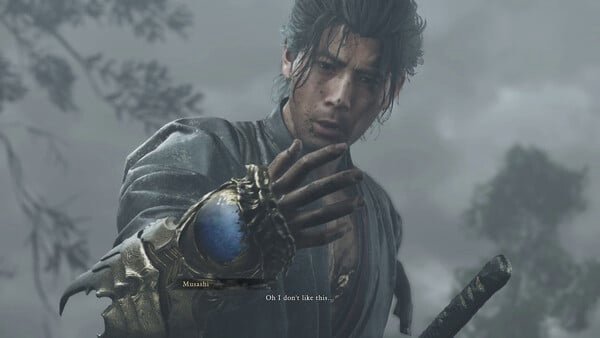
The boss fights stayed highlights throughout. But I hit a point where I stopped looking forward to the opening stretch of any new story section, because that’s where things turn mindless. I’d internalized the mechanics so thoroughly that mowing down fodder felt like a chore instead of a fight, which means the game punishes me for getting good at it.
The villains show up too late
Because the reward for most of these missions feels empty in narrative and emotional terms, whole sections read as time-wasting. Worse, the main villain and main rival introduced at the start disappear for almost a dozen hours of gameplay.
That’s a shame, because some of these villains have loads of personality. They’re either defeated as soon as they show up or absent enough that nothing pushes me forward through most of the playthrough. So much is set up early, and payoff takes forever.
Serviceable, when it could’ve been more
One of the worst things a game can do is exhaust you into going through the motions. This one doesn’t do that early. By the halfway mark it does. It’s too long for rewards that aren’t satisfying enough.
The mechanics are rich, and pointing them at the boss fights is where the game shines. The presentation deserves credit on its own terms. It just needs to give me a reason to care more.
Trim the fat, punctuate the moments it wants to show off in the cinematics, and this could’ve been a perfect action RPG for everyone. As it stands, it’s perfectly serviceable, and it would be better if it didn’t overstay its welcome.
The good: You feel like you’re playing in a samurai action movie, rewarding combat system, boss fights and designs are a highlight.
The bad: Story is way too drawn out for how basic and disjointed it is, combat gets repetitive outside of boss fights, Musashi isn’t that interesting of a character.
Content warning: graphic body horror.