

Robinhood’s stock tokens don’t make you a shareholder. That’s the whole fight, and the company just conceded the point by promising to fix it.
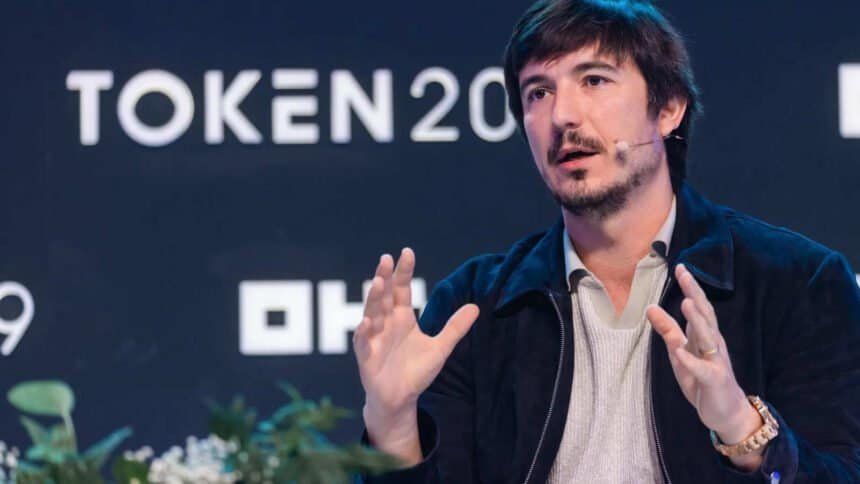
“In-kind redemption and voting are coming for Robinhood Stock Tokens,” CEO Vlad Tenev posted on X on Monday. The stock closed at $114.35.
Johan Kerbrat, Robinhood’s head of crypto, put a finer point on the timeline. “We’re actively working on redemptions for shares 1:1 with voting for eligible Stock Token holders on the roadmap,” he said.

What triggered it
AMC Entertainment CEO Adam Aron asked Robinhood to stop offering tokens tied to AMC. His argument: the company never approved them, and the people holding them don’t get shareholder rights.
He wasn’t wrong about the second part.
Read the disclosures, not the ticker
Robinhood says its Stock Tokens are backed one-for-one with real shares held in custody. That sounds like ownership. It isn’t.
Per the disclosures, the tokens are offered outside the U.S. through a Jersey-domiciled subsidiary and structured as debt instruments. You get price exposure to the underlying stock. You don’t own the shares and you have no beneficial rights to them.
Three ways to tokenize, and only one of them is ownership
The SEC laid out the taxonomy in a January statement. A company can tokenize its own securities, which keeps the issuer-shareholder relationship intact. A third party can custody conventional shares and issue tokens representing an ownership interest in them, a tokenized security entitlement. Or a firm can issue a separate security giving synthetic exposure to the stock, with no ownership of it.
Robinhood’s product is the third one.
Two tokens can carry the same ticker and hand you completely different rights. That’s the part worth internalizing before you buy anything with a familiar four-letter symbol on it.
What’s being promised
In-kind redemption would let eligible investors swap a token for the corresponding share. Voting is planned too, and Kerbrat pointed to Robinhood’s Say shareholder engagement platform as infrastructure the company could build on.
Coinbase is moving the same direction. CEO Brian Armstrong said Monday the exchange is adding voting rights to its tokenized stock offerings. Coinbase’s tokenized equities already support one-for-one redemption into underlying shares and incorporate dividends, he said.
The harshest critique comes from inside the industry
Carlos Domingo, CEO of tokenization firm Securitize and an advocate for issuer-sponsored tokenization, isn’t buying the rebrand.
“These products are not ‘stocks,'” Domingo said in an X post. “In my opinion, calling these ‘stock tokens’ is misleading to investors.”
Domingo’s point isn’t just about whether the wrapper is backed. Holders have no voting rights today, can’t redeem a token directly for the underlying share, and Robinhood handles dividends by increasing token holdings instead of paying cash.
He also raised the structural problem nobody has solved: these tokens move freely between blockchain wallets, and the identity and location of whoever ends up holding one may not be known. Grafting shareholder rights onto a bearer instrument is harder than announcing you’ll do it.
Where this leaves you
Scrutiny hasn’t eased just because two of the biggest platforms said the right things on the same Monday.
If you’re holding Robinhood Stock Tokens right now, you’re holding a debt instrument issued out of Jersey that tracks a price. Redemption and voting are on a roadmap, not in your wallet. Check the disclosures for the specific token you own before you assume otherwise, because the ticker on the screen is telling you almost nothing about what you actually hold.