
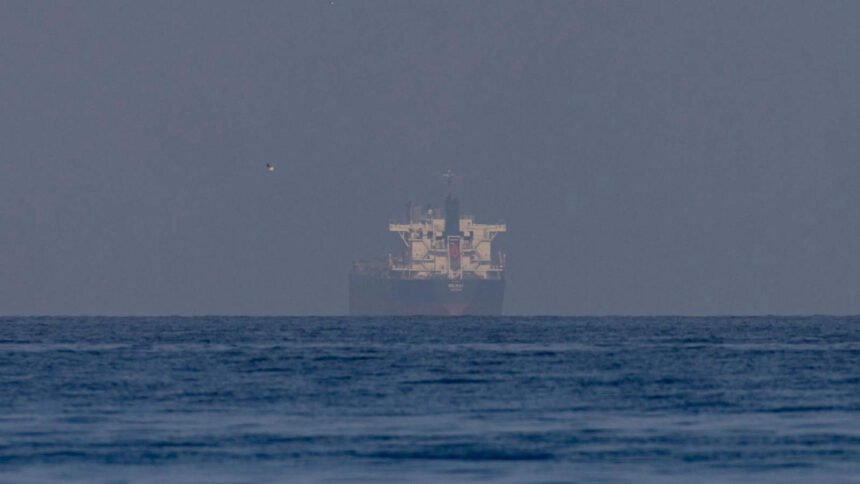
Iran has been charging tankers between $1 million and $2 million to cross the Strait of Hormuz this year. The U.S. Treasury now says that since June, part of that money has been routed through a cryptocurrency exchange in Tehran.
A release Thursday shows the Office of Foreign Assets Control has designated BitBank, a Tehran crypto exchange set up in 2024, along with Pishtaz Simorgh Electronic Trade Company, the software firm that built it.
“Today’s designations of Iranian digital asset infrastructure make perfectly clear that efforts to finance the Iranian regime using cryptocurrencies are not beyond OFAC’s reach,” Treasury Secretary Scott Bessent said.

Hundreds of millions in bitcoin, and where OFAC says it went
OFAC alleged BitBank moved hundreds of millions of dollars in bitcoin to the Islamic Revolutionary Guard Corps, the branch of Iran’s armed forces that controls much of the country’s economy and is designated a terrorist organization by the U.S.
Over the same period, the Hormuz Safe Marine Services Authority began using BitBank to pass along what it collected. That’s the outfit Tehran uses to sell ships “safe passage” insurance, and it was itself sanctioned on July 29.
The toll booth has a website and a sales pitch
HormuzSafe was developed by Iran’s economy ministry. It advertises insurance, traffic control and emergency response to vessels that pay.
Shipping lawyers have called the arrangement a violation of transit rights under the Law of the Sea, OFAC said.
The freeze isn’t the part that bites
A designation means BitBank’s property in U.S. jurisdiction is frozen and Americans are barred from dealing with it. That’s the standard clause, and for an exchange operating inside Tehran it doesn’t change much day to day.
The heavier clause is the secondary sanctions tag attached to every name in Wednesday’s action. It extends the exposure to foreign firms: an exchange in Dubai or a bank in Istanbul that processes BitBank flows can itself be cut off from the U.S. financial system, without any American ever touching the transaction.
For offshore venues that take Iranian users, the threat is losing dollar access rather than facing a U.S. court. That’s a business risk, not a legal one, and it tends to move compliance departments faster.
Not a single wallet address
Here’s the gap. Wednesday’s action did not include a single wallet address.
OFAC has published bitcoin and tron addresses in past crypto designations. When it named Zedcex in January, it listed seven tron wallets. Those strings are what compliance teams load into screening software.
Without them, a screening system has a company name and a software vendor to match against, and nothing on-chain to flag. Names get changed. Addresses don’t, at least not without moving funds.
What to watch on the next tranche
If you’re running compliance at an exchange with any Gulf exposure, the actionable piece of this designation isn’t the press release. It’s whether OFAC follows up with the address list, the way it did with Zedcex. Until then, BitBank’s flows are a name on a list, and names are the cheapest thing in this business to replace.