

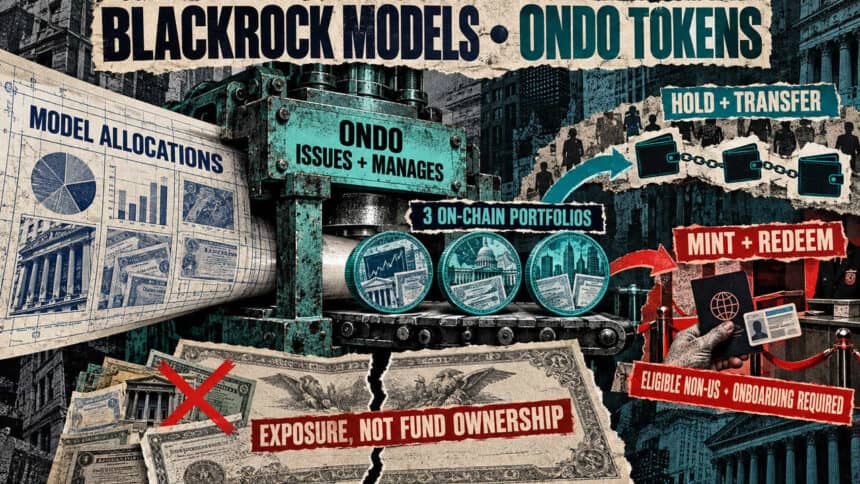
BlackRock’s name is on the model. Ondo Finance’s name is on the security. That split tells you nearly everything about the three portfolio tokens Ondo launched on Sept. 24.
Ondo built the tokens on investment strategies BlackRock developed for the company. They give buyers economic exposure to diversified baskets of assets. They aren’t interests in BlackRock funds, and BlackRock isn’t running them.

Who can actually cash out
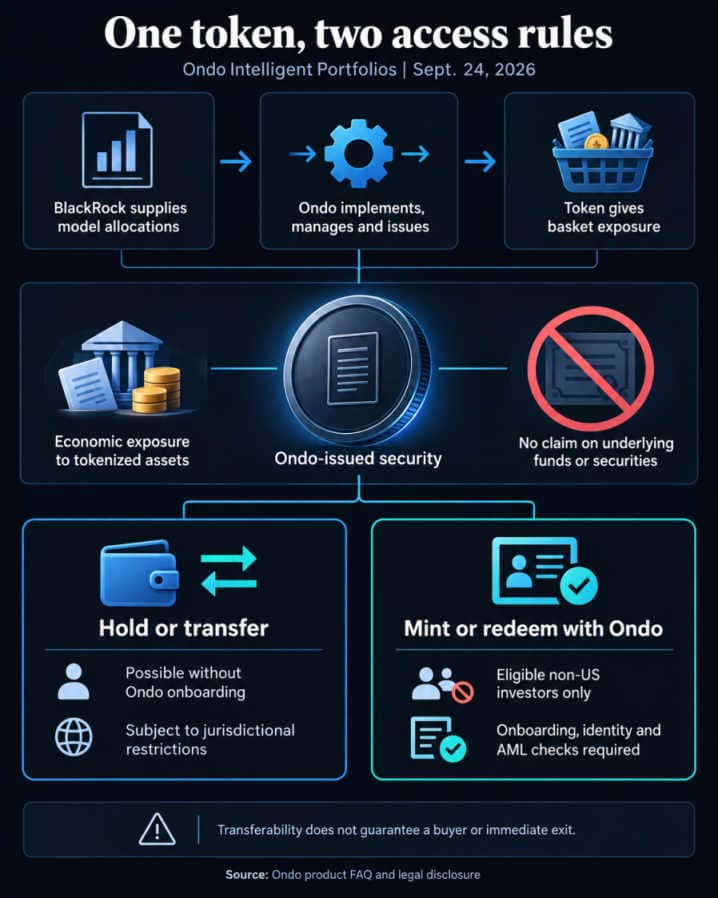
Redemption is limited to eligible non-US investors who complete onboarding, according to Ondo’s launch release and product terms. Everyone else can end up holding these tokens with no direct way to hand them back to the issuer.
Ondo’s FAQ says direct minting and redemption require an eligible person outside the US to pass identity and anti-money-laundering checks. The process also screens for US-person status, restricted jurisdictions and prohibited persons. Ondo processes redemptions only for eligible holders who have completed onboarding.
But the tokens can move on-chain, subject to jurisdictional and other restrictions. So someone can receive or hold a portfolio token without ever going through that process. Owning the token doesn’t qualify that person to redeem it with Ondo.
Moving a token between wallets and redeeming it with the issuer are two separate things. Treat them that way before you buy.
Liquidity around the clock isn’t the same as a buyer
Ondo describes peer-to-peer transfers as available around the clock, including through supported third-party platforms. That sounds reassuring until you think about what it leaves out.
Being able to transfer 24/7 doesn’t mean someone will be there to buy at a given price. It also doesn’t mean a holder can get out immediately. If you can’t redeem directly, you’re relying on a third party willing to take the token, under that venue’s rules and whatever the market looks like that day.

The three tokens
The first products are Ondo High Income (BLKHIon), Ondo Diversified Growth (BLKDIGon) and Ondo High Growth (BLKGRWon). The ticker prefix leans hard on the BlackRock connection. The legal paperwork is more careful.
The portfolios draw on strategies BlackRock developed for Ondo. Ondo implements the allocations using tokenized assets and rebalances them on a preset schedule, the company said in its launch explanation.
A holder gets economic exposure to a weighted basket that includes Ondo Stocks, which track equities and exchange-traded funds. Holders have no right to the underlying funds or securities.

What BlackRock is and isn’t doing
Ondo’s legal disclosure calls each token a separate security issued by Ondo Global Markets (BVI) Limited. That’s the entity you’re exposed to.
BlackRock Fund Advisors supplies model allocations to Ondo. It doesn’t make investment decisions for the on-chain portfolios. Ondo decides how to implement the models and manages, sponsors and administers the products.
BlackRock doesn’t manage the portfolios, and it doesn’t owe advisory or fiduciary duties to token investors.
The model can drift
This is the detail I’d flag first to anyone buying because of the BlackRock name. BlackRock is generally not required to update its model after delivery. And when changes do come, Ondo decides whether to apply them.
That means an on-chain portfolio may differ from the model it’s based on. The strategy that justified the purchase could look different a year from now, and the firm whose name is in the ticker has no duty to you if it does.
If you’re an eligible non-US investor willing to go through Ondo’s identity checks, these tokens give you a redeemable, rebalanced basket built on a BlackRock-designed model. If you’re not, you’re holding an Ondo security that you can’t redeem, and you’ll only get out if someone on a third-party platform agrees to buy it.