

In Brief:
- Moca Network launched the Moca Chain mainnet on September 29, positioning itself in digital credentials and payments.
- The Layer 1 blockchain utilizes the MOCA token for transaction fees and supports Ethereum development tools.
- Aimed at enhancing user experiences, it facilitates credential verification without repetitive personal data submission.
Moca Chain mainnet goes live
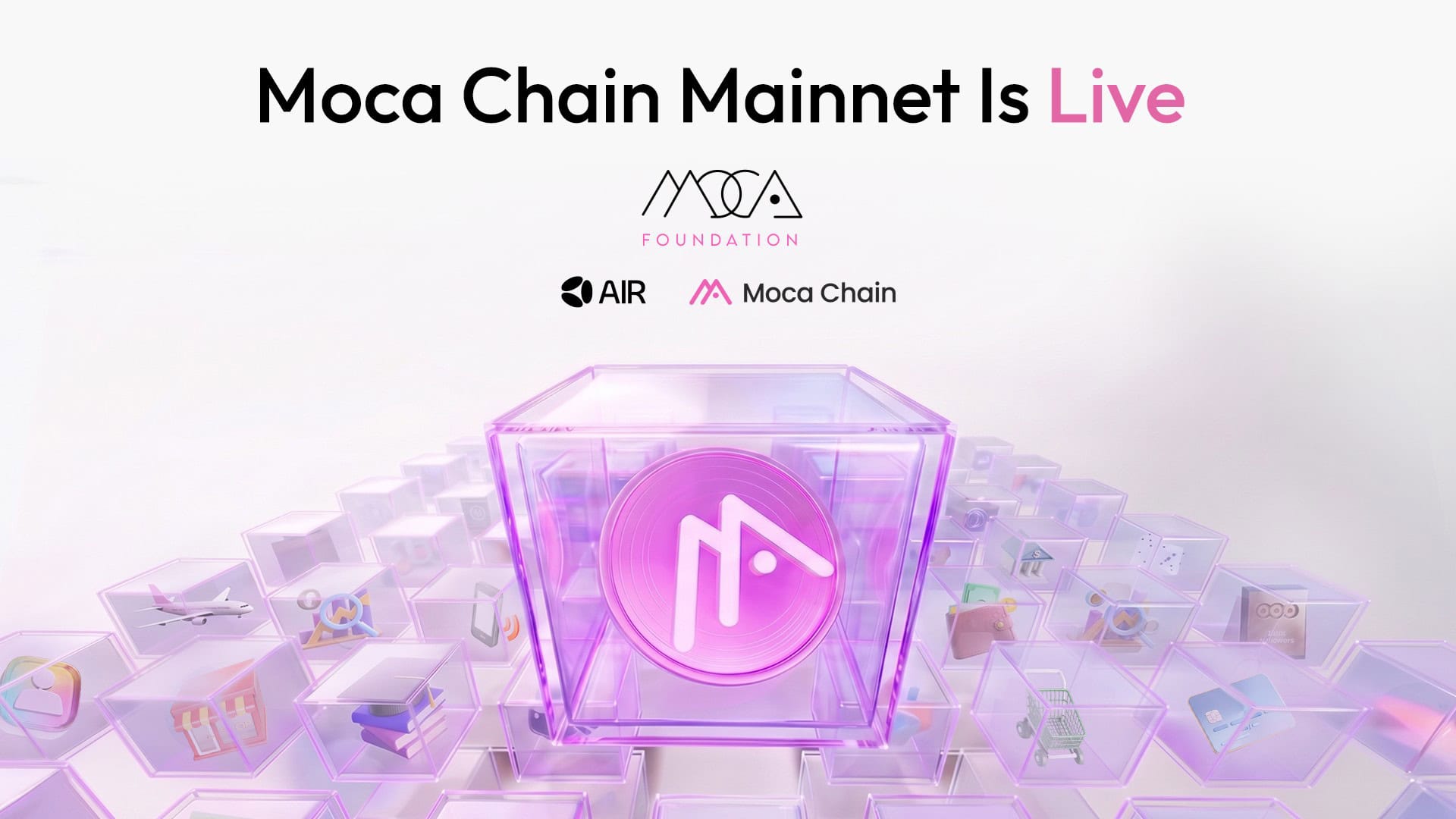
Moca Network has officially launched its Moca Chain mainnet, marking a significant step in its initiative to integrate digital credentialing and payments. The Layer 1 blockchain, with an EVM chain ID of 2288, utilizes the MOCA token for transaction fees and governance.
The blockchain simplifies credential issuance, verification, updating, and revocation for businesses. It features zero-knowledge proof verification from day one, enhancing privacy for users.
Businesses can verify customer attributes—like age or membership status—and issue credentials for use across different platforms. This approach allows customers to prove eligibility for services without constantly submitting sensitive documents. For example, gaming achievements or loyalty status could be verified in real-time.
Yat Siu, executive chairman of Animoca, stressed the importance of user privacy, stating, “Users should not be forced to surrender sensitive personal information redundantly every time they use a new service and platform.” He pointed out that current processes stifle competition and lock users into familiar platforms.
Business model and opportunities
Underpinning the network is a commercial strategy through Animoca’s AIR Identity platform, enabling issuers to charge for verifying credentials. With businesses paying for verification and users controlling data sharing, a revenue stream can emerge from previously issued credentials.
The AIR suite connects businesses to the network, offering payment and loyalty solutions alongside credentialing. AIR Money integrates services such as payments and withdrawals, with a range of payment options including fiat and stablecoins.
The initial objective focuses on streamlining customer onboarding and maximizing existing user relationships across platforms. However, broader adoption hinges on the perceived commercial value of such connections.
AI agents and the future
Moca Network also envisions roles for AI agents within its ecosystem. These agents would need to verify user instructions and permissions, expanding the functionality of digital credentials.
Moca’s planned delegation system would allow users to limit permissions granted to agents based on scope and duration. This could eventually allow an agent to book services while using a user’s credentials to access membership discounts, showcasing Moca’s ambition to intertwine payments with portable credentials.
The competitive field includes initiatives from major players like Coinbase and Google, which provide various solutions for authorized purchases and payments. Moca’s unique proposition lies in merging credential sharing, payments, and loyalty into a cohesive experience.
The effectiveness of this model will depend on customer experiences regarding repeated checks, the business benefits for merchants, and the ongoing revenue for credential issuers. The role of AI agents may amplify these interactions, yet effective permission enforcement remains a crucial factor.