

In Brief:
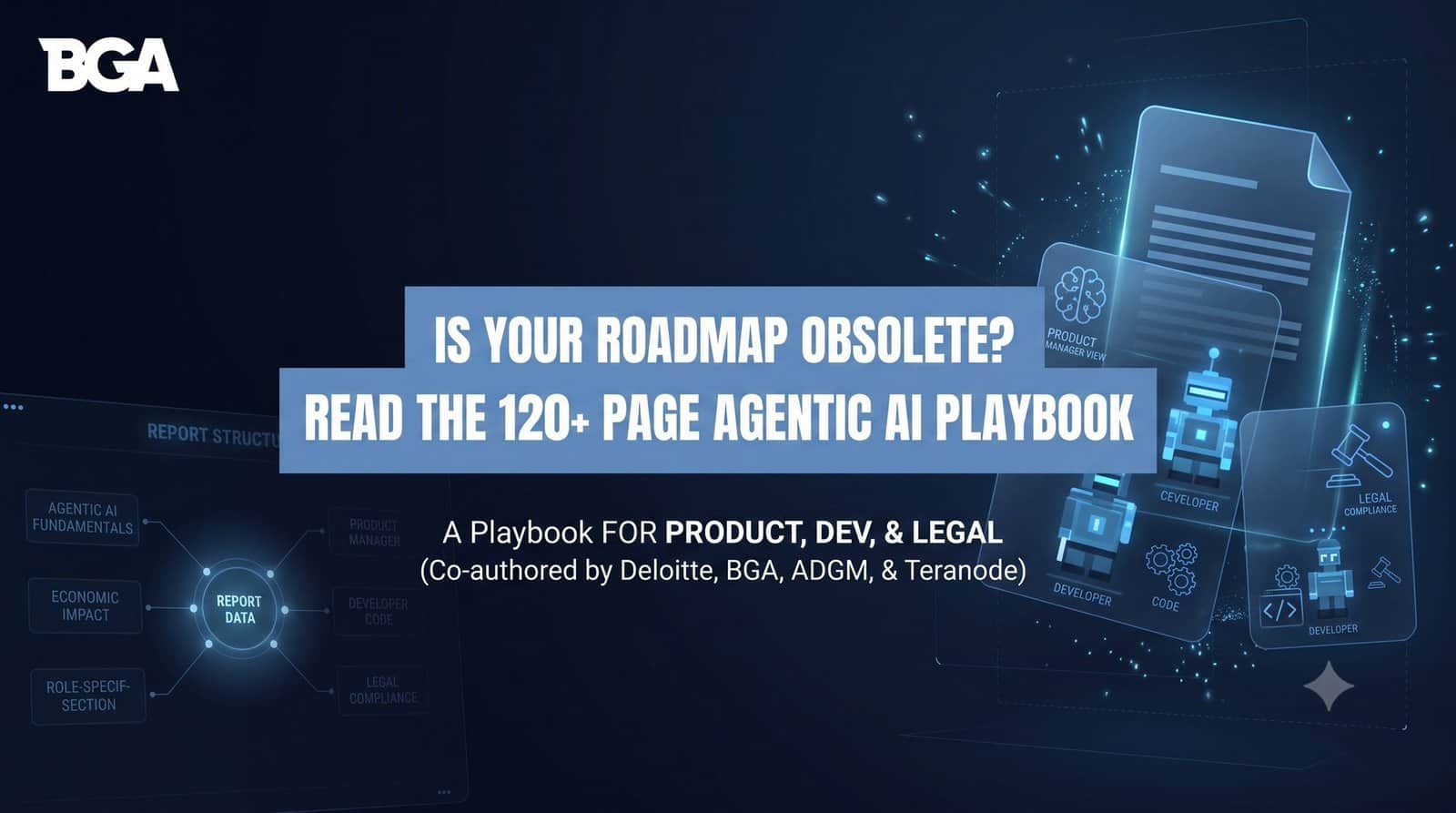
- The Blockchain Game Alliance published “Agentic AI in Gaming and the Emerging Digital Economy” in April 2026, with contributors including Deloitte, Abu Dhabi Global Market and Teranode Group.
- Teranode’s contribution centers on two governance concepts, Know Your Agent and an AI Control Tower, both aimed at agents that hold wallets and move funds without per-transaction human approval.
- The research fed into the AI & Agentics Council, launched in late July with Deloitte and DMCC, and Teranode demos the Control Tower at Gamescom in Cologne on Aug. 26.
The Blockchain Game Alliance is arguing that AI agents need their own identity layer, separate from KYC and KYB, before studios let them touch player assets or treasury funds.
That case runs through “Agentic AI in Gaming and the Emerging Digital Economy,” the six-section report the alliance published in April 2026 with contributors including Deloitte, Abu Dhabi Global Market and Teranode Group. The report calls for machine identity that supports authentication, authorisation, traceability and policy enforcement for automated actors.
The next 18 to 36 months will fundamentally reshape the digital economy.
Why? Because AI agents are moving out of sandboxes and into live, persistent virtual economies where real capital is at stake.
To help builders navigate this, @BGameAlliance, @Deloitte, ADGM, and Teranode
“The next 18 to 36 months will fundamentally reshape the digital economy,” the alliance said in a post promoting the work, pointing to agents moving out of sandboxes and into live, persistent virtual economies where real capital is at stake.
Know Your Agent
Teranode Group brought two concepts to the report. The first is Know Your Agent, or KYA, “because future financial systems may need to verify not only the customer, but also the agent acting on their behalf,” said Thomas Giacomo of Teranode Group. The second is an AI Control Tower, on the premise that “governance must become continuous, policy-driven and real-time.”
Giacomo framed the shift bluntly. “We are moving from AI systems that generate content to AI systems that execute actions,” he said.
Teranode’s technical work pairs hardware-based secret management with runtime attestation, tying each agent to an accountable human or organisation. Stronger machine identity doesn’t make an agent a legal counterparty, the company said, but it does let someone be held responsible for what the agent does.
Contributors credited from Teranode include Aurélien Munoz, Robert Alizon, Liuxuan Pan, Marcin Pakielo, Pieter van Eck and Rafa Jiménez.
How the Control Tower works
Munoz, lead product manager at TeraNode Group, described the Control Tower as “an unpassable Digital Toll Booth” that sits between an agent’s intent and the actual execution of an API call.
Before a stablecoin leaves a wallet, the tower checks the agent’s identity, its transaction limits and whether the action matches what the human user originally asked for. Transactions above a safety threshold get blocked outright or escalated to a person for manual approval.
The regulatory hook is the EU AI Act, which classifies financial systems and the AI agents managing them as high-risk. Munoz said the answer for studios is governed autonomy rather than letting code run unsupervised, with KYA protocols and pre-execution control paired together.
Standards and cost
The report maps the standards stack agents would run on: ERC-8004 for identity and reputation, live since January 2026; x402 for HTTP-native payments; ERC-8183 for agentic commerce, still in draft; and the A2A and MCP communication protocols.
It also pushes back on GPU count as a way to size infrastructure. Costs come from idle accelerators, repeated retrieval, duplicated embeddings, overprovisioned storage, tool-call overhead and poorly controlled agent loops, the report said, and the metric that matters is end-to-end cost per useful task.
Three features separate blockchain games from Web2 free-to-play in the report’s framing: agent-level reputation and identity, direct wallet management and a token-based economy.
From report to council
The April research led to the AI & Agentics Council, which the alliance launched in late July with Deloitte and Dubai free zone DMCC. Founding partners are Xsolla, SKALE, The Sandbox and WAM.
It runs as a department inside the BGA, with a scope covering governed autonomy, human accountability, model-independent infrastructure and economies where agents participate alongside players. The unresolved liability question, who answers when an agent executes a transaction on its own, is cited as what keeps institutional money out.
The BGA was founded in 2018 and counts roughly 350 members. Sébastien Borget, co-founder and COO of The Sandbox SAND $0.08025 ▲ +88%, has been its president since 2020. In the report, Borget noted that AI agents predate large language models in gaming, with early versions built on reinforcement learning where agents learned through rewards or penalties.
Teranode demos the AI Control Tower on Aug. 26 at the Agent AI Summit in Cologne, subtitled “Architecting Autonomous Worlds.” The same day, in the same city, ONEchain shows an AI-native gaming economy of autonomous agents that “compete, create, trade and earn on-chain.”