
A Federal Reserve governor just said out loud what the futures market has been whispering about for weeks: the next move on rates might be up.
Lisa Cook said Wednesday she’s ready to back an interest rate increase unless the inflation numbers get better.
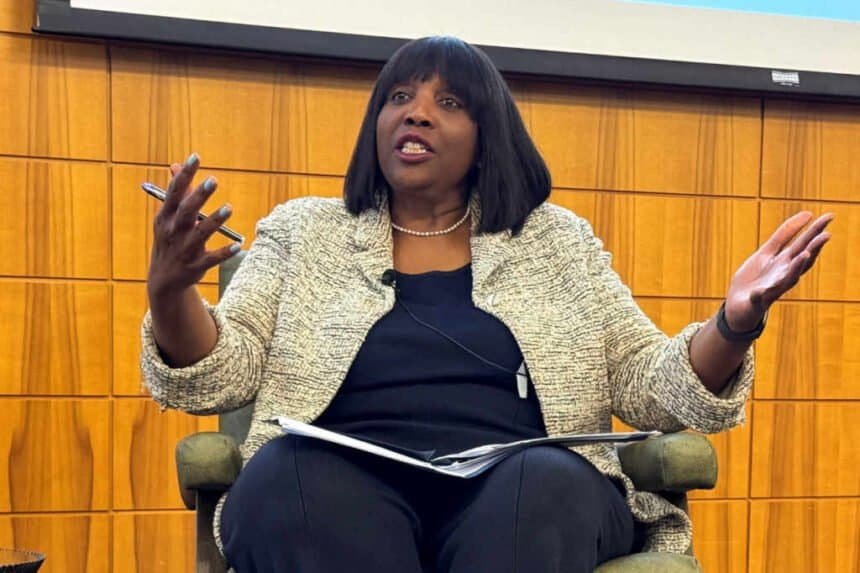
“Inflation is too high, and I consider the risks to the inflation side of the dual mandate higher than the risks to the employment side at this point,” Cook said during a speech in Anchorage, Alaska. “As such, I am prepared to act by raising rates, if necessary.”

That’s not hedged central-bank language. That’s a governor telling you where her vote goes next.
June’s data did show inflation easing, driven mostly by a sharp slide in energy prices. Cook wasn’t impressed enough to bank on it. She said there shouldn’t be too much read into a single data point, especially with price increases still running well ahead of the Fed’s 2% goal.
Why she voted to hold anyway
Cook was part of the 9-3 majority that voted last week to keep the benchmark borrowing rate in a range between 3.5%-3.75%.
Her reasoning for waiting was specific. She wanted to see how three separate pressures shake out in the price data: possibly waning impacts from tariffs, an energy supply shock tied to the Iran war and the demands of the artificial intelligence buildout.
So the hold was a look-before-you-leap vote, not a signal that she’s comfortable.
The five-year problem
The part of Cook’s speech that should get the most attention isn’t about June. It’s about what happens when above-target inflation stops being a news story and starts being a habit.
“If I do not see signs of continued disinflation soon, I am prepared to act,” Cook said. “With five years of above-target inflation, the risk grows that higher inflation may become entrenched in price- and wage-setting behavior, leading to persistence that would be much harder for us to attack. The longer inflation is above target, the more likely this scenario becomes.”
Five years. That’s the number worth sitting with. Entrenchment in wage- and price-setting behavior is the failure mode central bankers lose sleep over, because once it’s in, rate policy has to work a lot harder to get it out.
No luxury of waiting
Cook allowed that other environments might let the Fed sit on its hands longer. Not this one.
“We do not have that luxury in this one,” she said.
Markets are already positioned for movement. According to the CME Group’s FedWatch, the central bank could act as soon as September, though traders are pricing in higher odds for an October move.
And Cook isn’t the only voice pushing this direction. Earlier in the day, Minneapolis Fed President Neel Kashkari, one of the three dissenting votes on last week’s decision, told CNBC he still believes higher rates are necessary.
Kashkari dissented. Cook didn’t. If the disinflation signal doesn’t show up in the next round of data, that distinction may not last.