

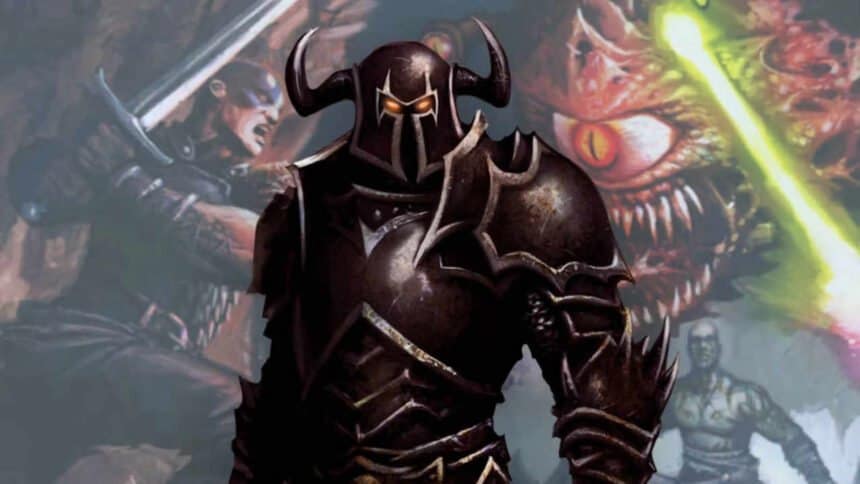
You wake up chained in a locked cell beneath the city of Athkatla. Your friends are in cages nearby, and a wizard is running experiments on them one at a time. You have no idea yet what he wants from you.
That’s the opening of Baldur’s Gate 2, and it came out over twenty years ago.
Baldur's Gate 3 is a wonderful game, one of my personal favorites, one tens of thousands of people are still playing constantly three years after its release. But it isn’t automatically the best Baldur’s Gate game. There’s another game set in the same world, one in which an unrelenting series of wild things happen (a wizard tortures your soul while you’re trapped in a locked cage, your best friend may or may not turn on you at the worst possible moment, a berserker screams prophecy at a hamster named Boo completely straight-faced), and in many people’s opinions, this, not Baldur’s Gate 3, is by far the best Baldur’s Gate game. Some call it the greatest game of all time.

In Baldur’s Gate 2, you spend one hundred hours deciding whether you have what it takes to become a god.
The villain players still flinch at
Baldur’s Gate 2: Shadows of Amn, fully playable on Windows PC, picks up directly from Baldur’s Gate 1, though it works fine as a standalone. Your character is a Bhaalspawn, one of many mortal children fathered by Bhaal, the dead god of murder. You and your kind are being hunted across the Sword Coast for the divine spark in your blood. By the time the game opens, that hunt has caught up to you.
Jon Irenicus, your captor, is a skin-crawling, heinous, thoroughly messed-up villain. He was once a respected elven mage, exiled from his own people for running forbidden experiments on people, a hobby he’s clearly not gotten over. Early in the game you find a grove of dryads he’s drained dry just to test his methods: tree spirits reduced to withered, silent things for no good reason.
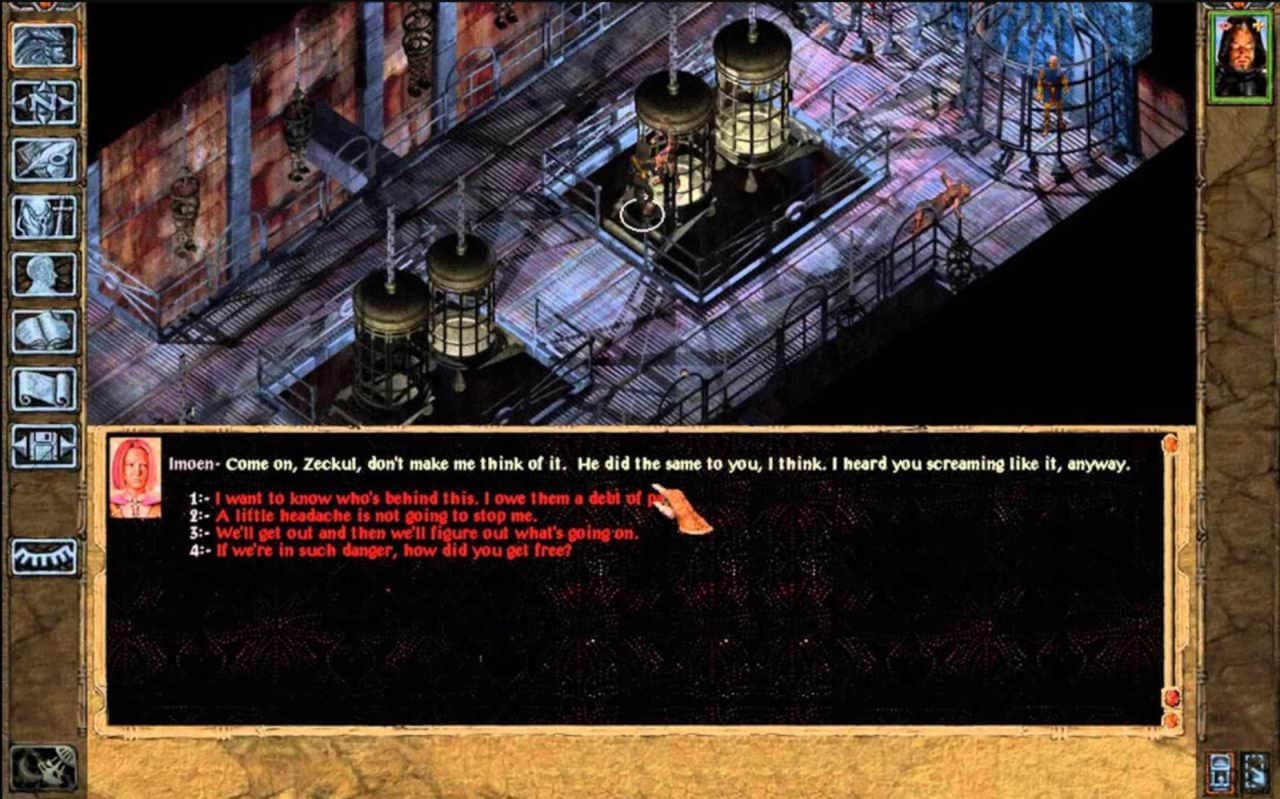
You’re not facing him alone, though. You’ll get through this, probably, with the help of a handful of friends. Each of them is dealing with their own nightmares and will need your help too.
Series regular Jaheira loses her husband before the game’s even properly begun and spends the rest of the campaign fighting through grief on top of everything else. Aerie has spent her life as a caged circus performer with her wings clipped; learning to fly again is the least of her problems. Anomen is a knight-in-training so hungry to prove himself that his own bad judgment gets people killed, including, possibly, his own sister. And Viconia DeVir is a dark elf priestess exiled from the Underdark for the disastrous crime of showing mercy, according to the goddess she can’t stop serving.
A city you could explore before “open world” was a sales pitch
The story you’re living through changes in response to your choices. You control how your characters grow, whether NPCs are happy or dead, and the fate of the entire world around you.
Long before “open world” became a common gaming marketing line, Athkatla’s docks, slums and government district were fully explorable from the moment you arrived, stacked with side content you could tackle in any order you wanted. Each class also gets its own distinct questline. A fighter leads a keep, a thief seizes a guild, a cleric is tasked with restoring a temple. Every one of these is a wholly separate slice of narrative gated behind who you built your character to be, not a side quest bolted onto a shared story everyone sees the same way.

That’s why the game holds up to so many replays. One longtime player didn’t finish his first full campaign until 12 years after purchase, because he kept restarting as another class to see the world from as many angles as possible.
Twelve years is a long time to spend not finishing one game. To be fair, there’s a lot going on. Over the roughly 70 hours most players spend finishing the main campaign, you’ll get tortured for information, have no choice but to trust a fellow prisoner who definitely seems as dangerous as your captor, discover with horror what Irenicus is up to, and then decide if you, as a Bhaalspawn, have what it takes to face your murderous siblings.
All the while you’re grappling with your own identity, and with your monstrous Slayer form crawling its way out of your skin, and what that means for you and your friends. Will you be strong enough to ascend to Bhaal’s own throne when godhood is on the table? Or will you end up as crow meat, nothing more than another failed vessel added to a dead god’s list of dead children?
The blueprint BioWare kept reusing
Baldur’s Gate 2 came out in 2000 and became BioWare’s blueprint for several of the company’s subsequent games. Knights of the Old Republic (2003) had an alignment system and late-game-companion twist much like Baldur’s Gate 2’s. Mass Effect (2007) and its loyalty missions feel like Stronghold missions set in space. Dragon Age (2009) handled origin characters and their unique stories and missions in an eerily reminiscent way.
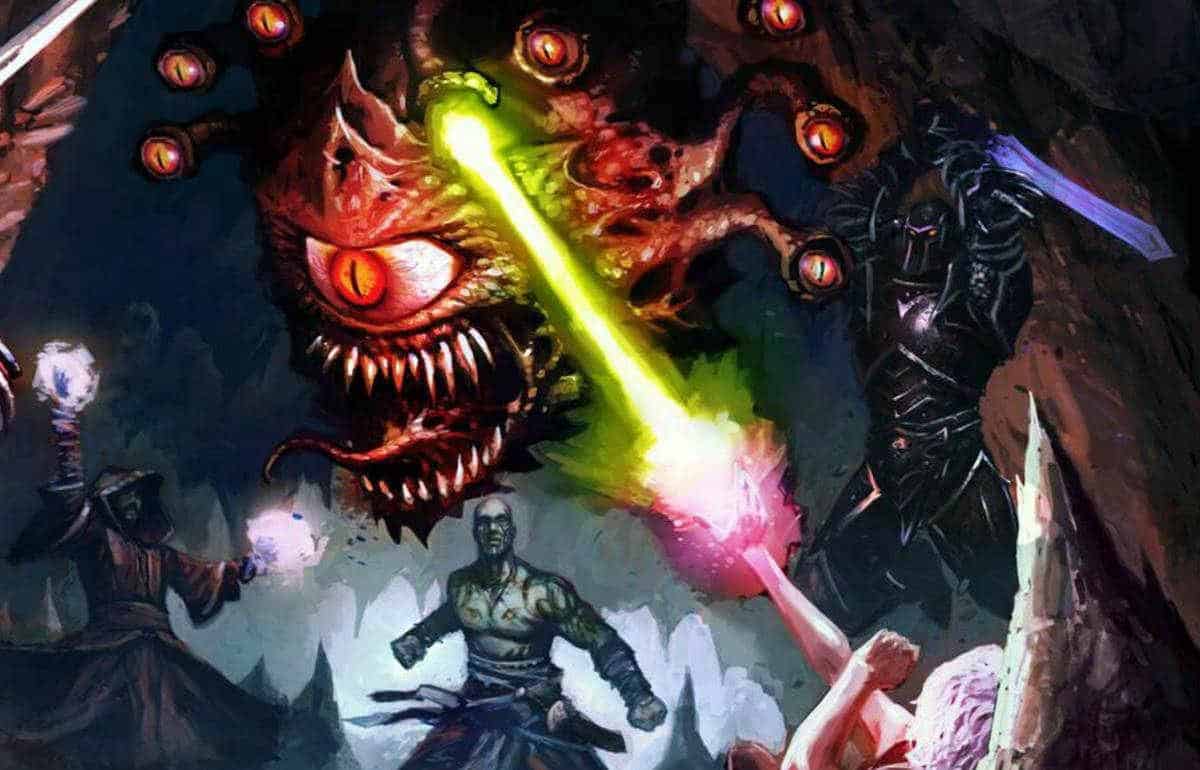
Seeds planted in Baldur’s Gate 2 found their way to Baldur’s Gate 3, too. Companions who react to and judge nearly every choice you make. An endgame decision about whether to embrace or resist a monstrous transformation in exchange for power. And that’s a game still enjoying near-universal praise and constant, never-ending replays.
Which is fabulous for Baldur’s Gate 3, a game I’m replaying more often than not. But why am I constantly seeking new ways to play that game when Baldur’s Gate 2 is right there?
So here’s a challenge. When you next feel the urge, Dark or otherwise, to replay Baldur’s Gate 3, pick up the second game instead. It’s old enough that you can usually find it on sale for pennies, and it’s time to understand why players still flinch at Irenicus’s name decades later. There’s nothing to lose. Except your soul, maybe.