

Nintendo got a $300 million check back from the U.S. government this quarter, and it turned into a 150% profit increase.
That’s the headline number in the company’s financial report for the first quarter of this fiscal year, and it’s the kind of line item you almost never see in a gaming earnings call. Following the United States Supreme Court’s ruling on IEEPA tariff refunds, Nintendo got its money back, cost of sales dropped considerably, and profits jumped. The company is quick to point out that players weren’t the ones footing the original bill: “tariffs related to the refunds were primarily borne by the company rather than passed on to consumers through product prices.”
The Switch 2 just passed the GameCube
Hardware sales dropped 31 to 34% for both consoles compared to last year. Ignore that number, or at least contextualize it. The Switch 2 launched during the first quarter of the previous fiscal year, so last year’s report is padded with a launch week spike. Comparing the two straight across isn’t a fair fight.

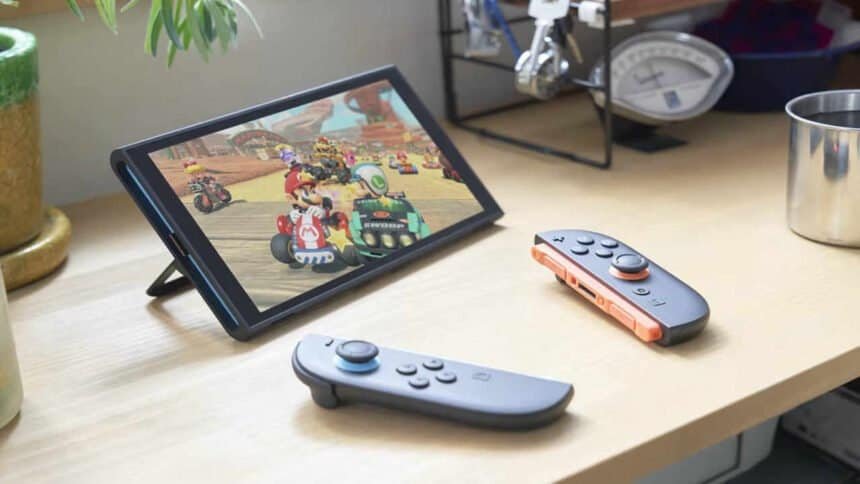
What matters: 3.82 million Switch 2 units moved this quarter, bringing the lifetime total to 23.68 million. That’s past the GameCube now.
And the original Switch, a console that came out nine years ago, still sold more than 660,000 units in three months. Nine years. Most hardware is a rounding error by that point.
People are buying fewer boxes and way more games
Switch 2 exclusive software sales rose 9.2%. Fine, solid. But software for the original Switch went up 38.6%, which is a strange and delightful number for a machine most companies would have quietly stopped supporting.
Digital game sales climbed 90% year over year. That’s the part everyone will fixate on, especially with Sony’s announcement to end disc production still hanging over the conversation.
Here’s the counterweight: physical copies still make up 40% of Nintendo’s game sales. Nintendo isn’t killing the game card. Not with numbers like that.
The Galaxy movie made a billion dollars and didn’t beat its own predecessor
Nintendo’s IP-related income, which covers official merchandise, royalties, apps, movies and videos, rose 107.4%. Most of that traces back to one release.
The Super Mario Galaxy Movie hit theaters in April 2026, right at the start of the fiscal year, and pulled in over $1 billion in revenue. That makes it the second-highest grossing movie based on a video game.
Second, because it couldn’t clear The Super Mario Bros. Movie. Nintendo beat everyone except itself.
Why Zelda is the real test
The strategy behind these films isn’t complicated. Nintendo leans hard on family-friendly content and values, and it wants the animated movies to land with existing fans and with people who’ve never touched this universe or its characters. Maybe nudge a few of them toward picking up a controller for the first time.
The Legend of Zelda live-action movie is in the works, and Nintendo hopes it reaches an even wider audience and clears The Super Mario Bros. Movie at the box office.
Which means the company’s own 2023 hit is now the bar it keeps failing to jump. A billion dollars, a Supreme Court refund, a nine-year-old console still selling, and the thing Nintendo wants most is to beat a cartoon plumber it already made.