

Two OpenAI executives sat in the same briefing this week and told a different story about the same product. One said the company’s models can now reason better than a doctor. The other, asked to back that up, started subtracting.
Ashley Alexander, OpenAI’s vice president of health product, said the company’s models “are now capable of reasoning at levels that are better than clinician level.” That’s a big claim, and it’s the kind of thing you’d want a second opinion on.
You get one from inside the company.

When reporters pressed for detail on how the models stack up against human clinicians, OpenAI health lead Karan Singhal said he’d “temper” the claim. His softer version: “there have been individual studies that have been pointing in that direction,” and he pointed to one from Harvard and Stanford. A study pointing in a direction isn’t the same as beating your doctor, and Singhal seemed to know it.
A lawsuit lands the day before launch
The timing is rough. On Wednesday, a Florida pastor sued OpenAI, alleging ChatGPT gave him “extremely dangerous medical recommendations” that led him to put off care for a pulmonary embolism. A day later, the company is widening access to the exact feature built around medical advice.
OpenAI’s own framing tries to thread that needle. It says ChatGPT Health “supports, not replaces, professional care.” Hold that line next to “better than clinician level” and you can see the company arguing both sides at once.
What’s actually shipping Thursday
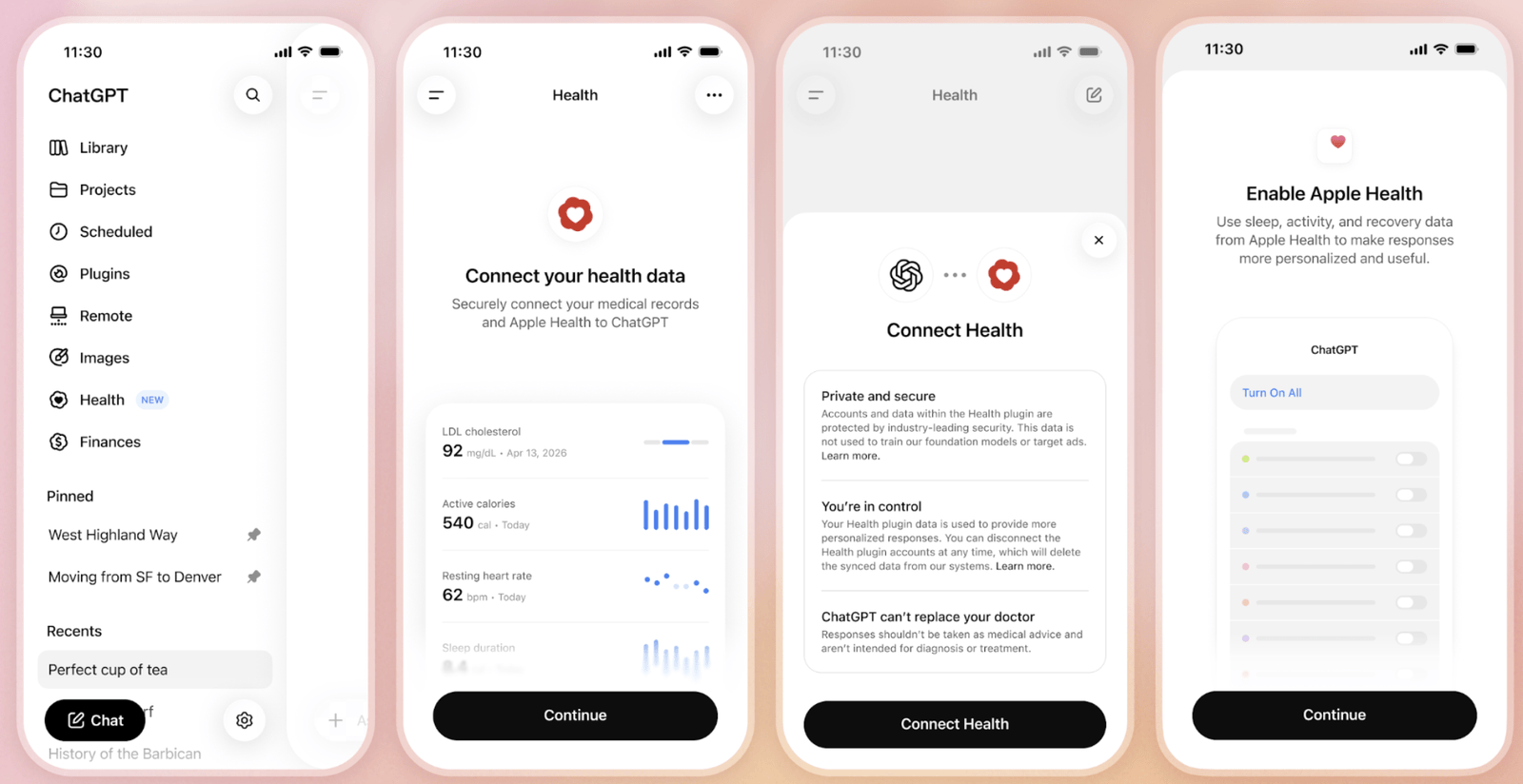
ChatGPT Health goes out to everyone in the US on Thursday, letting more people connect medical records and health-tracking data to the chatbot. The change people will notice first is smaller than the headline: you can now ask about your connected health info inside the main chat instead of hopping to a separate Health tab.
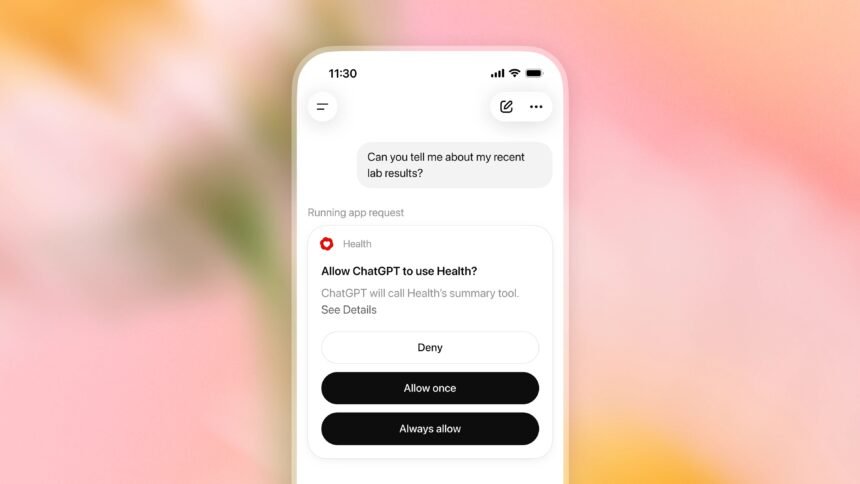
Before it uses that data to personalize an answer, ChatGPT asks permission. The company says “all conversations are encrypted at rest and at transit,” and that anything you connect through Health “receives additional encryption protection.”
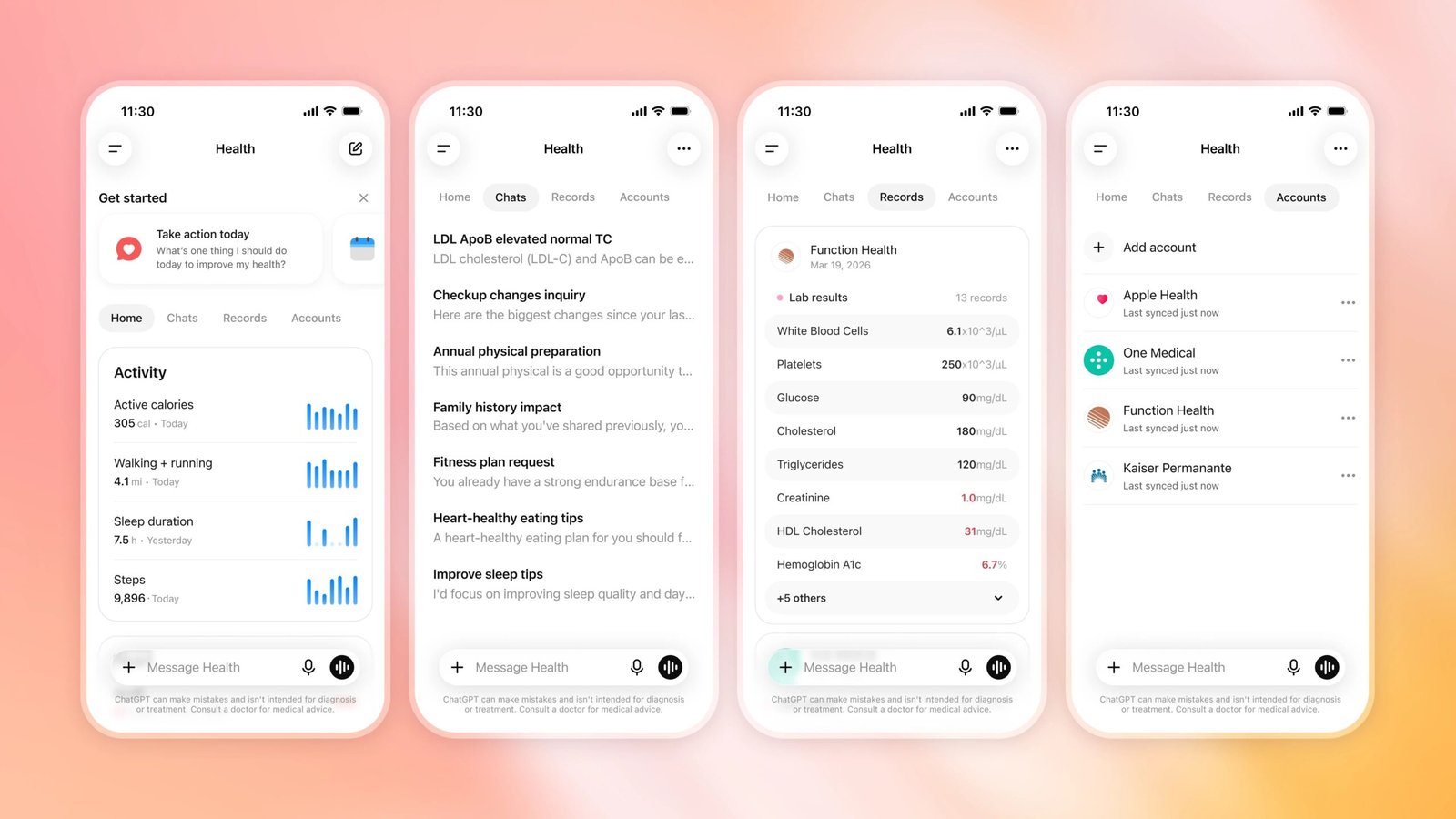
You control what goes in. That covers post-visit notes, notes from your care team, lab results and medications, pulled from health providers or from services like Apple Health, Weight Watchers, MyFitnessPal and Function. You can review and change any of it later.
The model underneath
All of this runs on OpenAI’s latest models. The rollout comes weeks after the company launched GPT-5.6 Sol, which it calls its “strongest model yet for health.” ChatGPT Health uses those newest models under the hood.
It’s available to logged-in users 18 and older on web and iOS, across the free, Go, Plus and Pro plans.
Connect your labs if you want. But when the vice president says the model out-reasons a clinician and the health lead won’t co-sign that in the same room, the useful takeaway isn’t the marketing line. It’s which of those two people you’d trust with your pulmonary embolism.