
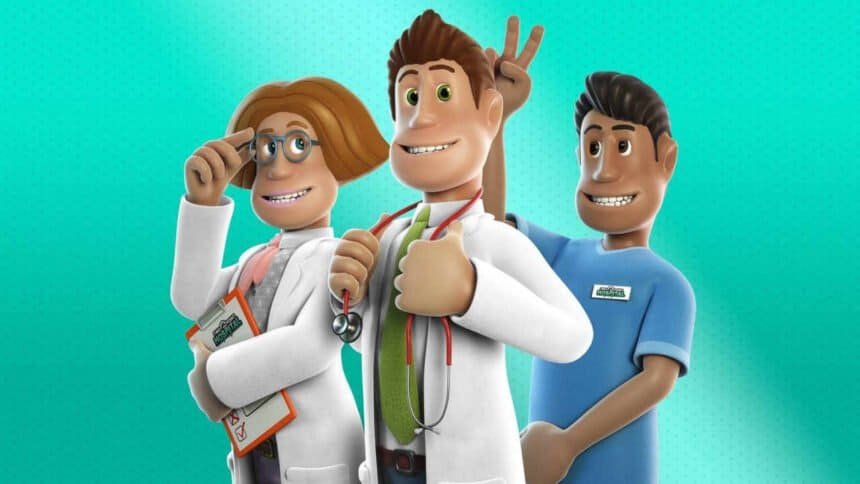
Two Point Studios paid back Sega’s advances in two and a half days.
Not 18 months, which is what the team had budgeted for. Two and a half days. That’s what happened when Two Point Hospital hit Steam in August 2018 and went to the top-selling spot in more than 40 territories, in a month that also gave players Madden NFL 19, Overcooked 2 and Monster Hunter World.
“It completely blew us away,” said Jo Koehler, Two Point’s COO. “I don’t know what we expected, but it wasn’t what happened.”

The studio originally signed with Sega for roughly 18 months back in 2016. Ten years later it’s still here, still one of Sega’s most important first-party studios, and still making the exact kind of game a room full of executives once told them nobody wanted.
Microsoft said sims weren’t sexy enough
Before Two Point, there was Lionhead. Founder Gary Carr was on a prototype team there with Ben Hymers, now the studio’s technical director, and the two had worked together before on projects including Lionhead’s studio simulator The Movies. Carr asked whether Hymers wanted to start something new, unattached to Lionhead.
“I was old and he was young,” Carr said. “I basically wanted to harvest his youth and cling to it.”
He’s joking. But the youth part mattered. Hymers loved the Bullfrog games Carr had worked on, Theme Hospital chief among them, and kept asking why nobody made those anymore. The answer came from the people greenlighting games at Xbox.
“We pitched these games at Microsoft, and I remember at the time they were saying, ‘We need billion-dollar franchises. We leave that kind of money on the table,'” Carr recalled. “And that was a saying that really irked me a bit.”
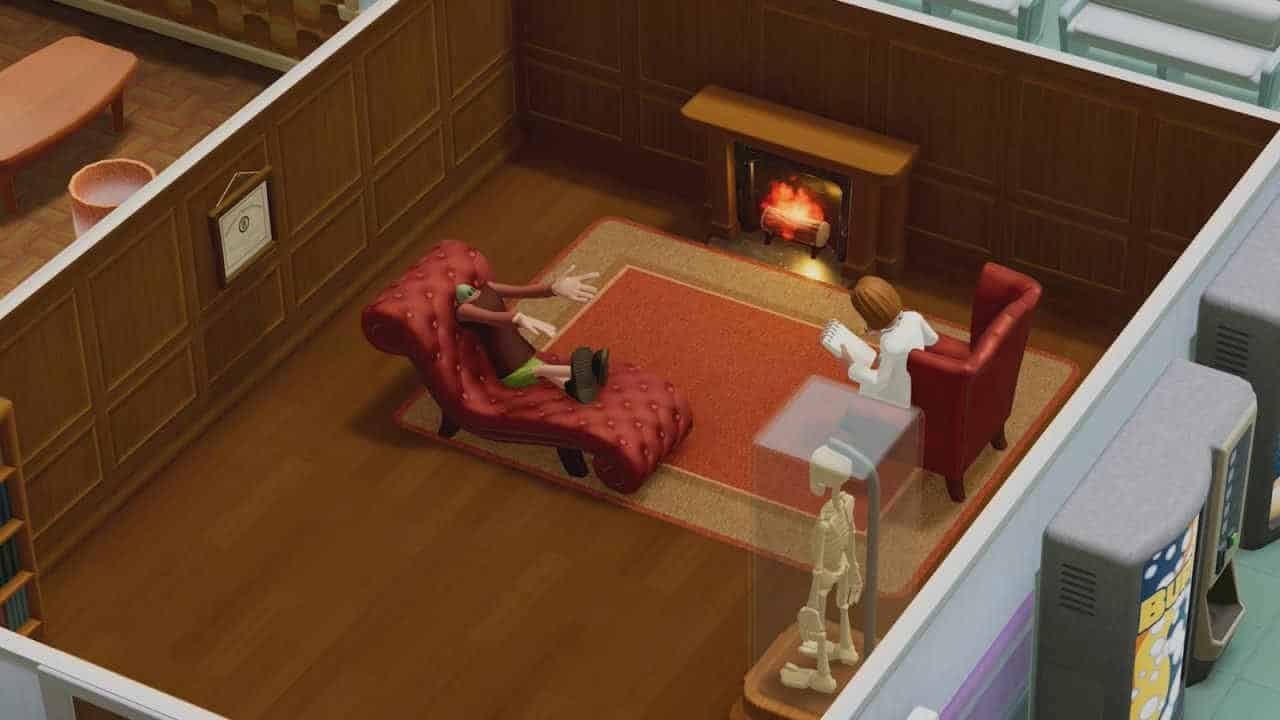
That line “bashed” the idea out of Carr and fellow founder Mark Webley. Hymers kept pushing, arguing nostalgia plus a good management game was a real combination, and eventually Carr came around to the possibility that Microsoft had it wrong.
“I think we assumed [sim games] had probably had their day, if I’m honest,” Carr said. “Ben definitely made me think twice about that assumption. When you’re in the industry for so long, you kind of don’t have a strong sense of public perception and what people want.”
So the three of them ran the logic the obvious way. If Microsoft was content to leave money on the table, someone else would pick it up. They pitched themselves as “below AAA” and went looking for a publisher.
Sega had been wishing out loud for a studio like this
The timing borders on absurd. Sega’s Searchlight program, built to find smaller independent studios that complemented its bigger output, was running at full speed. It wanted projects below AAA. And Carr found out later that Sega’s decision-makers had been talking among themselves just days before Two Point got in touch, saying how nice it’d be to have a Bullfrog-style studio in the portfolio.
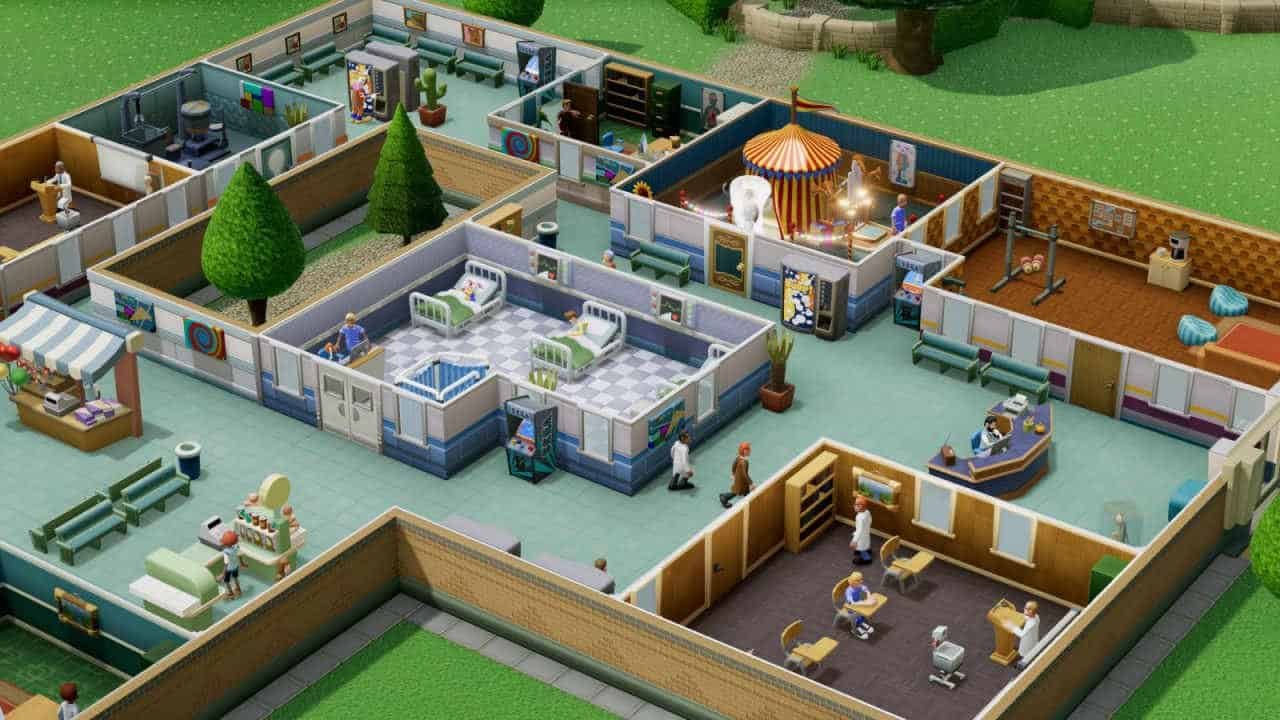
Then Microsoft closed Lionhead in 2016, right as Hymers, Webley and Carr were negotiating with Sega. A pool of developers who already knew each other and already knew how to build sim games needed work. Carr also brought in Koehler, an experienced producer who’d worked with EA and Playsport, the studio behind Motorsport Manager. Production started with six people. By the time Hospital shipped, it was 14.
Development went smoothly in a way that only happens when experienced people who trust each other are in one room.
“It was a very strong shared vision of what we were making, which really sped up the process,” Hymers said.
“We trusted in each other,” Carr said. “Everybody was very experienced, so there was a free-form attitude to design, to our style, and everybody was involved. It was wonderful, almost like we’d gone back 20 years to early game development in the 80s and 90s, where there wasn’t really that much documentation or process. It was just about energy.”
No audience to please, no design documents to honor. Carr said the team let itself “regress” to the charming, lighthearted games it made at Bullfrog and Lionhead. It was therapy as much as business, and they all assumed it was their last shot at doing the work they loved with people they liked.
Being number one on Steam is scarier than it sounds
Carr figured Two Point would last as long as Sega kept writing checks, maybe two years. Hospital sold particularly well in China, Germany, the U.S. and the U.K., all of which surprised the team. Games like this had historically underperformed in China and Germany, and Theme Hospital sold noticeably worse in the U.S. than in the U.K.
“Our expected recoup time was about 18 months down the line, when we hoped we might have enough money to put behind the company,” Carr said. “Instead, we repaid Sega’s advances in two-and-a-half days. Which was nuts and a really emotional time. A lot of dev companies, they make a game and at the point they’ve released the game, they’re at their most vulnerable because they’re broke. They’ve spent all the development money, but thankfully and luckily, we were immediately in the black.”
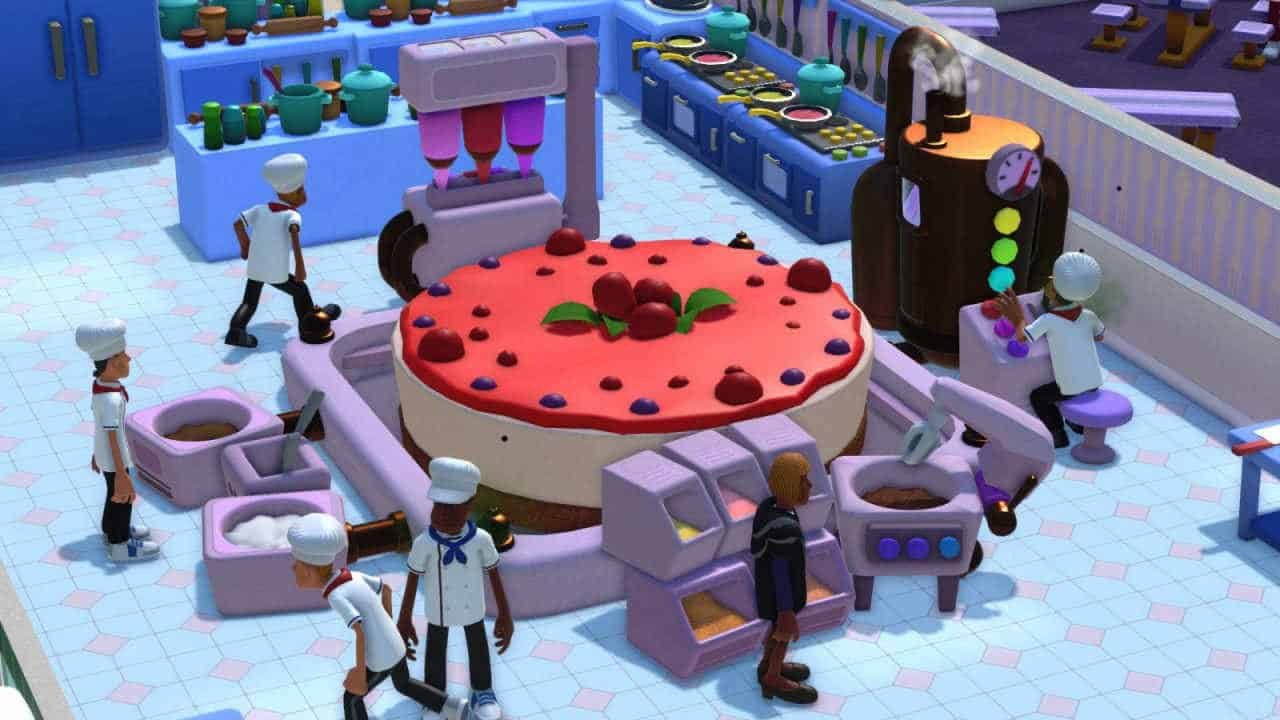
Sega was as surprised as they were. The original contract had no provisions for anything past launch, so Two Point negotiated an amendment fast and spent the following months fixing bugs, reading feedback and staying up late answering players.
Success also brought a problem nobody had planned for.
“There was fear,” Carr said. “We were a relatively unknown indie game studio, only founded two years before, and almost to the anniversary date of two years, we were number one on Steam. People can quite easily go on Company House and see you’re an independent studio, and we had a lot of people swarming around, a lot of outside interest.”
Sega wanted to keep them. Two Point felt the loyalty, because Sega had backed them without demanding much, including without demanding ownership of whatever IP came out of it. It handed over money and let them make the game. The other offers got batted away, and Two Point became a first-party studio.
Campus proved the era wasn’t actually over
Hospital was meant as a farewell to a dead style of game and development. Turns out it wasn’t dead. So Campus needed to be its own thing rather than another act of restoration.
Webley’s philosophy was that a good setting is anything people feel connected to, grand or mundane. Everyone’s been through an education system. Almost nobody was making games set in one. Easy call.
Koehler led the work of collating post-launch feedback from Hospital, both the small friction points that tripped players up and the bigger question of who this audience actually was. The answer: exactly the people Carr and company had spent careers making games for. They wanted deep simulation that didn’t drown them and lighthearted charm that didn’t come at the cost of complexity. Barely anyone was serving that middle ground then, and 10 years on, Two Point’s games remain largely uncontested there.
One thing had changed from the Bullfrog and Lionhead days, though. This audience had opinions, and somewhere to put them.
“Prior to that, we were typical developers for the time, who didn’t necessarily have a relationship with people that bought our games,” Carr said. “Now we literally ask our community what they want. It’s flipped my experience from being kind of in a bubble of development to actually spending time speaking to players. It isn’t just about keeping people buying your games. It’s about helping them, then helping you make a better game for the next time around.”
The thieves had to go
Acting on that feedback meant better technical foundations for Campus and later Museum. Two Point started developing for consoles alongside the PC version, reworking interfaces and button placement and other Hospital sore spots. It also built systems to make its simulated people something more than what Carr called “fodder.” Campus lets you mark favorite students and professors and get updates on how they’re doing, or hear when a student makes a friend. Museum took that further with staff traits, associated events and the possibility of a staffer dying if an expedition to find an exhibit goes badly.
Feedback also meant rebuilding parts of games already out in the world. Museum shipped with a less balanced security system than it has today, partly inspired by real-world heists the team heard about during development. The complaints made the flaw obvious. Timely is fine, Koehler said, but handing people creative freedom to build a museum and then letting thieves take it apart isn’t a fair trade.
Growing the studio to support all this raised the question the founders care most about. Koehler and the founders share a belief that once management layers appear, everyone suffers. Koehler “managed the hell” out of the place, Carr said, to protect that. Fourteen people at Hospital’s launch, 50 now, plus carefully vetted support studios for specializations Two Point doesn’t have in-house.
“A lot of us have been at companies that have grown really big really quickly and it just kind of destroys the culture at the studio,” Hymers said. “And we didn’t want that because we liked how we work.”
“We’re all developers,” Carr added. “At bigger studios, you become managers. But the reason we got into games was to make games. So we all keep our hands on, and we stay small. Otherwise, we’d have to become managers again.”