
Nintendo has released four home consoles since the GameCube died, and every single one of them officially supports a GameCube pad. That’s not nostalgia. That’s a company admitting it got something right the first time.
The GCN turns 25 this year, and the controller is the best argument for its legacy. Nintendo has kept re-releasing it in new editions, over and over, for a machine that stopped rolling off production lines two decades ago.
A few things got it here. It was built for the games it shipped alongside, it became inseparable from one of Nintendo's biggest franchises, and that franchise kept dragging it forward onto every new platform. It’s still one of the best Nintendo Switch controllers you can buy.
The buttons don’t make sense until they do
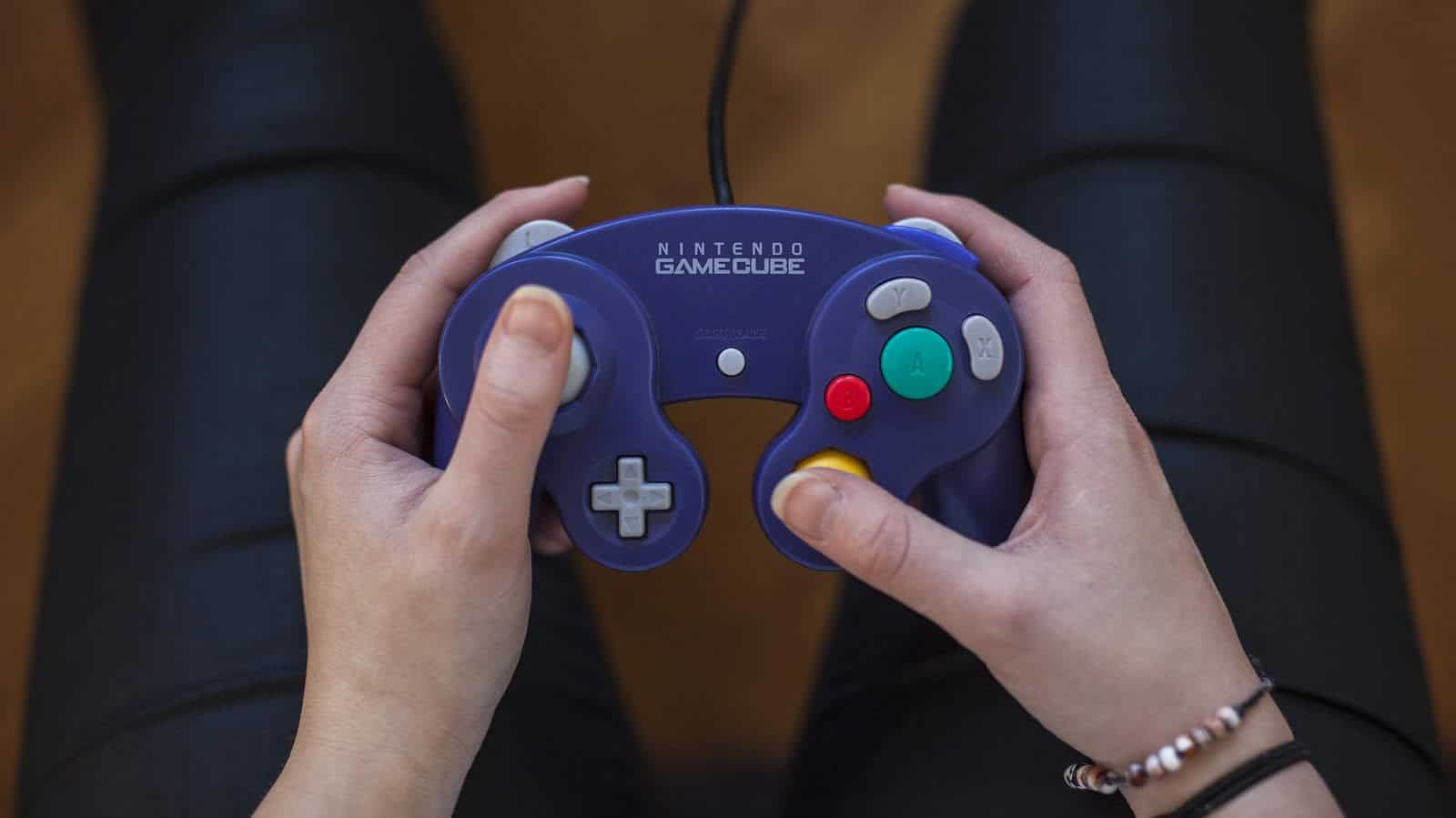
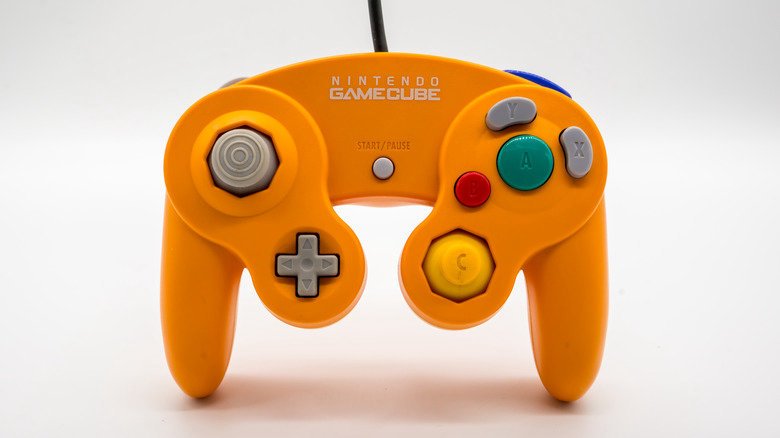
Look at it once and you’ll notice it doesn’t play by the rules. No four-button diamond. Instead there’s an oversized green A button, a tiny red B button, and two kidney-shaped X and Y buttons sitting around them like satellites.
That weirdness is deliberate. A newcomer picks it up and immediately understands that A is the button that matters. You can feel which button your thumb is on without looking down. And the layout lets you mash A together with anything else without contorting your hand.
The L and R triggers are analog, reacting to pressure instead of flipping a switch. Plenty of games leaned on that. In Super Mario Sunshine, a partial press lets Mario spray water while he walks; slam it down and he plants his feet to blast away. The Super Mario 3D All-Stars port on Switch splits those into separate buttons on a Joy-Con or Pro Controller, and it just doesn’t land the same way.
The octagon under your thumb
Most control sticks sit in a circular gate, the guard that limits how far the stick travels. The GameCube’s main thumbstick uses an octagonal one, inherited from the N64 pad before it.
Hitting an exact direction becomes much easier. That matters more than it sounds. The Super Monkey Ball games demand precise movement to thread narrow stages, and Soulcalibur II uses those notches to cleanly separate the directional attack inputs that fighting games run on.
Melee is the reason this thing never died
You can’t talk about the GameCube controller without talking about Smash. Super Smash Bros. Melee was the console’s best-selling game, a party game that made full use of four controller ports, and then it turned into something much larger.
Melee hides mechanics like wavedashing that push its skill ceiling absurdly high. It’s fast, which makes competitive sets fun to watch instead of a chore. And the roster is mostly balanced enough that different approaches actually work.
Then came the sequel. Super Smash Bros. Brawl landed on Wii in 2008, and because the Wii read GCN discs and had four GameCube controller ports, everyone kept using the pad they already knew. It also beat waggling a Wii Remote by a wide margin. Before Super Smash Bros. for Wii U arrived in 2014, Nintendo announced an adapter to plug GameCube controllers into that console. That same accessory worked on Switch, and got sold again with fresh branding, when Super Smash Bros. Ultimate showed up in 2018.
Muscle memory Nintendo refuses to abandon
Millions of people built their reflexes around this controller, casually and competitively. Nintendo has responded with adapters and a steady drip of re-releases. A Smash edition GameCube controller came out in 2014, and a near-identical version went on sale in November 2018, right before Ultimate.
Now there’s a revamped wireless GameCube controller for the Switch 2’s GCN library on Nintendo Classics, with a handful of modern additions like ZL and Home.

The flaws are real
This pad isn’t perfect. It has problems against its own competition at the time and against anything modern, and unlike the PS2 and Xbox controllers, its design never got iterated on for a successor. It’s still a joy to hold.
The D-pad and the nub-shaped C-stick are the two genuine failures. That D-pad is mushy and small, so you’ll register two directions when you wanted one. The C-stick handles quick camera nudges fine but doesn’t come close to the twin-stick setup everything uses now.
The odd button layout also punishes anything not built for it. SNES games that ask you to hold Y to run and tap B to jump feel clumsy here. But for the games designed around it, Luigi’s Mansion and The Legend of Zelda: The Wind Waker, it feels like the hardware and the software were made in the same room.
The WaveBird got there first
In 2002 Nintendo shipped the WaveBird, one of the first mainstream wireless gamepads. Earlier consoles had tried wireless using IR, which falls apart the moment something blocks the signal.
The WaveBird asks you to match a channel on both the receiver and the controller, has no rumble, and is a little chunkier at the base than the wired model. It’s still excellent, with long battery life and almost no dropouts. I used one for most of my GameCube years.
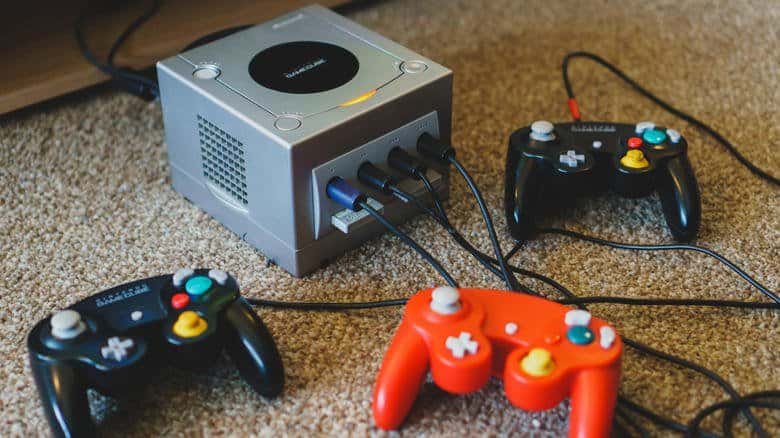
Which brings me to the part that stings. My original GameCube controllers still work. Barely any wear, no quirks to play around, and they come out whenever friends are over for multiplayer. Meanwhile the Switch’s Joy-Con drift got so widespread that Nintendo paid a $40 million fine in France.