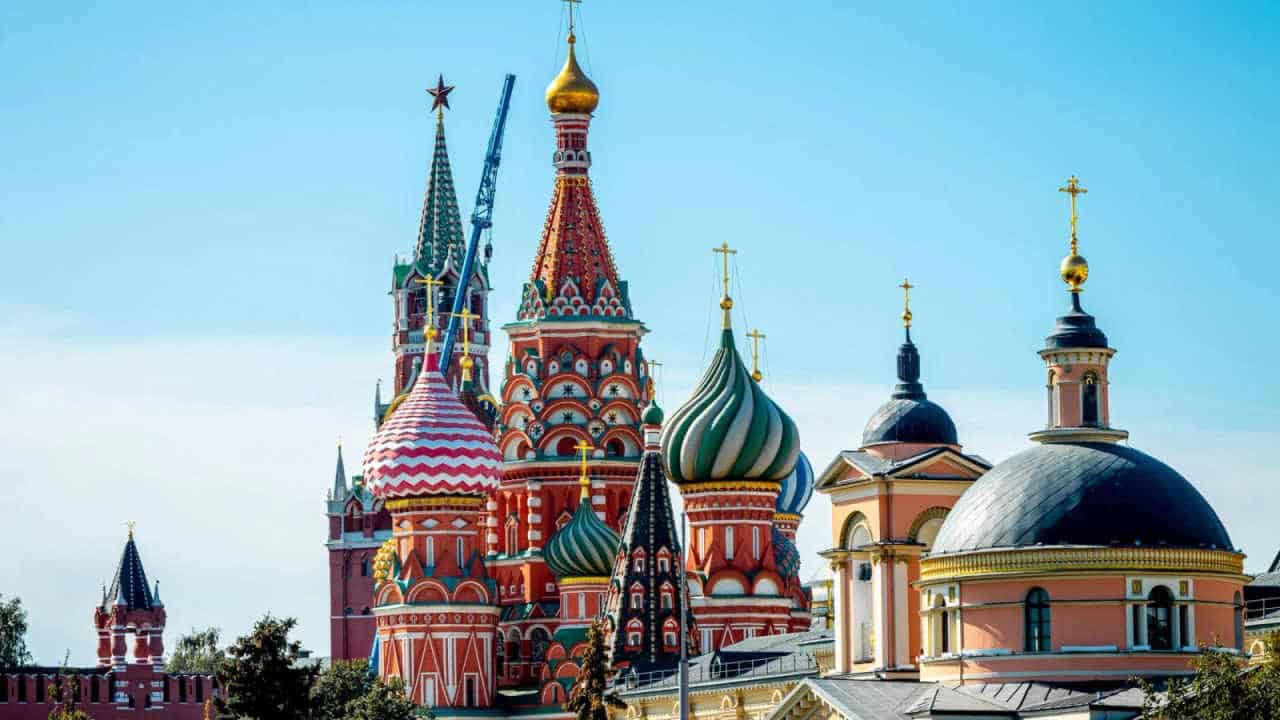

Moscow just told its Bitcoin miners to shut off the machines, and not for a season. The ban on crypto mining in Moscow, the surrounding Moscow Region and parts of Kursk runs through Dec. 31, 2032.
That’s a seven-year lockout in the capital of a country that produced an estimated 175 exahashes per second in the first quarter, or 16.4% of Bitcoin’s global computing power, second only to the U.S.
What’s unclear is how much of that hashrate actually sat inside the newly restricted zone. Nobody has published that split, and the decree doesn’t break it out.
The decree covers pools too
Government decree No. 936 doesn’t stop at rigs. It also prohibits participation in crypto mining pools, which closes the obvious workaround of pointing hardware at a pool from a restricted address.
The decree was signed on July 25 and published on July 31, according to local media reports.
The grid math behind the ban
Russia’s Energy Ministry said a year-round restriction was needed to reduce the risk of power-capacity shortages as energy-intensive mining facilities connect to regional grids.
Here’s the number that matters. Mining currently consumes roughly 1 gigawatt in the Moscow power system. The region’s data-center capacity could reach 3.6 GW, or 17% of peak demand, by 2032, Interfax reported after the decree was first signed.
Seventeen percent of peak demand is not a rounding error. It’s the kind of load that forces a utility to choose between building generation and telling somebody to stop plugging things in. Moscow chose the second option.
Mining isn’t just an energy story here
Mining in Russia is tied to sanctions, and that’s the part that makes this more than a grid-management story.
Russian companies had been using domestically mined bitcoin in international payments after legal changes designed to counter Western restrictions, Finance Minister Anton Siluanov said in December 2024.
Legislation passed by parliament in July kept Russia’s ban on domestic crypto payments in place but preserved exceptions for foreign-trade settlements and transactions involving mined cryptocurrency. The mechanism stays available as sanctions squeeze conventional payment channels.
Washington noticed a while ago
The U.S. Treasury sanctioned BitRiver and 10 subsidiaries in 2022, saying Russian mining companies helped the country monetize its energy resources and could offset the impact of sanctions.
So the same activity Moscow is now curbing at home is the activity Washington moved against three years earlier, for different reasons. One side sees a grid liability. The other sees a sanctions valve.
This is a pattern, not a one-off
Russia legalized registered crypto mining back in 2024. Then it banned the activity in 10 regions through March 2031, citing electricity demand.
Year-round restrictions were later extended to southern Irkutsk and most areas of Buryatia and Zabaykalsky Krai. The Moscow decree fits the same shape: legalize the industry nationally, then carve out the places where the grid can’t absorb it.
What to watch instead of the headline
If you’re tracking Russian hashrate, the useful signal isn’t the ban itself. It’s whether the country’s 16.4% share of global computing power holds through the next quarterly reading or slides as capital moves toward regions with power to spare.
Watch the pool participation clause, too. A rig ban is enforceable at the substation. A pool ban is enforceable only if somebody is willing to inspect who’s hashing where, and that’s a harder job than reading a meter.
Separately, Zcash’s Tachyon upgrade aims to scale shielded payments, improve quantum readiness, and test whether its funding, security, and governance can hold.