


Decentraland Review 2026: Is It Worth Using?
Decentraland MANA $0.08879 ▼ -1.1% is one of the oldest and most recognizable blockchain metaverses. It launched publicly in 2020, has attracted enormous media coverage and brand partnerships, and holds a significant position in the metaverse narrative. It also has a famously low concurrent user count relative to its cultural footprint, and its visual fidelity sparked the viral “Metaverse embarrassment” discourse when photos of nearly empty blocky environments circulated in 2022. This review gives you the honest picture of Decentraland in 2026 — what it is, what it actually delivers, and who it is genuinely useful for.
Quick Answer: Decentraland is a browser-accessible 3D virtual world on Ethereum where users own virtual land parcels as NFTs and build interactive experiences. It hosts regular events, brand activations, and community gatherings. Daily active user counts are modest compared to mainstream gaming platforms but genuine. MANA is the governance and utility token. LAND NFTs are scarce (fixed at 90,601 parcels) but have limited practical demand at current activity levels. Best suited for early adopters, digital art enthusiasts, and attendees of specific metaverse events.
Table of Contents
- What Decentraland Actually Is
- What You See When You Visit
- How Active Decentraland Really Is
- LAND Ownership: What It Means and What It Is Worth
- MANA Token: Utility and Investment
- Decentraland Events: The Strongest Use Case
- The Honest Verdict
- Frequently Asked Questions
What Decentraland Actually Is
Decentraland is a browser-based 3D virtual world where all land parcels are NFTs on the Ethereum blockchain. The world is divided into 90,601 fixed LAND parcels, each ownable by different users who can build whatever they want on their parcel using Decentraland’s scene builder tools.
The Foundation — a non-profit organization — governs Decentraland through the MANA governance token and a DAO structure. Major decisions about the platform, including which features to build and how treasury funds are allocated, go to MANA holders for votes. This decentralized governance model is a core part of Decentraland’s identity as a user-owned metaverse.
Accessible directly at decentraland.org without any download in a browser, or through a downloadable desktop client for better performance. The browser version works on most modern computers without GPU requirements that would limit mainstream accessibility.
What You See When You Visit
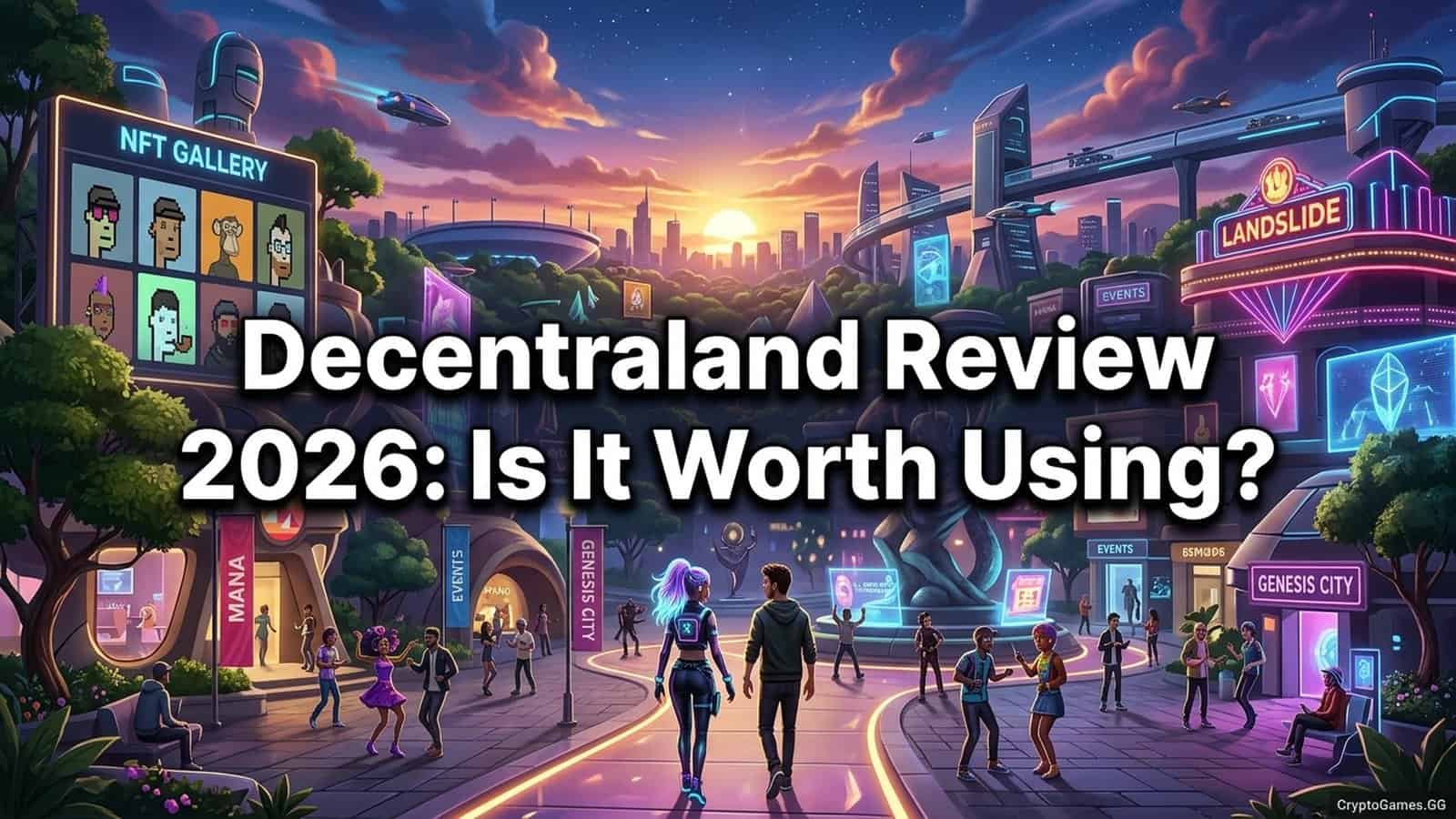
Visiting Decentraland in 2026 reveals a world that is visually simple by modern gaming standards but operationally more interesting than the empty screenshots from 2022 suggest. Graphic fidelity is deliberately modest — low-polygon environments load quickly in a browser without requiring high-end hardware. This trade-off between accessibility and visual fidelity is a conscious design choice, not a technical failure.
The Genesis Plaza starting area is typically populated with a small number of other users on any given visit. The density varies significantly by time of day and whether an event is happening nearby. During major events like Metaverse Fashion Week or music performances, specific areas can fill with dozens to hundreds of concurrent visitors creating a genuinely social atmosphere. Between events, many parcels are empty or host static displays with few active visitors.
The quality of individual LAND parcels varies enormously — from impressive interactive art galleries, games, and experiences built by skilled developers to completely undeveloped empty parcels that land speculators hold without building anything. Navigating to curated areas through Decentraland’s events calendar reveals the world’s actual creative capability, while random exploration often leads through empty or poorly developed areas.
How Active Decentraland Really Is
Decentraland’s user count controversy is real and worth addressing directly. The platform has substantially fewer daily active users than equivalent non-blockchain virtual worlds, and far fewer than mainstream social gaming platforms.
However, the platform does have genuine ongoing activity. Daily active wallet counts from DappRadar are modest but real — not fabricated. Regular events attract genuine attendees. The community governance DAO has active participation with regular proposal voting. Brands continue hosting activations in the world specifically because of its blockchain-native audience demographics — crypto-engaged users who own the platform tokens are a valuable target demographic for some brands regardless of absolute user count.
The honest user count assessment: Decentraland in 2026 is a niche platform with a dedicated community rather than a mass-market virtual world. Comparing it to Roblox or Fortnite’s concurrent user counts is a category error — Decentraland serves a different, smaller audience with different motivations.
LAND Ownership: What It Means and What It Is Worth
Owning a LAND parcel in Decentraland means owning an ERC-721 NFT on Ethereum that corresponds to a specific location in the virtual world. The total LAND supply is permanently fixed at 90,601 parcels — no new LAND will ever be created. This fixed supply is one of the foundational value arguments for LAND NFTs.
LAND owners can build on their parcels, rent them to other creators, or sell them on the Decentraland Marketplace. Prime location LAND (near Genesis Plaza, roads, or popular neighbor parcels) commands higher prices than peripheral locations, similar to real estate dynamics.
LAND prices peaked dramatically in 2021 when the metaverse narrative was at its strongest. Some parcels sold for hundreds of thousands of dollars. In 2026, LAND prices have corrected substantially from peak, reflecting the significant gap between the metaverse narrative and actual daily user counts. Current LAND prices should be evaluated relative to current platform activity rather than peak narrative hype.
MANA Token: Utility and Investment
MANA is both the governance token and the primary transaction currency within Decentraland. It is used for purchasing LAND, buying wearable items, accessing paid events, and voting on governance proposals. MANA holders vote on the platform’s development roadmap, treasury spending, and policy decisions through the Decentraland DAO.
MANA is an ERC-20 token on Ethereum with a regulated but not fixed supply. The token has experienced significant price volatility correlated with broader crypto market cycles and the metaverse narrative cycle. At peak in November 2021, MANA reached approximately $5.85. In subsequent years it declined significantly, reflecting both broader crypto market conditions and the gap between metaverse expectations and realized user adoption.
As an investment, MANA is a bet on Decentraland growing its user base and the metaverse concept gaining mainstream traction. As a utility token, it provides access to a niche but real blockchain metaverse community.
Decentraland Events: The Strongest Use Case
If Decentraland has a genuinely compelling use case in 2026, it is as an event venue for crypto-native communities and brands targeting blockchain-aware audiences. The platform’s events calendar includes regular concerts, art exhibitions, fashion shows, gaming competitions, and brand activations that draw concentrated attendance in ways that daily browsing does not.
Metaverse Fashion Week — held annually in Decentraland — attracts luxury brands seeking to engage crypto communities and has become a genuine cultural event within the blockchain space regardless of what you think about the metaverse concept broadly. Music events from independent and established artists use Decentraland as a venue for token-gated performances that reward NFT or MANA holders with access.
The events use case works because the blockchain-native audience attending these events is exactly the demographic brands or artists want to reach, and the token-gated access model creates exclusivity that cannot be easily replicated in traditional platforms. This specific use case is genuine and has shown staying power beyond the 2021 narrative peak.
The Honest Verdict
Decentraland in 2026 is: a functioning blockchain metaverse with a real community, genuine governance, and specific use cases that work well. It is not: a mass-market virtual world that competes with mainstream gaming platforms on user experience or population density.
Visit and explore if you are interested in blockchain governance, digital land ownership as a concept, or attending crypto-community events. Invest in MANA or LAND if you have a specific investment thesis about blockchain metaverse adoption growth that you have stress-tested against the actual current user data. Skip entirely if your interest is in high-quality gaming experiences, large concurrent populations, or visual fidelity comparable to modern games.
Rating: 6/10 overall. 8/10 for its specific target audience (blockchain enthusiasts, digital artists, metaverse event attendees). 3/10 for general gaming audiences expecting mainstream game quality and user counts.
Frequently Asked Questions
How many people use Decentraland daily?
Decentraland’s daily active user counts are modest and have been a subject of controversy. On-chain wallet activity tracked by DappRadar shows genuine but small daily active user numbers — in the hundreds to low thousands on typical days, with higher counts during major events. The platform serves a niche engaged community rather than a mass-market audience.
Is Decentraland free to visit?
Yes. Visiting and exploring Decentraland is completely free. You do not need MANA or a wallet to walk through the virtual world and visit public spaces. Purchasing LAND, buying wearables, accessing paid events, and participating in governance require a wallet and MANA tokens. The base exploration experience has no cost barrier.
Is LAND in Decentraland a good investment?
LAND value depends on Decentraland growing its user base and the metaverse concept gaining mainstream traction — neither of which is guaranteed. LAND prices have declined substantially from 2021 peaks. Whether current prices represent good value depends on your assessment of the platform’s long-term growth trajectory, which is genuinely uncertain. LAND investment carries significant risk and should be sized accordingly.
What can you actually do in Decentraland?
You can walk through and explore user-created virtual spaces, attend events including concerts, art exhibitions, and brand activations, participate in community governance through MANA token voting, buy and customize wearable avatar items, interact with other users in social spaces, and build your own experiences if you own LAND. The quality and interest level of available activities varies significantly depending on which areas you visit and whether events are scheduled.
Decentraland is genuinely interesting to people who engage with it on its own terms rather than expecting it to be something it has never claimed to be. The honest picture is of a working blockchain metaverse with real governance, real community, and real limitations — not a failed project, not a revolutionary mass-market platform, but a functional niche product for the audience it serves.