


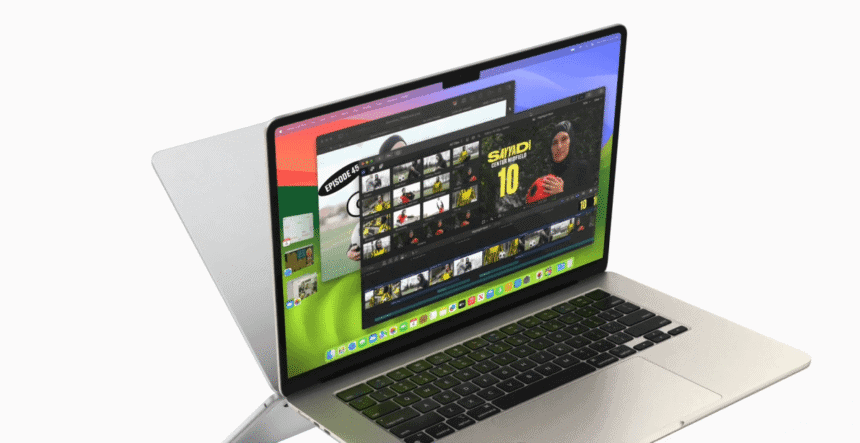
Try buying a MacBook Air from Apple right now and the checkout page tells you the story before any analyst does. Most configurations won’t ship until the back half of August. Some slip to September.
That’s not a holiday-season backlog or a launch-week crush. It’s the global memory chip shortage finally reaching Apple’s best-selling Mac, according to Bloomberg’s Mark Gurman.
The cause isn’t mysterious. AI companies are buying memory in volumes that leave everyone else fighting over what’s left, and Apple isn’t exempt from that math.

It started with the Macs nobody was watching
Gurman said the shortage had already hit Apple’s more niche machines, the Mac mini and Mac Studio. Those are easier to overlook. A constrained Mac Studio annoys a few thousand video editors and largely stays out of the news cycle.
The MacBook Air is different. It’s the Mac most people mean when they say they want a Mac, and retailers are telling Gurman that supply seems to be more constrained than ever before.

Read that phrasing carefully. Not tight. Not seasonal. More constrained than ever before, which is a strong claim from people whose job is stocking these things year after year.
Apple’s fixes are the expensive kind
Gurman says Apple is working to address the issue by raising prices and sourcing memory from Chinese suppliers. Those are two very different levers pulled at the same time, and neither is the move of a company with comfortable inventory.

Price increases are the blunt instrument. Diversifying suppliers is the slower structural one. Doing both suggests Apple doesn’t expect this to resolve on its own in a quarter.
The back-to-school promo tells on itself
Here’s the detail that convinced me this is real and not a routine supply hiccup. Apple delayed its latest back-to-school promotion from June.
Apple does not casually move back-to-school. It’s one of the most reliably scheduled marketing events on the company’s calendar, aimed at a buying window that doesn’t wait around.
And when the promotion did arrive, the marketing material is more focused on the base model of the MacBook Pro for the first time. Apple is steering shoppers toward a pricier laptop because it can actually deliver that one.
Four words buried in the fine print
The promotional material even warns, “MacBook Air subject to availability.”
Apple writes disclaimers the way other companies write legal filings, which is to say almost never in a way that admits weakness. Putting a hedge like that on the flagship consumer laptop is a company telling you, quietly, that it can’t promise the thing you came for.
What this looks like from the buyer’s side
If you’re shopping now, the practical situation is simple and unglamorous. Standard configurations mean an August wait. Step outside the common spec sheet and you’re looking at September.
That’s a meaningful problem for anyone buying for a school year that starts before the laptop arrives, which is precisely the customer the delayed promotion was built for.
The AI boom has a physical bill
Most coverage of AI infrastructure spending stays abstract. Billions in capex, gigawatts of data center, roadmaps stretching into the next decade.
This is what it looks like when that abstraction becomes concrete. Chip-hungry AI companies bid up memory, and the effect lands on a consumer laptop ship date months later and a continent away.

If you need a MacBook Air before September, stop refreshing Apple’s site and start checking retail inventory in person, because the disclaimer in Apple’s own marketing is the most honest guidance the company has given about when yours actually shows up.










[…] that twice. People who had already left Apple, and were already at OpenAI, still had Apple hardware, and they’re the ones who brought it up. Whether that’s evidence of theft or evidence of a […]