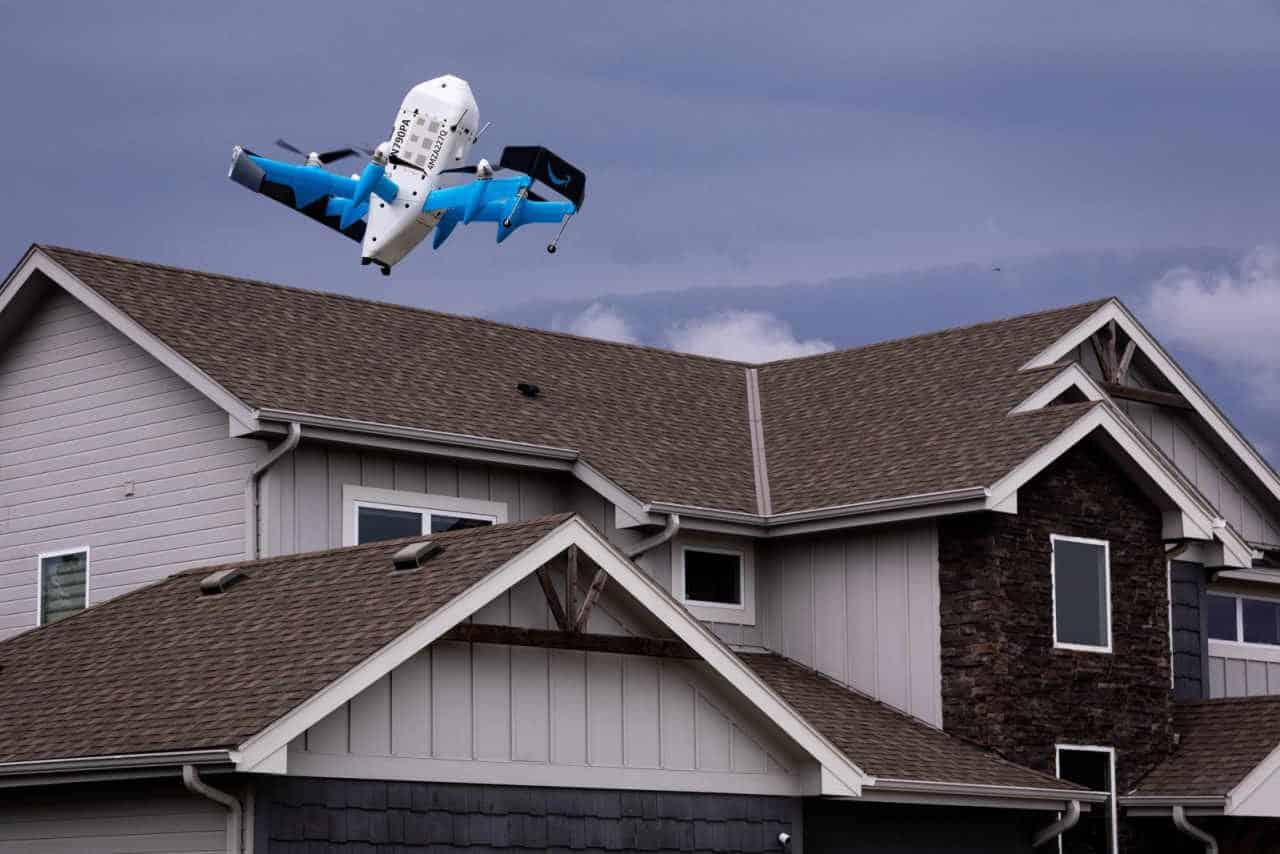

Amazon wants its drones flying over six times more American ground by December than they do right now. The company says Prime Air will reach “nearly 500 cities and towns in the United States” by the end of this year.
That’s the headline number. The part worth sitting with is what those drones have run into on the way there.
Five new metros, and more coming
Prime Air deliveries will soon launch in the Chicago, Illinois; Syracuse, New York; Cleveland, Ohio; Atlanta, Georgia; and Boise, Idaho metro areas, according to Amazon’s announcement. The company says there are “more communities to come later this year.”
Those five join 11 locations across the US where Amazon already flies. Each Prime Air site covers roughly 175 square miles, which is a smaller radius than “Chicago” or “Atlanta” implies. Living in the metro area and living inside the delivery cone are two different things.
What actually fits on a drone
The weight ceiling is 5 pounds or less. That’s the constraint that shapes the whole service.
Phone case, vitamins, a charging cable, over-the-counter medicine. Not your groceries, not a monitor, not a case of seltzer. The pitch isn’t replacing the van in your driveway. It’s the small stuff you needed an hour ago.
And an hour is roughly what Amazon claims: most orders arrive around 60 minutes after checkout, according to Amazon Prime Air vice president David Carbon. Carbon said the service has already delivered “hundreds of thousands of packages to customers” this year.
Hundreds of thousands sounds like a lot until you set it against the volume Amazon moves through conventional delivery. This is still a pilot wearing a national rollout’s clothing.
The safety pitch and why it’s in the press release
Amazon spent part of its expansion announcement restating drone safety features, including what it calls Prime Air’s “industry-leading Detect-and-Avoid system.”
Companies don’t lead with collision avoidance unless collisions are on their mind. These drones have already drawn scrutiny for crashing into cranes, internet cables, gardens and an apartment building.
An apartment building. That’s the one that lingers, because it’s the failure mode people picture when they hear a rotor overhead and look up.
The real test is the neighbors
Six times the footprint means six times the number of people who didn’t ask for any of this and get a vote anyway, through noise complaints, city councils and local coverage of the next crash.
Amazon has been trying to get Prime Air off the ground for more than a decade. The engineering question was always whether a drone could put a package in a backyard. The open question now is whether 500 towns want it there.
If you’re in Chicago, Syracuse, Cleveland, Atlanta or Boise, check whether your address falls inside that 175-square-mile zone before you get attached to the idea. Most of a metro area isn’t in it.