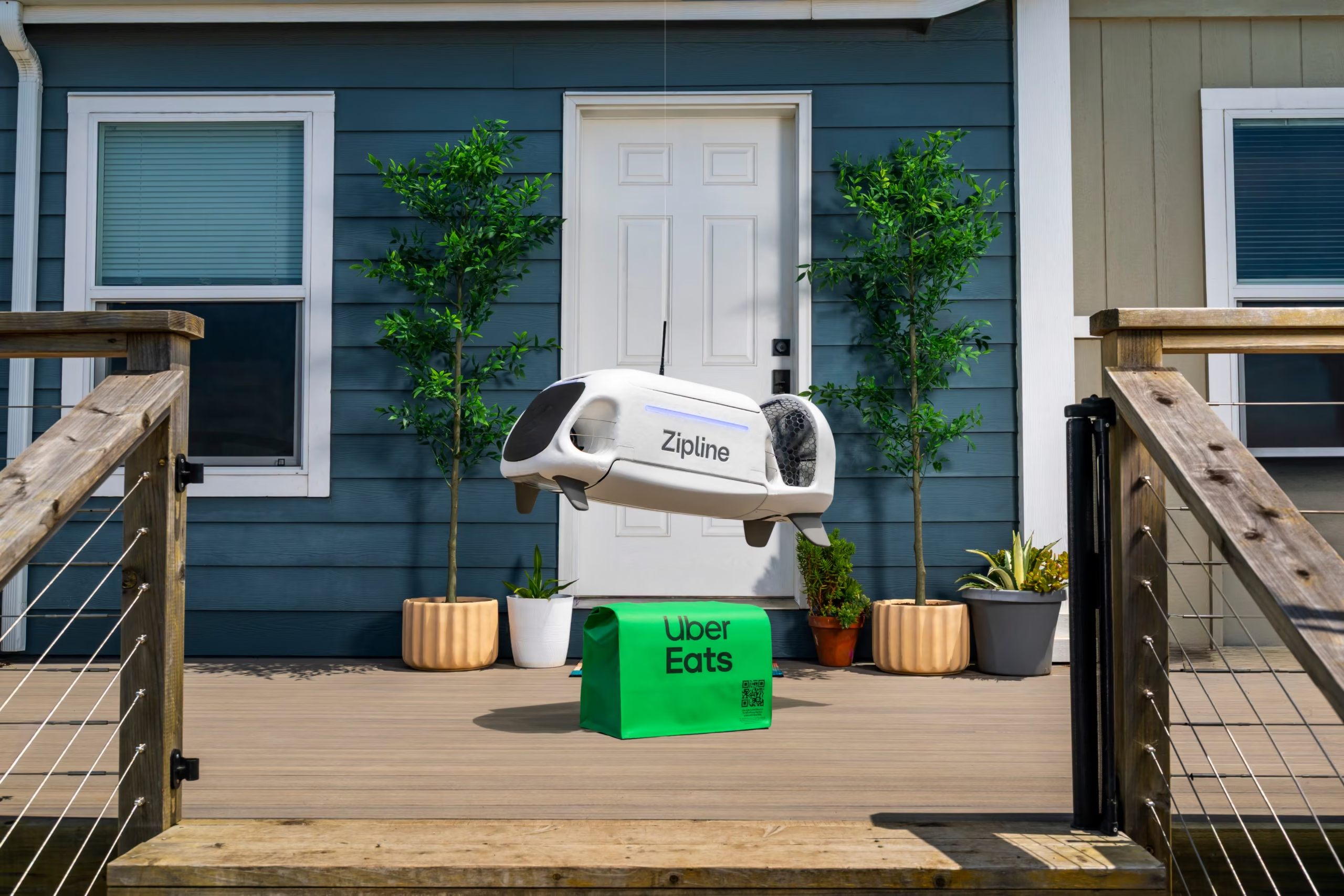

Uber wants a drone dropping your burrito on your front lawn a million times a day by 2029. That’s the number the company put on its new partnership with Zipline, and it’s the kind of figure that tells you more about where food delivery is headed than any of the softer language around it.
Airborne takeout starts later this year. Uber is also making a strategic investment in Zipline, the California-based company that has been running drone deliveries in Texas since 2025.
The first Uber Eats flights will happen in Dallas-Fort Worth, where Zipline already operates, before expanding to dozens of additional cities.
Zipline isn’t a startup running a pilot program
This is the part that separates the deal from the usual drone press cycle. Zipline has made 2 million deliveries so far, and it started in Rwanda back in 2016, flying medical supplies to remote locations in minutes.
It also operates in Ghana, Japan, Nigeria, Côte d’Ivoire and Kenya. So when Uber says Zipline’s drones can bring an order to a customer’s front lawn in a “matter of minutes,” there’s an operational record behind the claim rather than a rendering.
Uber says it’s building the world’s largest hybrid network of human couriers, sidewalk robots and drones, matching customers with the most efficient delivery method depending on where they live. That’s marketing language, but the structure underneath it is real: Uber isn’t building drones. It’s buying access to other people’s.
The Flytrex playbook, again
We’ve seen this deal before. Uber struck a similar arrangement with drone company Flytrex last year, investment included.
The pattern is consistent and it’s a deliberate choice. Uber partners with third-party operators while its rivals go for regulatory approval to fly their own hardware.
DoorDash took the other path. Last month it launched DoorDash Air, its own drone delivery program, after getting approval from the Federal Aviation Administration.
Why everyone is moving right now
Regulation is the reason the timing clustered. A 2025 order from President Donald Trump pushed the FAA to propose new rules expanding drone delivery operations, which means companies can fly farther and cheaper than they could before.
That’s opened a scramble. Drone operators are chasing partnerships with grocery chains and major retailers, going after a market that one analysis puts at $7.7 billion by 2031.
Set the two numbers side by side and the ambition gets clearer. Zipline has completed 2 million deliveries in roughly a decade of operation across two continents. Uber and Zipline are targeting 1 million per day in about three years.
If you live in Dallas-Fort Worth, you’ll find out first whether that math holds. Everyone else gets to watch the flight logs.