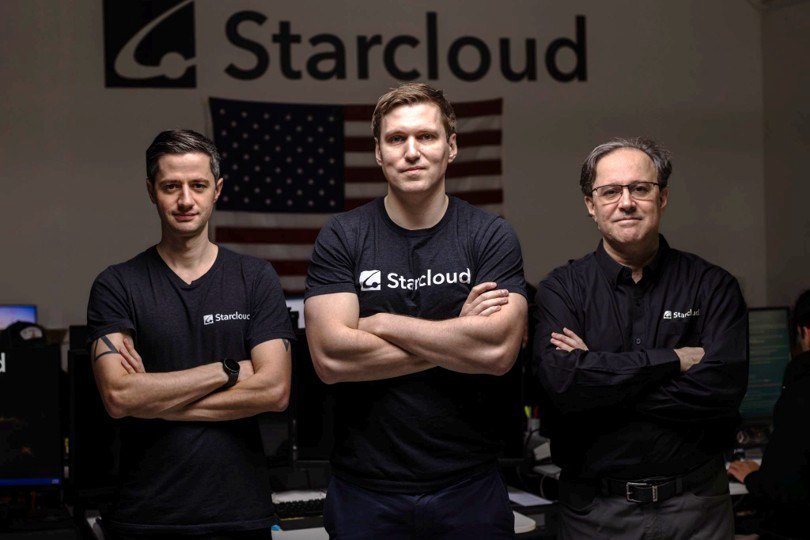



Starcloud has an FCC application on file for 88,000 spacecraft. It has 25 employees.
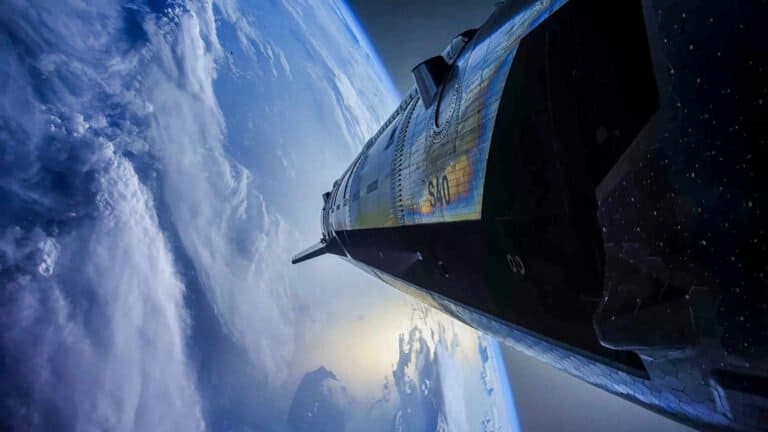
That gap tells you most of what you need to know about the company’s new money. Starcloud told us it added a $250 million extension to the $170 million Series A it closed in March, valuing the startup at $2.3 billion. The cash buys a bigger factory and pushes work on Starcloud-3, the company’s largest orbital data center spacecraft, which is meant to fly on SpaceX’s forthcoming Starship rocket.
But the more interesting reason CEO Philip Johnston is stockpiling capital isn’t manufacturing. It’s the growing worry that there won’t be a ride.
The launch squeeze is the real story
“We can see what’s coming—we’re going to need to book an enormous amount of launch,” Johnston said.
Falcon 9, the vehicle that made cheap smallsat deployment routine, is scheduled to end in 2028. SpaceX plans to replace it with Starship, which is much larger and still unproven. For anyone building a satellite constellation on a multi-year timeline, that’s a planning problem with no clean answer.
“As soon as we can, we want to get under contract with things like Starship,” Johnston said. “One of the biggest costs is now on securing your launch capacity….launch is pretty constrained right now because [SpaceX’s] Falcon 9 program is scheduled to end in 2028.”
The alternatives aren’t ready. Blue Origin’s New Glenn and ULA’s Vulcan aren’t flying regularly. Rocket Lab’s Neutron isn’t on the pad yet. Launch economics were already the hardest part of the orbital data center pitch, enough that one startup in the category decided to build its own rockets rather than wait.
And Starship’s own schedule keeps moving. This week SpaceX CEO Elon Musk said the company will delay an attempt to catch a returning Starship by a few months, and will try to re-fly the vehicle for the first time at the end of the year or early 2027.
Johnston isn’t hedging much publicly. He says he remains confident SpaceX can show that the world’s most powerful rocket can be reused quickly and often. He also knows what happens if it can’t.
“Obviously if we can’t book any SpaceX launch capacity in 2029, that will be that will be challenging for us,” he said.
What actually flies first
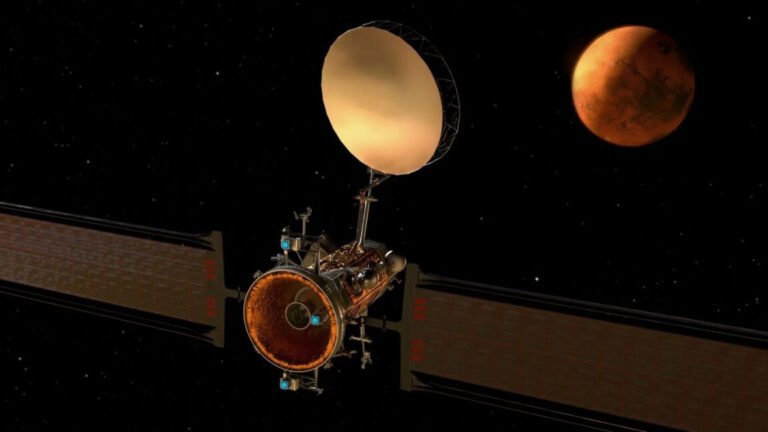
Before any of the Starship-class hardware, Starcloud is putting two 8 kw compute satellites, called Starcloud-2, on rideshare flights in 2027. Those will run orbital inference jobs for customers including US government agencies. The company is weighing a dedicated Falcon 9 buy to put up more spacecraft, and looking at contracts with other providers for later missions.
That’s the near-term business. The long-term thesis is entirely dependent on Starship dropping launch costs far enough that an orbital inference layer can compete on price with data centers on the ground.
Nvidia wrote a check, and Johnston thinks he knows why
Manhattan West Ventures led the extension. Nvidia and Cisco participated, and a person familiar with the deal said Nvidia put in $25 million. Benchmark, EQT, Soma, NFX, 776, Cedar Capital, Goanna Capital and Standard Capital also joined.
Johnston treats the Nvidia money as validation of something specific rather than general enthusiasm. Starcloud is the only company we know of currently running an Nvidia H100 terrestrial data center GPU in orbit, and the first to train a model on one. Most other GPUs in space are edge processing parts, which is a different job entirely.
Starcloud is feeding what it learned back to Nvidia as the chipmaker builds its first GPU designed for space, the Vera Rubin Space-1.
“The reason they’ve chosen to do this investment now is because of all of this data that we got from Starcloud One,” Johnston said. “They, more than any other VC, did way more technical duty on this than anybody else.”
The chip doesn’t exist yet
Vera Rubin Space-1 hasn’t been built. Starcloud hopes to fly it in late 2028, and its engineers are watching a short list of design decisions that will determine whether that works: how the chip’s running temperature relates to the size of the radiators dumping that heat, where radiation shielding sits and how much ruggedizing the parts need to survive a launch.
Those are unglamorous constraints, and they’re the ones that decide whether a data center GPU can live above the atmosphere for any useful length of time.
Starcloud’s 25 people are setting up production lines in a 100,000 square foot facility in Woodinville, Washington, down the road from where SpaceX and Amazon build satellites for their own communications networks. Hiring is ongoing. The talent pool is the point of the address.
If you want a number to watch, skip the valuation. Watch whether Starcloud signs a Starship contract before Falcon 9 retires in 2028. Everything else in this plan sits downstream of that signature.