Crypto Games
  • Crypto Games
    • Crypto Games News
    • Reviews
    • Crypto Games Guides
    • Tournaments & Events
    • Presales
    • Airdrops & Giveaways
    • Editorials
  • Crypto
    • Crypto News
    • Blockchains
      • Blockchain News
    • Dapps
    • NFT Collections
    • Press Release
  • AI
  • Technology
    • Technology Guides
    • Space
  • Entertainment
    • Movies & TV Series
    • Regular Games
Reading: NASA’s Roman telescope is off to hunt the universe’s darkest secrets
Share
Telegram News
Crypto Games Crypto Games
Font ResizerAa
  • Crypto Games
  • Crypto
  • AI
  • Technology
  • Entertainment
Search
  • Game List
    • By Genre
    • AR Crypto Games
    • Arcade Crypto Games
    • Auto Battler Crypto Games
    • Battle Royale Crypto Games
    • Brawler Crypto Games
    • Building Crypto Games
    • Casual Crypto Games
    • Collectible Crypto Games
    • Combat Crypto Games
    • Crypto Trading Card Games
    • Fantasy Crypto Games
    • Fighting Crypto Games
    • FPS Crypto Games
    • Horror Crypto Games
    • Metaverse Crypto Games
    • Mini Games Crypto Games
    • MMO Crypto Games
    • MMORPG Crypto Games
    • Multiplayer Crypto Games
    • On-Chain Crypto Games
    • PvP Crypto Games
    • Racing Crypto Games
    • Sci-Fi Crypto Games
    • Shooter Crypto Games
    • Space Crypto Games
    • Sports Crypto Games
    • Strategy Crypto Games
    • Turn-Based Strategy Crypto Games
    • Virtual World Crypto Games
    • By Blockchain
    • Aptos Crypto Games
    • Arbitrum Crypto Games
    • Avalanche Crypto Games
    • Base Crypto Games
    • Berachain Crypto Games
    • Blast Crypto Games
    • BNB Chain Crypto Games
    • BRC-20 Crypto Games
    • Cardano Crypto Games
    • Enjin Crypto Games
    • Ethereum Crypto Games
    • Gala Games Crypto Games
    • Immutable X Crypto Games
    • Klaytn Crypto Games
    • Myria Crypto Games
    • NEAR Crypto Games
    • opBNB Crypto Games
    • Polygon Crypto Games
    • Ronin Crypto Games
    • Sei Crypto Games
    • Solana Crypto Games
    • Somnia Crypto Games
    • Sui Crypto Games
    • TON Crypto Games
    • TRON Crypto Games
    • WAX Crypto Games
    • By Device
    • Android Crypto Games
    • Browser Crypto Games
    • iOS Crypto Games
    • Linux Crypto Games
    • MAC Crypto Games
    • Mobile Crypto Games
    • PC Crypto Games
    • Windows Crypto Games
  • Crypto Games
    • Crypto Games News
    • Reviews
    • Crypto Games Guides
    • Tournaments & Events
    • Presales
    • Airdrops & Giveaways
    • Editorials
  • Crypto
    • Crypto News
    • Blockchains
    • Dapps
    • NFT Collections
    • Press Release
  • AI
  • Technology
    • Technology Guides
    • Space
  • Entertainment
    • Movies & TV Series
    • Regular Games
Follow US
Copyright © 2026 CryptoGames.GG. All Rights Reserved.
Crypto Games > Blog > Technology > Space > NASA’s Roman telescope is off to hunt the universe’s darkest secrets
Space

NASA’s Roman telescope is off to hunt the universe’s darkest secrets

George Tsagkarakis By George Tsagkarakis - Owner Last updated: September 1, 2026 8 Min Read
We may include affiliate links in our content, meaning we could earn a commission—or receive blockchain-based assets—if you click a link and make a purchase or take a specific action. Additionally, we use generative AI to help draft and refine our posts for clarity and grammar. All content is fact-checked and reviewed by a human editor before publication.
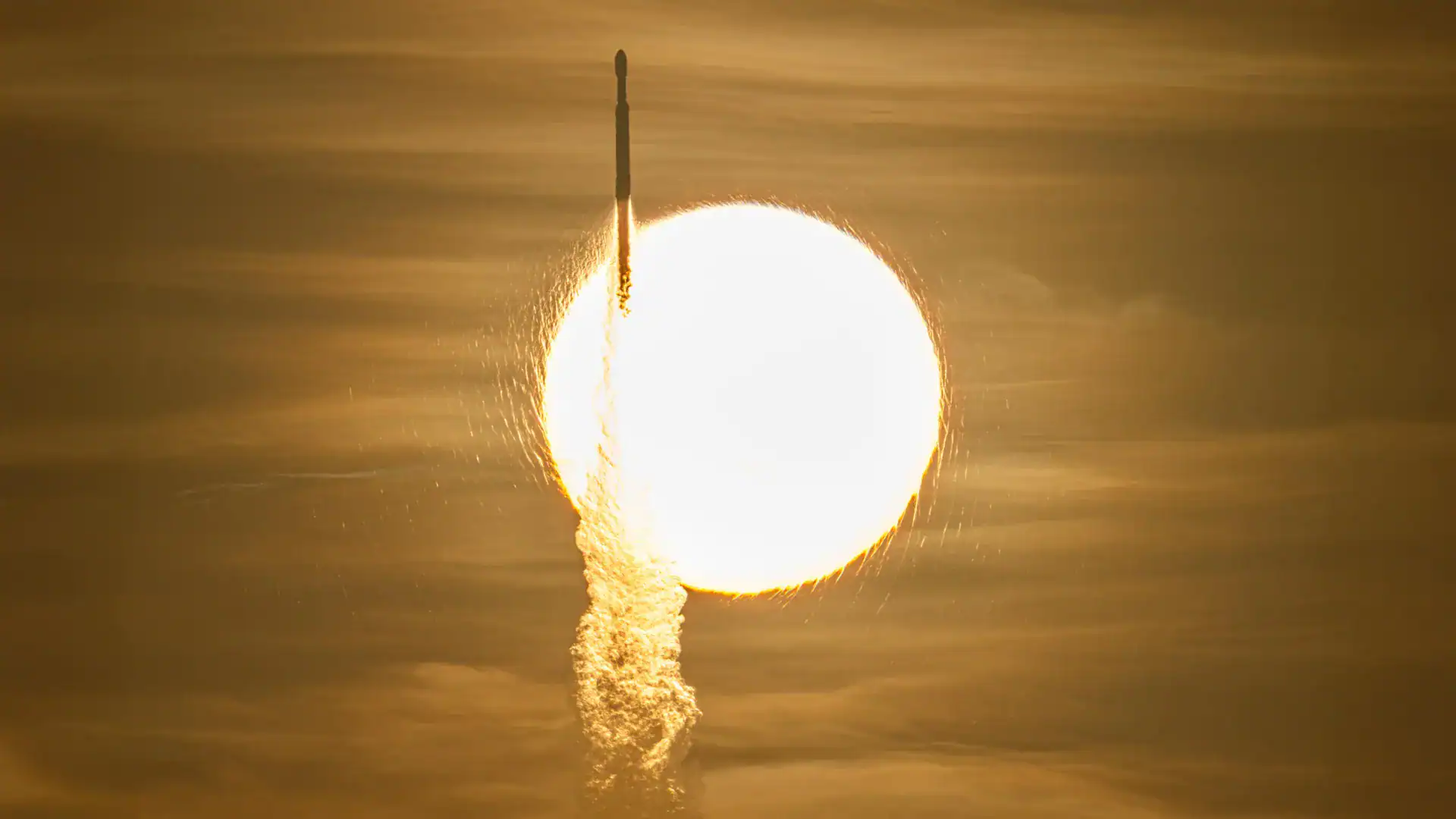
NASA's Roman telescope is off to hunt the universe's darkest secrets Image Source: Sciencedaily
NASA's Roman telescope is off to hunt the universe's darkest secrets
SHARE

Seven minutes. That’s how long it took after liftoff for controllers at NASA’s Goddard Space Flight Center in Greenbelt, Maryland, to start pulling telemetry off the Nancy Grace Roman Space Telescope. The observatory left Launch Complex 39A at NASA’s Kennedy Space Center in Florida at 7:26 a.m. EDT Sunday on a SpaceX Falcon Heavy, and it’s now three months and roughly one million miles from the orbit where it’ll actually do its job.

Contents
Why speed is the whole point18 detectors the size of a saltineThe handoff chain to L21.4 terabytes a day and not enough humansThe part NASA wants you to notice

The number worth holding onto isn’t the launch time. It’s this one: NASA says Roman is designed to survey the universe about 1,000 times faster than the Hubble Space Telescope.

That figure is doing a lot of work, and it’s worth being precise about what it means. Hubble takes extremely detailed images of relatively small patches of sky. Roman is built to deliver similarly sharp views across a much wider field. Same detail, vastly more sky per pass, which is how you get from studying galaxies one at a time to studying them by the enormous number.

Ad image Ad image

Why speed is the whole point

Roman was engineered to stay optically stable while swinging fast from one target to the next. No long settling pauses between observations. That’s an unglamorous engineering constraint, and it’s the thing that turns a good infrared telescope into a survey machine.

The primary science targets are dark matter, dark energy and exoplanets. NASA also expects the sweeping observations to shake loose plenty of discoveries outside those three buckets, which is usually what happens when you point a wide, sharp instrument at a lot of sky.

"Roman will be a discovery machine that will bring us closer than ever before to answering humanity’s most profound questions about our cosmic history," said Nicky Fox, associate administrator for the Science Mission Directorate at NASA Headquarters in Washington. "With its large field of view and fast survey speeds, Roman will usher us into a new era of discovery and make the invisible visible, setting the foundation for humanity’s search for life beyond our solar system."

18 detectors the size of a saltine

The Wide Field Instrument, Roman’s main science camera, switches on a few weeks into the cruise. It’s a 300 megapixel infrared camera built from 18 4K detectors, each about the size of a saltine cracker. Those collect photons from distant objects and convert them into panoramas.

Before that, other hardware has to unfold. One hour and 23 minutes after launch, the team confirmed the solar panels and lower instrument sun shade had deployed. Over the next several days the high-gain antenna and the visor-like deployable aperture cover follow, controllers run the first of two course corrections, and the Coronagraph Instrument comes online.

The coronagraph is the piece with the longest tail. Direct imaging of an Earth-like planet is brutally hard because a host star can be billions of times brighter than the planet circling it. A coronagraph blocks most of that starlight. Roman won’t photograph Earth twins; it’s aiming at planets closer to Jupiter in size, advancing technology that a future mission like NASA’s Habitable Worlds Observatory concept could use for the harder target.

The handoff chain to L2

Falcon Heavy performed as planned and separated from the observatory 31 minutes after liftoff. The two side boosters came back to the launch site after detaching from the center core, where they can be refurbished. It’s the fourth primary NASA mission to fly on a Falcon Heavy.

Roman talks to controllers through the Near Space Network first, a mix of ground stations and relay satellites handling tracking, telemetry and commands. About 70 minutes after launch, that shifts to NASA’s Deep Space Network for the trip to the second Sun-Earth Lagrange point, L2, roughly one million miles out. L2 is where solar and terrestrial gravity let a spacecraft hold position without burning much fuel.

The relay itself is a small piece of choreography. Canberra Deep Space Communication Complex in Australia takes it first. Roughly six hours later it passes to Madrid in Spain, then to Goldstone in California. Three sites, continuous contact, no gaps.

1.4 terabytes a day and not enough humans

Once science operations start, Roman will send about 1.4 terabytes of data to Earth daily. That’s the highest daily data rate of any NASA astrophysics mission so far, and it’s more than conventional analysis can chew through.

So machine learning, artificial intelligence and citizen scientists will help sift the observations for anything that looks important, with astronomers following up on the most promising hits. Roman’s science output depends on triage as much as optics.

"We’ve never been able to view the universe with eyes like Roman’s before," said Julie McEnery, Roman’s senior project scientist at NASA Goddard. "There’s no telling what more we’ll know and have seen by this time next year."

The part NASA wants you to notice

The agency’s leadership is framing this as a schedule-and-budget story as much as a science one.

"Roman is exactly the kind of success story we want to see across NASA," said NASA Administrator Jared Isaacman. "Delivered ahead of schedule and on budget, this mission reflects more than a decade of dedication from the NASA workforce and our industry partners. Now, Roman will give us a new atlas of the universe, push the boundaries of discovery, and demonstrate what is possible when America’s space program pairs bold ambition with disciplined execution."

There’s evidence behind the claim. Earlier this year NASA’s Launch Services Program worked with SpaceX to pull the launch date forward because the telescope finished ahead of expectations. Moving a launch earlier is not the direction these things usually go.

NASA Goddard manages the mission, with the Jet Propulsion Laboratory in Southern California, Caltech/IPAC in Pasadena, California, the Space Telescope Science Institute in Baltimore and scientists from a range of research institutions taking part. BAE Systems Inc., L3Harris Technologies and Teledyne Scientific & Imaging are the main industrial partners. International contributions come from ESA, JAXA, the French space agency CNES (Centre National d’Études Spatiales) and the Max Planck Institute for Astronomy in Germany.

For now, the remaining three months are commissioning: testing and calibrating instruments until the observatory is behaving precisely enough to start real work. Mark your calendar for early 2027. That’s when NASA expects to release the first images, and that’s the first honest look anyone gets at whether a 300 megapixel camera surveying 1,000 times faster than Hubble delivers what the spec sheet promises.

You Might Also Like

Roblox faces FTC Investigation Request From Child Safety Groups Over Design

Gala Games launches Mercantorium, a marketplace for player-owned items

FIFA Rivals Moves NFTs to Pulse Marketplace With USDC

DeepMind’s hurricane forecasts caught weather scientists off guard

Bitcoin sits near $64,000 as U.S. inflation data looms and a Harmony exploit guts ONE

TAGGED:AllDark EnergyExoplanetsHubble Space TelescopeNancy Grace Roman Space TelescopeNasaSpaceX Falcon Heavy
Share This Article
Facebook X Whatsapp Whatsapp Reddit Telegram Copy Link Print
Share
By George Tsagkarakis
Owner
Follow:
George Tsagkarakis, known as Staycalm4now is a professional author in the crypto gaming industry since early 2018. He has experienced all the growth of Blockchain Gaming and helped multiple projects achieve their goals and established a player base. He is the co-founder of egamers.io and now the Founder and owner of CryptoGames.gg He is also the COO of MyStage, an AI x Crypto Startup.
Previous Article Doctor Who: Lost In Time — Doctor Who Is Officially Back, and It's Called Memento Mori Doctor Who Is Officially Back, and It’s Called Memento Mori
Leave a Comment
Subscribe
Login
Notify of
Please login to comment
0 Comments
Oldest
Newest Most Voted
FacebookLike
XFollow
YoutubeSubscribe
TiktokFollow
TelegramFollow

Stay Updated

Join our telegram Channel and stay in the loop with the most important news.

Top games right now

Ranking updated 3h ago

1Axie InfinityEthereum · Ronin · Card Games$169M token · our verdict → 2The SandboxEthereum · Casual$125M token · our verdict → 3PixelsEthereum · Ronin · Casual$3.8M token · our verdict → 4World of ClaudecraftSolana · NFT Adventure GamesRead our verdict → 5IlluviumEthereum · Immutable X · Auto Battler$26M token · our verdict → 6SplinterlandsBNB Chain · Trading Card Games$4.6M token · our verdict →Browse all 584 live games
Latest News
NASA's Roman telescope is off to hunt the universe's darkest secrets
NASA’s Roman telescope is off to hunt the universe’s darkest secrets
September 1, 2026
Doctor Who: Lost In Time — Doctor Who Is Officially Back, and It's Called Memento Mori
Doctor Who Is Officially Back, and It’s Called Memento Mori
September 1, 2026
GTA 6 Might Make Your Getaway Car Run Dry, And The Betting Rumors Get Weirder
September 1, 2026
Red Dead Redemption 2's next-gen glow-up is finally here, sort of
Red Dead Redemption 2’s next-gen glow-up is finally here, sort of
September 1, 2026
Star Trek Lower Decks Fluxx — Star Trek: Lower Decks comes back in October 2026 as a Fluxx card game
Star Trek: Lower Decks comes back in October 2026 as a Fluxx card game
September 1, 2026
Grand Theft Auto VI drops a 27-minute extended look: what Rockstar actually showed
August 31, 2026
Every video game coming in September 2026, from Marvel's Wolverine to Valheim 1.0
Every video game coming in September 2026, from Marvel’s Wolverine to Valheim 1.0
August 31, 2026
Lineage creator Song Jae-kyung tells OpenAI's Seoul keynote that AI belongs in the game, not just the toolchain
Lineage creator Song Jae-kyung tells OpenAI’s Seoul keynote that AI belongs in the game, not just the toolchain
August 31, 2026

You Might Also Like

CROSS renames itself ONE, binding the gaming chain to a 38 million-device app store
BlockchainsCrypto GamesCrypto News

CROSS renames itself ONE, binding the gaming chain to a 38 million-device app store

5 Min Read
China's robot MMA 'world first' crowned a headless winner [2026]
Artificial Intelligence (AI)Crypto NewsTechnology

China’s robot MMA ‘world first’ crowned a headless winner [2026]

5 Min Read
SCOR and Edison Chen Launch The 888 Continuum, a Four Month On Chain Campaign With Exclusive CLOT Rewards
Crypto GamesCrypto Games News

SCOR and Edison Chen Launch The 888 Continuum, a Four Month On Chain Campaign With Exclusive CLOT Rewards

5 Min Read
Join the Waitlist for Free Dino Gotchis Mint
Crypto GamesCrypto Games News

Join the Waitlist for Free Dino Gotchis Mint

3 Min Read

Always Stay Up to Date

Subscribe to our newsletter to get our newest articles instantly!
[mc4wp_form]
Crypto Games GG Logo. Crypto Games GG Logo.

CryptoGames.GG is a Crypto Games List and News Portal.

We share valuable information about Play To Earn Games and Other Web3 Projects.

While CryptoGames.GG uses AI to produce and draft content; every piece of information is fact-checked by a human, reviewed, and edited as needed.

News

  • Crypto Games
    • Crypto Games News
    • Reviews
    • Crypto Games Guides
    • Tournaments & Events
    • Presales
    • Airdrops & Giveaways
    • Editorials
  • Crypto
    • Crypto News
    • Blockchains
      • Blockchain News
    • Dapps
    • NFT Collections
    • Press Release
  • AI
  • Technology
    • Technology Guides
    • Space
  • Entertainment
    • Movies & TV Series
    • Regular Games

The Boring Stuff

  • About Us
  • RSS Feeds
  • Contact
  • Disclaimer
  • Terms and Conditions
  • Privacy Policy
  • Review Process Statement
  • Editorial Standards
  • Corrections Policy

Join Our New Telegram Group

Discover the most importa news, from presales to giveaways and game updates.
Join Now
2026 CryptoGames.GG All Rights Reserved
wpDiscuz
Welcome Back!

Sign in to your account

Username or Email Address
Password

Lost your password?