
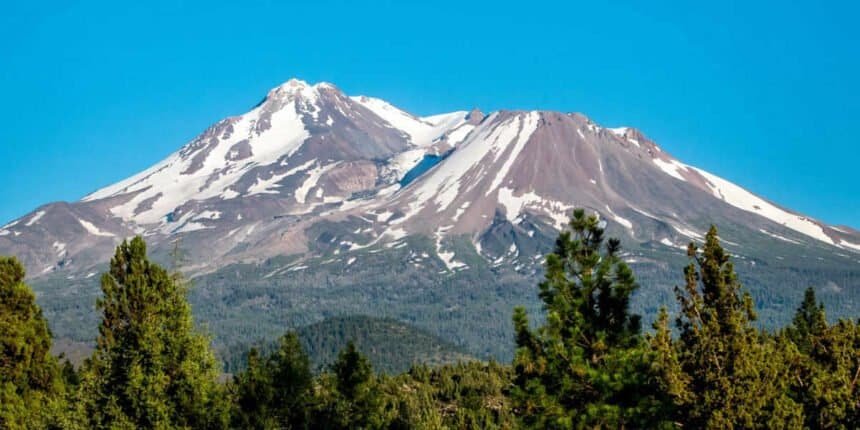
The turnaround rule on Mount Shasta is noon. Three young men reached the summit at 7pm.
That gap is the whole story. They started climbing at 3am, blew through the cutoff by seven hours, and then tried to walk down a 14,000-foot volcano in the dark. They spent the night in Mud Creek Canyon and were pulled out the next morning by Forest Service rangers and volunteers.
The planning tool they used was Google’s AI chatbot Gemini.

According to a report from the Siskiyou County sheriff’s office, the hikers “were advised by Gemini to bring far less food and water than their group required, especially when their planned 8-hour ascent became a multiday ordeal.”
Read that sentence carefully, because it contains the actual failure. The chatbot didn’t send anyone up a cliff. It packed them for an eight-hour day.
The math that didn’t survive contact with the mountain
An eight-hour ascent is not an unreasonable estimate for Shasta on paper. Fit climbers do it. But a plan is only as good as its worst day, and the food-and-water calculation is where the margin lives.
Pack for eight hours and you’re fine for eight hours. Pack for eight hours and take 16, and you’re rationing. Pack for eight hours and spend a night in a canyon at altitude, and you’re a rescue call.
The trio did call. They phoned the sheriff’s office from the descent asking for directions, which is a detail worth sitting with: they had signal, they had a phone, and the phone still couldn’t get them down.

What the chatbot can and can’t be blamed for
It isn’t clear that Gemini deserves all the blame here, and I’d argue it doesn’t deserve most of it. Nothing in an AI itinerary forces you to keep climbing past the posted turnaround time. That was a human call, made at noon, and then again at 1pm, and 2pm, and on up to the summit at seven.
But the provisioning advice is a different category of failure, and it’s the one that should bother you if you use these tools. A chatbot will produce a confident packing list without ever telling you what its estimate assumes or how badly the list degrades if you’re slower than average.
There’s no error bar. There’s no “and if this takes twice as long, here’s what you’ll wish you carried.” You get a tidy answer, formatted well, delivered in the same tone whether it’s right or catastrophically optimistic.
The sheriff’s advice is the practical takeaway
“It is always advisable to call the local USFS Mount Shasta ranger station ahead of your trip to ensure you have the most accurate information, and to never rely solely on AI for your trip planning,” the sheriff’s office said.
That’s not an anti-technology position. Note the word “solely.”

A ranger station knows what the snow did last week. It knows which route is rotten right now, which creek crossing moved, and how many parties turned around yesterday. A language model knows what people have written about the mountain, averaged and smoothed, with no idea what today looks like.
One of those sources can tell you the conditions. The other can tell you the conditions as of whenever its training data stopped caring.
Use it for the outline, not the load
If you’re going to plan a trip with a chatbot anyway, and plenty of people will, treat its output as a first draft you’re obligated to check. Route names, permit basics, general season, sure. Water and food quantities for a summit day, no.
Ask a human at the ranger station what a slow party carries. Then carry that.
The three hikers walked away from this, which makes it a story instead of an obituary. Mud Creek Canyon in the dark had every opportunity to go the other way.
Before your next climb, make one phone call to the USFS Mount Shasta ranger station and ask a single question: what would you add to this pack? Whatever they say, add it. That’s an extra pound or two in your bag against a night in a canyon waiting for volunteers.