
The world’s largest crypto exchange was, by one account, close to operating legally inside the European Union. Then the president of the European Central Bank stepped in, and the door shut.
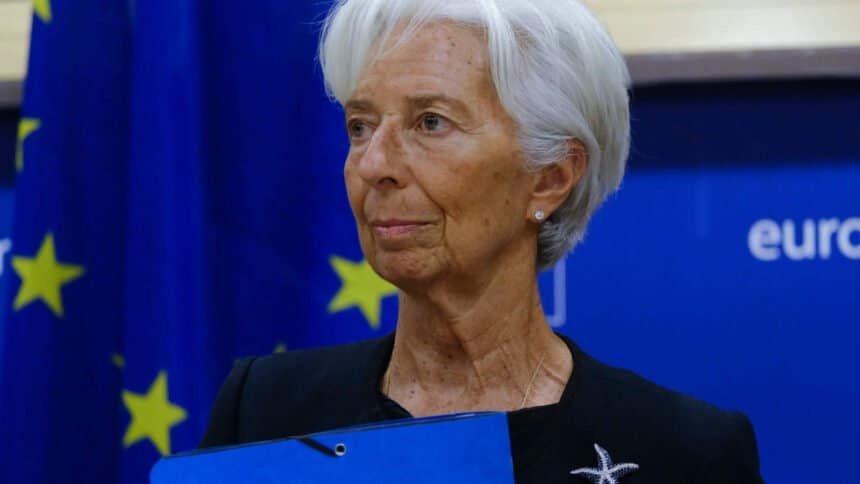
That’s the claim in a Wall Street Journal report published Thursday, which said Christine Lagarde stopped Binance from getting a foothold in the trading bloc. The paper cited interviews with officials.
“Lagarde wanted to keep the controversial crypto exchange, which pleaded guilty to financial-crime violations in the U.S., out of the European Union,” the report said.

The license Binance doesn’t have
EU law is specific here. Local Crypto-Asset Service Providers need a MiCA license to operate. Binance doesn’t have one.
The exchange withdrew its MiCA application in Greece in June. It said at the time that it was still working to pursue MiCA authorization in another EU member state.
So the practical situation hasn’t changed for anyone trading from inside the bloc. What the report adds is a name and a motive behind the wall.
Lagarde’s position on Bitcoin isn’t new
Anyone who has followed her public comments saw this coming. Back in 2021, Lagarde called Bitcoin “a highly speculative asset” used for money laundering. She criticized cryptocurrencies as a whole and said central banks would never hold bitcoin.
That’s a five-year-old on-the-record position, not a sudden turn. The Journal’s reporting reads less like a revelation and more like confirmation that a stated view became an operational one.
The stablecoin worry is the more interesting part
Buried in the report is a motive that has nothing to do with Binance’s criminal record. Lagarde was worried Binance would embed the dominance of dollar-based stablecoins in Europe, instead of encouraging euro counterparts, the paper said, citing various interviews.
That’s a currency-sovereignty argument, not a consumer-protection one. And it’s consistent with everything else the ECB is doing.
Binance is the world’s biggest crypto exchange, and billions of dollars in stablecoins are traded on its platform daily. Let that volume into the euro area with a license and you’re not just approving an exchange, you’re approving a distribution channel for dollars.
The digital euro is the other half of this
Lagarde treats central bank digital currencies differently than she treats crypto. A CBDC is a digital form of fiat money, like the US dollar or euro, and nations around the world sit at different stages of researching and releasing them.
The EU under Lagarde is moving fast on a digital euro. She has described it as key to Europe’s financial autonomy, while taking aim at privately issued stablecoins.
Bitcoiners and others in the crypto industry have criticized CBDCs on surveillance grounds, arguing they could be used to monitor citizens. That objection has political weight in the US, where President Donald Trump signed an executive order banning CBDCs when he took office.
So you have two jurisdictions running opposite experiments at the same time. One is building the thing. The other has outlawed it.
Binance’s record makes the block easy to defend
Whatever you think of the stablecoin reasoning, the exchange handed regulators an easy justification. Binance and its CEO, Chanpeng Zhao, pleaded guilty to anti-money-laundering violations in 2023 and paid a record $4.3 billion fine.
A record fine is a hard thing to argue past in a licensing meeting. It gives any official who wants to say no a reason that doesn’t require explaining currency policy to the public.
If you’re trading from inside the EU and waiting for Binance to come in through the front door, watch which member state it files its next MiCA application in, and watch how quickly that regulator moves. The answer to the second question will tell you more than the first.