


A dead Falcon 9 upper stage punched a crater roughly 60 feet across and less than 10 feet deep into the lunar surface near Einstein Crater, and NASA’s Lunar Reconnaissance Orbiter has the photos to prove it. That’s the kind of space junk story that usually gets a shrug. This one turned into science.
Welcome to Edition 9.07 of the Rocket Report.
The Moon got hit and scientists got lucky
LRO’s narrow-angle camera imaged the impact site from multiple angles, and NASA released the results this week. The stage had been drifting in deep space since launching a commercial Moon lander in 2025.
Collisions like this are rare but not unprecedented. The upside is that the impact dug up pristine material from beneath the surface, stuff that never got weathered by solar wind, galactic cosmic rays or micrometeorites.
It was also a free calibration exercise for the people who track incoming objects. Asteroid trackers predicted where the Falcon 9 would hit and came within about 0.6 miles, according to NASA.
ULA promotes from within after a rough year
United Launch Alliance has promoted Chief Operating Officer Mark Peller to president and CEO. He succeeds Tory Bruno, who left in December to develop and manage national security programs at Blue Origin.
Peller has been at ULA since the company was formed in 2006, and most recently ran development of the Vulcan rocket. Vulcan debuted successfully in 2024 and has been grounded since early this year over a problem with its solid rocket boosters.
He inherits a mess. The 50-50 Boeing and Lockheed Martin joint venture lost its long-standing position as the Pentagon’s preferred launch contractor last year, and that was before February’s anomaly with a strap-on solid booster.
The rocket shrugged off the malfunction and still delivered its payload to orbit. But that was the second such anomaly in the last three Vulcan missions, which is a pattern, not a fluke.
Engineers are redesigning parts of the booster’s nozzle structure, and it isn’t clear whether Vulcan flies again before the end of the year. Last month Boeing and Lockheed Martin confirmed they guaranteed a loan to ULA to help it through “financial challenges” caused by the grounding.
Satellite operators can’t plan around Falcon 9 anymore
Falcon 9 opened orbit to a generation of satellite startups. Now SpaceX wants to retire it for the much larger, still unproven Starship, and the commercial satellite industry is nervous.
The worry is that SpaceX focuses on its own payloads, Starlink STARL $0.00000015 ▼ -5.9% V3 satellites and orbital data centers, because those drive far greater profits. Starship’s Pez satellite dispenser is optimized for Starlink, which tells you plenty about priorities.
Gwynne Shotwell has previously said Falcon 9’s operational lifetime may end in 2030 or 2032. More recently, commercial customers have been hitting walls trying to buy a launch after 2028.
One source said SpaceX has told the US government it intends to end commercial launches after 2028 while continuing to fly Falcon 9 for a limited number of federally contracted missions. Whether those dates hold or not, the message landed.
Taiwan’s first military launcher test ended in self-destruct
A prototype for a future satellite launch vehicle built by Taiwan’s top weapons manufacturer veered off course shortly after liftoff Wednesday, Taiwan’s Central News Agency reports. The “trajectory anomaly” triggered the rocket’s self-destruct mechanism.
The National Chung-Shan Institute of Science and Technology, which ran the test, reported no injuries or property damage. Debris fell into a planned safety control zone near the southern tip of Taiwan.
Details are thin, but the flight likely involved a sub-scale suborbital version of NCSIST’s planned military satellite launcher, a solid-fueled rocket meant to put small payloads into low-Earth orbit. It was the program’s first test flight.
Meanwhile the civilian Taiwan Space Agency is working a separate liquid-fueled launcher that could be ready for orbital missions in the early 2030s.
Innospace fails twice in a row
A small suborbital rocket owned by South Korean startup Innospace lost control Thursday seconds into a test flight from Brazil’s Alcântara Space Center, the company said. The Brazilian Air Force, which runs the spaceport, triggered the Sebit rocket’s flight termination system after it left the planned trajectory.
No injuries, no property damage. “While we regret that the planned flight could not be fully completed, the test flight provided valuable flight data from key systems, including the launch pad, propulsion system, and guidance, navigation and control (GNC),” Innospace said.
Sebit is a “multipurpose suborbital rocket” designed to carry payloads up to 100 kilometers (62 miles) altitude. This was Innospace’s second consecutive failure. Its first orbital attempt from the same spaceport in December ended when the Hanbit-Nano rocket spun out of control seconds after liftoff.
Ukraine hit the factory that builds Soyuz
Ukrainian President Volodymyr Zelenskyy confirmed Saturday that his country struck the Progress Rocket Space Center deep inside Russia with ground-launched cruise missiles.
“In Russia’s Samara region, one of the key enterprises within Roscosmos—the Progress Center, which was involved, among other things, in electronics production–was hit,” Zelenskyy said on X. “Flamingo missiles were used. A good achievement.”
Samara sits about 900 km from the Ukrainian border and is home to Russia’s most important rocket manufacturer. Progress assembles the Soyuz-2 and the newer Soyuz-5, and builds military satellites.
Soyuz-2 lifts about 8 metric tons to low-Earth orbit and handles civil and military work. It’s also the principal rocket for Russia’s human spacecraft launches, which raises questions about spillover effects for the International Space Station.
China now has two companies landing boosters
It’s been a little over a month since China recovered an orbital-class booster for the first time. On Tuesday a second operator pulled it off.
LandSpace’s Zhuque-3 lifted off from Jiuquan Satellite Launch Center, placed a single satellite into low-Earth orbit, and landed its first stage on target downrange in the Gobi Desert. The company is 11 years old. This was Zhuque-3’s second flight; the booster crash landed on the first one last December.
LandSpace follows the successful recovery of a Long March 10B booster in July, and several more Chinese companies look ready to try booster landings in the next few months.
None of them, not even the giant state-owned enterprises, come close to SpaceX’s launch rate. Collectively they fly about half as often. But they’re doing that with entirely expendable rockets, which is exactly why reuse could change the math.
The cost gap is now a chasm
New research is starting to quantify how thoroughly Falcon 9, reuse and high cadence rewrote the global launch market. Public policy researchers in the United Kingdom and Italy published the work in Economics Letters.
The most striking chart is cumulative payload to orbit by nation. Russia and the United States tracked close for decades, started diverging over the last 10 years, and then split wide open during the Falcon 9 ramp in the early 2020s.
Costs tell the same story. A decade ago the United States and Europe were roughly even. Today, per publicly available data, European launch costs run three times higher for comparable payloads.
The researchers put the average US cost of sending a kilogram to orbit at $3,225. Japan is $5,287, China $5,809, Russia $6,682 and Europe $9,897. India comes in highest at nearly $15,000 a kilogram.
Ariane 6 Block 3 is dead
The European Space Agency is no longer considering the Ariane 6 Block 3 evolution, which would have swapped in a carbon-fiber reinforced plastic upper stage for heavier legacy metallic structures, European Spaceflight reports.
An ESA spokesperson said work continues on Block 2 technologies, some already flying in the form of larger solid rocket boosters. A kick stage called Astris becomes available as an Ariane 6 add-on around 2029.
But the lightweight Icarus upper stage is finished after failing to win support from ESA member states.
The first public hint came from SpaceScout, which reported earlier this month on an ESA scientist presentation about a proposed robotic mission to orbit and land on Saturn’s moon Enceladus. That team is reassessing a design that assumed Ariane 6 Block 3 would be available for launch in the 2030s.
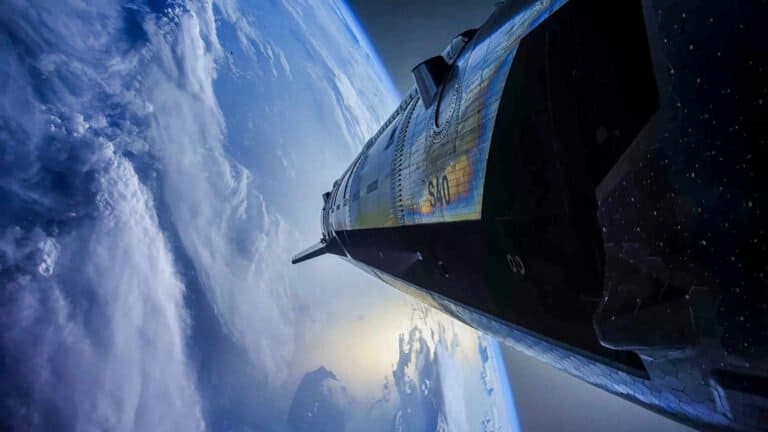
SpaceX towed a Starship 24 days across the Indian Ocean
The July 24 test flight ended, but the mission didn’t. The spacecraft unexpectedly stayed intact after splashdown in the Indian Ocean, and SpaceX improvised a recovery.
A recovery ship towed the vehicle engines-first several hundred miles to the Australian territory of Christmas Island over 24 days. From there SpaceX hopes to find a way to get it back to South Texas.
Engineers already have reams of data from all 13 test flights of Starship and Super Heavy. Data isn’t hardware, though. SpaceX recovers and reuses Falcon 9 boosters with near-flawless performance, and the handful of minor Falcon 9 failures have centered on the single-use upper stage.
So an intact ship is worth a lot. Engineers are particularly interesting in inspecting the heat shield as they hone in on a design for full and rapid reusability.
China’s Long March family bounced back fast
The workhorse Long March family is recovering quickly from a rare failure August 10. Chinese officials haven’t publicly said what caused the Long March 7A to break apart less than 90 seconds after liftoff.
The rocket’s YF-100 engines initially raised questions about other Chinese rockets using the same hardware. That concern didn’t last. YF-100 engines returned to flight six days later on a successful Long March 12, and the heavy-lift Long March 5, also YF-100 powered, is days away from one of China’s most important missions of the decade.
Chang’e 7 goes for the best real estate on the Moon
As soon as Sunday, a Long March 5 will launch from a coastal seaport in China carrying Chang’e 7, the most sophisticated mission yet in a lunar program that dates back nearly two decades.
The stack includes a lunar orbiter with high-resolution cameras and other sophisticated tools, a lander, a rover and a mini-hopper probe. The lander’s mass hasn’t been disclosed, but it’s several times larger than recent NASA-backed probes like Firefly’s Blue Ghost.
The destination matters more than the hardware. Chang’e 7 targets Shackleton Crater, very nearly at the south pole.
Most of the lunar surface is barren. The south pole isn’t, because Shackleton’s high rims create permanently shadowed “cold traps” where water ice and other useful materials may have accumulated over billions of years. In every long-term settlement plan NASA and China have drawn up, a relatively few square miles at the south pole matter the most.
Next three launches
August 21: Falcon 9 | Starlink 10-39 | Cape Canaveral Space Force Station, Florida | 15:14 UTC
August 22: Falcon 9 | Starlink 15-20 | Vandenberg Space Force Base, California | 07:25 UTC
August 24: Long March 5 | Chang’e 7 | Wenchang Space Launch Site, China | 00:05 UTC