
The Shot Pot did it. An automatic turret you drop on the ground, chattering away at Salmonids while you close the distance with a Splatana and start swinging. That’s the loop that got me, and I’ve bounced off every Splatoon game before this one.
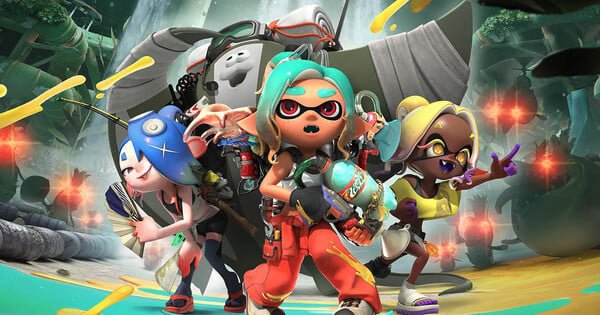
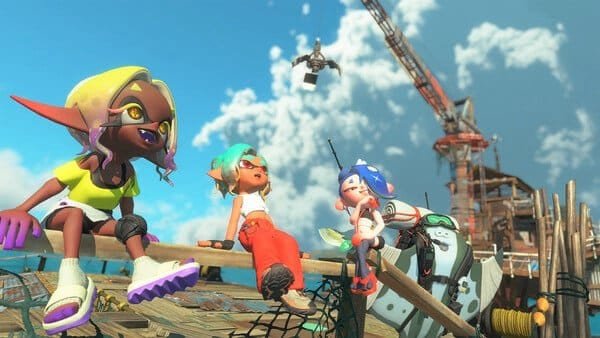
Splatoon Raiders is Nintendo’s first single-player-focused entry in a series built on multiplayer, and it works. You play the mechanic, tagging along with a trio of musicians called Deep Cut across the Spirhalite Islands, hunting treasure and mowing through waves of Salmonids with whatever weapons and gadgets you’ve bolted together.
Full disclosure on my history here: I’d pick up each new Splatoon, play for a week or two, then never touch it again. Not because the games were bad. Because I’m not a multiplayer person. Raiders is the first one that didn’t need me to be.
The story is set dressing and that’s fine
Hanging out with Deep Cut, which is Shiver, Frye and The Big Man (a talking sting ray), you pick up bits of their personalities. That’s about the ceiling. Don’t come in looking for a profound lesson. The hook is the gameplay, and the game seems to know it.
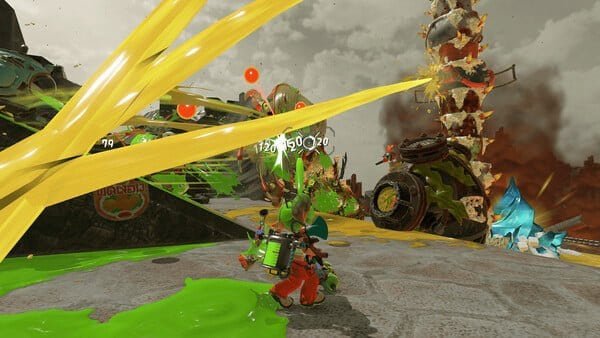
Mechanically it’s Splatoon as you know it. Ink your opponents, color the ground in the process, then dive into that ink because your running speed is slow and your swimming speed isn’t. Flanking enemies means reading the paint on the floor.
Mission design keeps things moving. Some are longer linear runs that mix shooting with platforming. Others hand you a timer and tell you to collect orbs before it runs out. The map has enough variation that the campaign never settled into one rhythm for me.
Buildcrafting is where this thing separates itself
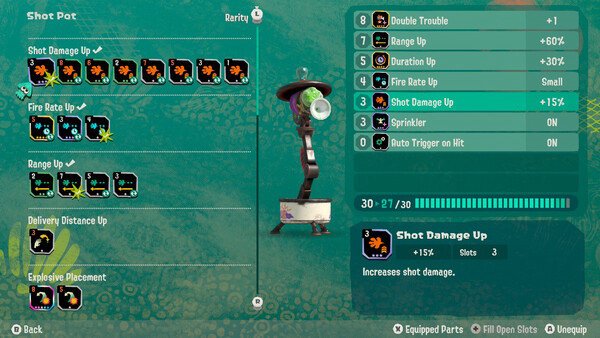
Multiplayer Splatoon has to balance player skill against loadouts, so customization stays fairly minimal. Raiders doesn’t have that problem. You’re fighting NPCs, so you’re free to become as strong as you want, and tinkering with gadgets and weapons to build something that feels like yours is the best part of the game.
You can augment parts onto gadgets for extra attacking properties. Within a set number of slots, you’re raising parameters like attacking range, fire rate and damage.
Clearing islands unlocks Relics that grant character powers. Lifesaver increases your HP recovery rate. Ink Pro cuts how much ink your weapons consume when you fire. Stack weapons, gadgets and Relics together and there’s always a reason to tear a build down and try something else.
It’s not strictly solo
Two other players can join you online for the harder campaign levels and the post-game. Every level gets “Spicy” and “Super Spicy” variations with tougher enemies, which is more replayability than I expected. I had one instance of teammates dropping mid-level from connection issues. Otherwise co-op connected smoothly and fast.
The wardrobe took a hit
Here’s the real disappointment. You can’t pick out your shirt, pants and headwear individually anymore. You unlock whole costumes and equip them as a set. Raiders traded cosmetic customization for build personalization, and there’s no good reason it couldn’t have kept both.
Faults included, this is my favorite Splatoon, even if that’s mostly down to the genre switch. Co-op was a smart way to hang onto the teamwork the series is known for without forcing me into a lobby. The customization was the ink I needed to sign over my time to this series for a long while.
The pluses: engaging gameplay and customization, with co-op as a welcome addition. The minuses: the story is barely passable, and the lack of individual cosmetic choices stings.