
In Brief:
- Wilder World (official site) switched on gear repair at the Armory, restoring damaged items to full stats and wiping battle damage visuals.
- Prices move with three variables: how damaged the item is, what type of gear it is and its rarity.
- The feature closes the loop on the persistent degradation system the studio shipped last month, which left worn armor permanently weaker with no way to bring it back.
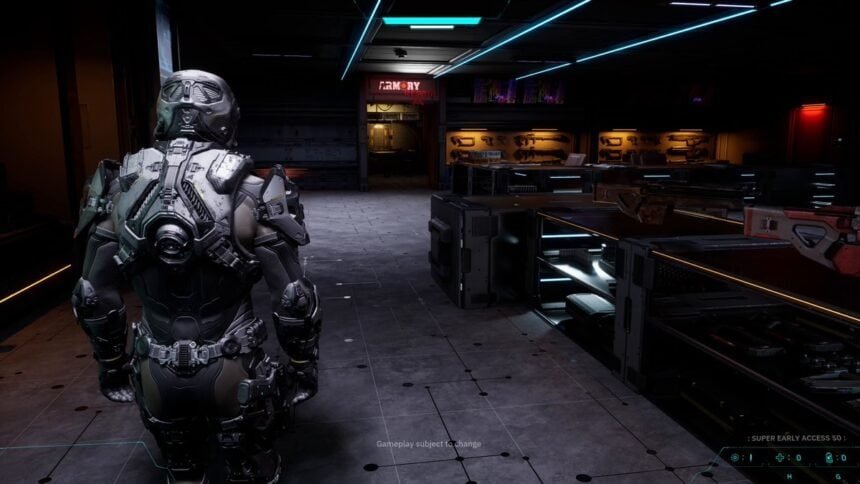
Wilder World turned on gear repair at the Armory, giving players a way to reverse the persistent damage system it shipped in July.
Repair returns an item to full condition. Stats go back to max and the battle damage visuals come off.

Gear repair is live at the Armory.
Repair restores your gear to full: stats back to max, battle damage visuals wiped clean.
Costs scale dynamically on 3 factors:
→ Damage amount
→ Gear type
→ Gear rarity
Keep it pristine or wear the scars.Wilder WorldView on X ↗
Pricing isn’t flat. Costs scale dynamically on three factors, the studio said in a post on X: damage amount, gear type and gear rarity. Wilder World didn’t publish a rate table or say which currency repairs are billed in.
What repair undoes
Damage had been a one-way trip since the degradation patch, which the studio published under the title “Every Hit Leaves a Mark.” That update sorted every armor piece into one of four condition states: Pristine, Good, Worn Out or Damaged.
Pristine delivers the full shield bonus. Good works below maximum. Worn Out loses a serious cut of its protection, and Damaged gives nothing at all.
Armor wears according to the damage it absorbs, so a player can survive a hard fight and walk into the next one materially weaker. Condition sits alongside an item’s other stats in the inventory, visible before a run.
And the damage persisted between sessions. The July post said Gear Repair was arriving next “to close the loop,” and framed the question it would put to players: when a piece is worth restoring.
Rarity on both sides of the ledger
Rarity already bought endurance. Higher-rarity gear takes more punishment before its condition slips, and items at WILD rarity hold out longest.
Now rarity feeds the repair bill too. The studio didn’t specify which direction it pushes the price.
The same update tied stat modifiers to equipment across the board. Armor can change shield capacity and movement mobility, attachments alter weapon stats and the exact bonus depends on item type and rarity. Hovering an item pulls up its full set of modifiers through tooltips in Loadout and Gear.
It also tightened inventory, attachments, backpacks and the HUD, and made enemies in the FORUM more responsive. They hesitate less, and the window between being seen and being engaged got smaller.
Where it sits in the Season Zero economy
The Armory is one of Wiami's open-world locations, alongside The Trenches, the Wiami Metro station, parks and Hydrolink. Players can buy weapons and gear there.
Repair lands inside Season Zero: The Invasion, which the studio announced through its ZINE on June 26. Players fight off invading forces while extracting MILD, a test currency that runs ahead of the full on-chain economy. You earn it on every run and carry it at your own risk. Bank it at the ATM or lose it on death.
Shards get gathered at the EZK Neural Station. Gear can be locked away in City Storage in Agora Alley rather than risked in high-threat areas.
Season Zero gear stays off-chain for the duration of the season, with on-chain integration planned for its end. Player-to-player trading runs through Satin Passage, Wiami’s in-game market, where anything extracted, looted or earned can change hands.
Separately, the Wilder World Market added listing, trading and selling. Players buy listed items outright, list their own at a set price or cancel before a sale, all through the ZERO wallet with no gas fees. Listed items are held by the marketplace until they sell or get pulled. Trading opened with Wilder Packs and their contents, covering Weapons, Wheels mods and Avatar gear, with more collections to follow.
Wilder Packs carry a total supply of 108,000 at 150 WILD each for their Season One release, split evenly between gameplay rewards and in-game purchase. All WILD spent on Season One Pack purchases is permanently burned. Each pack holds three fully on-chain, functional, tradable NFTs drawn from the Avatar, Wheels and Weapon industries.
Not the first repair sink
Consumable upkeep has been in the design for years. Racing gameplay already carried fuel, NOS refills, damage repairs and race entry fees, and the Little Meow build shipped with damage repair shops, autobody shops and fuel stations as interactive locations.
The Armory now gives combat gear the same treatment, and the studio left the decision where it wants it.
“Keep it pristine or wear the scars.”