
Somebody sat down and wrote that line. That’s the part people forget.
Every cheerful or miserable NPC parked at the edge of a wasteland, every quiet room overlooking a gambling den, every spectral figure drifting into your hero’s dreams: a developer chose those words. The ghost could have just wailed at you. Instead she asked what it means to be human, like a proper person would.
Most of that writing evaporates. Some of it doesn’t.

The lines that follow you to the supermarket
Certain quotes lodge somewhere behind your ribs and stay there long after the console’s off. You repeat them to strangers in the checkout line. You drop them on coworkers who have no idea what you’re referencing. Eventually they stop being quotes and start being part of how you talk.
That’s the reason a list of the 100 greatest video game quotes of all time got assembled earlier this year, pulling from every era of the medium. One line came out on top. Months of arguing later, 40 years after the game that contains it shipped, nothing has shifted. It’s still the best.
Here’s the scene the line comes out of, and most of you have never actually seen it.
The rescue that happens off-screen
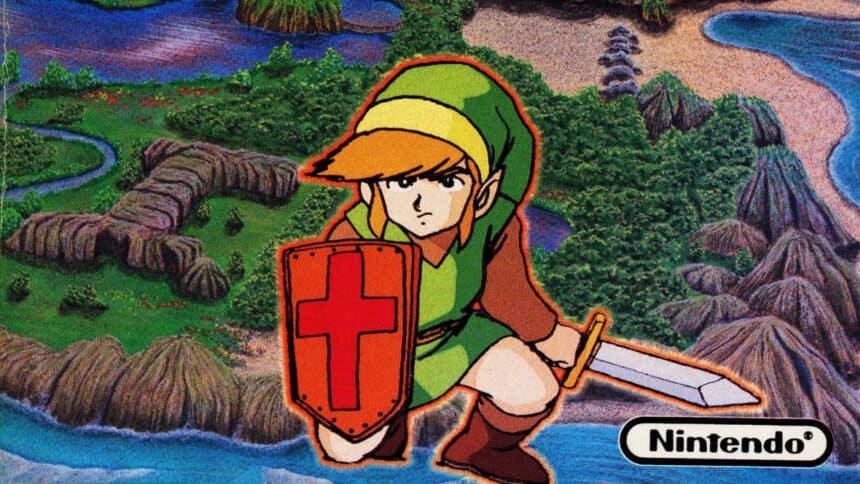
A dusty wilderness. An old woman, cornered by monsters, worn down from hours of running from the slobbering hordes and nowhere near as young as she used to be. A young lad wanders along the margins, arrives, and drives her pursuers off.
She’s grateful. She’s more grateful when he agrees to go save the kingdom of Hyrule.
That’s Link and Impa, and The Legend of Zelda starts immediately after it. The Famicom Disk System game that’s still one of the finest things ever released on the NES doesn’t show you any of it. Without the instruction manual, you’d have no clue it happened.
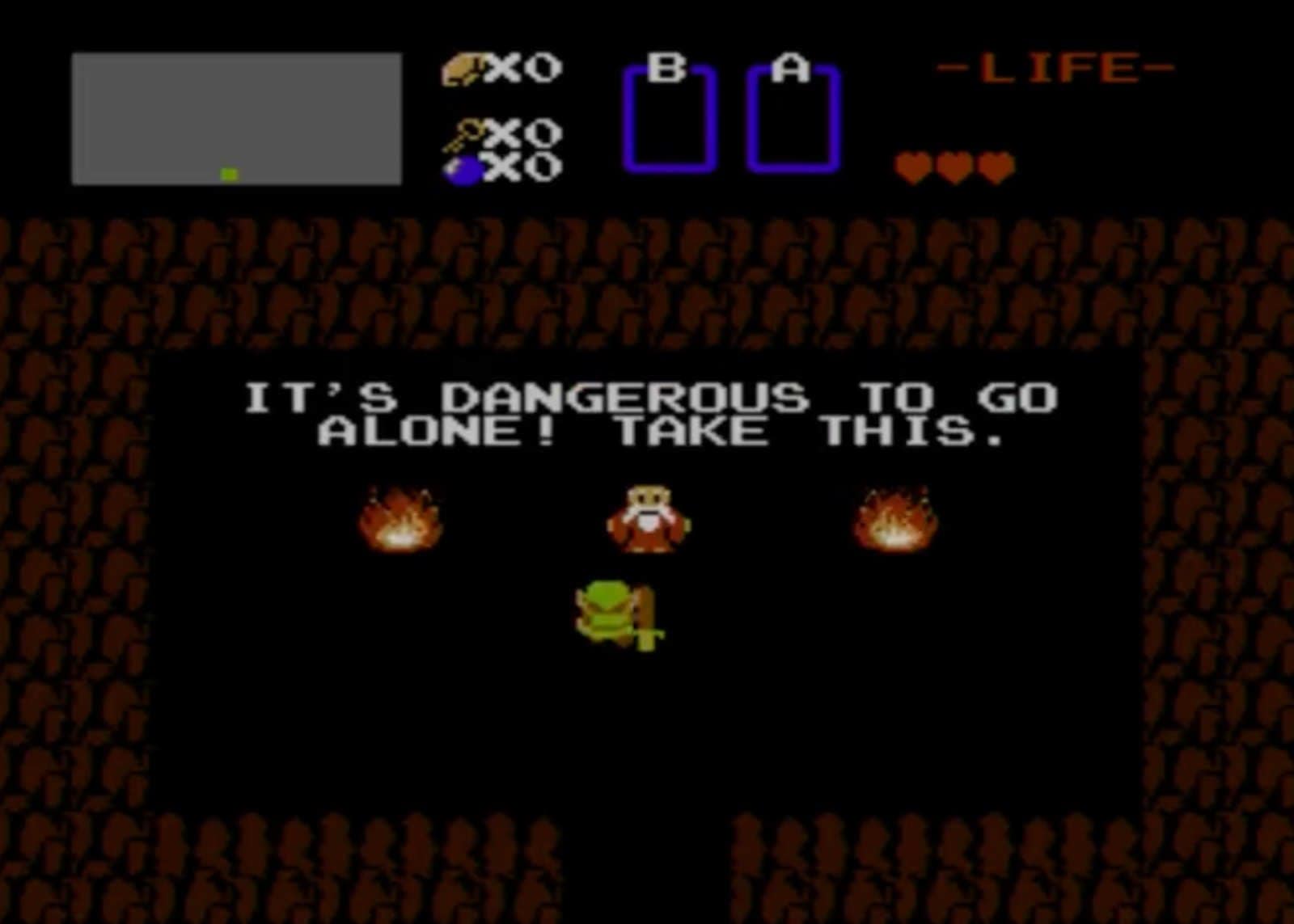
What you get instead: Link, staring straight ahead at a cave. He walks in. An old man says the only backstory some of us will ever need.
“It’s dangerous to go alone! Take this.”
Nine words doing the work of a manual
In 1986 you couldn’t yet appreciate what was waiting outside that cave. The line set the tone anyway. It warned you about a harsh wilderness before you’d laid eyes on a single enemy. It handed you the specific reassurance that only comes from gripping a sword hilt. And it told you that you were mostly on your own.
Mostly. Not quite.
Plenty of us finished the game and went straight into the second quest, the harder one, which opens with another trip to that same cave. Same warning. Same familiar weapon.
But the second time it isn’t a warning at all. It’s a promise. Hyrule’s still dangerous and now you know you can handle it, so you’re not bracing. You’re grinning.
Why you still say it out loud
The phrasing slips into ordinary conversation. It becomes memes on social media. Newer games nod at it now and then.
And be honest about the domestic version: your spouse is halfway out the door, you hand over the sack lunch, you warn them about the dangers of going alone. Somber occasions, silly ones, it works for both.
Say it to someone and you’re pulling up every other time you wandered into the digital wilds. It gets a smile out of people, that shared thing, that fond flicker of an experience an enormous number of us went through separately and together.
For a moment it makes you think about what this medium has meant, and what it might mean in the years ahead. We’ve all been through enough to want the adventure.
So you reach for the sword one more time.