
You can let an anglerfish eat you. On purpose. Just to find out what happens.
That’s the deal Outer Wilds makes with you, and it’s why one throwaway line from a long-dead alien has stuck with players since 2019.
The line that reads like a lunchbox note
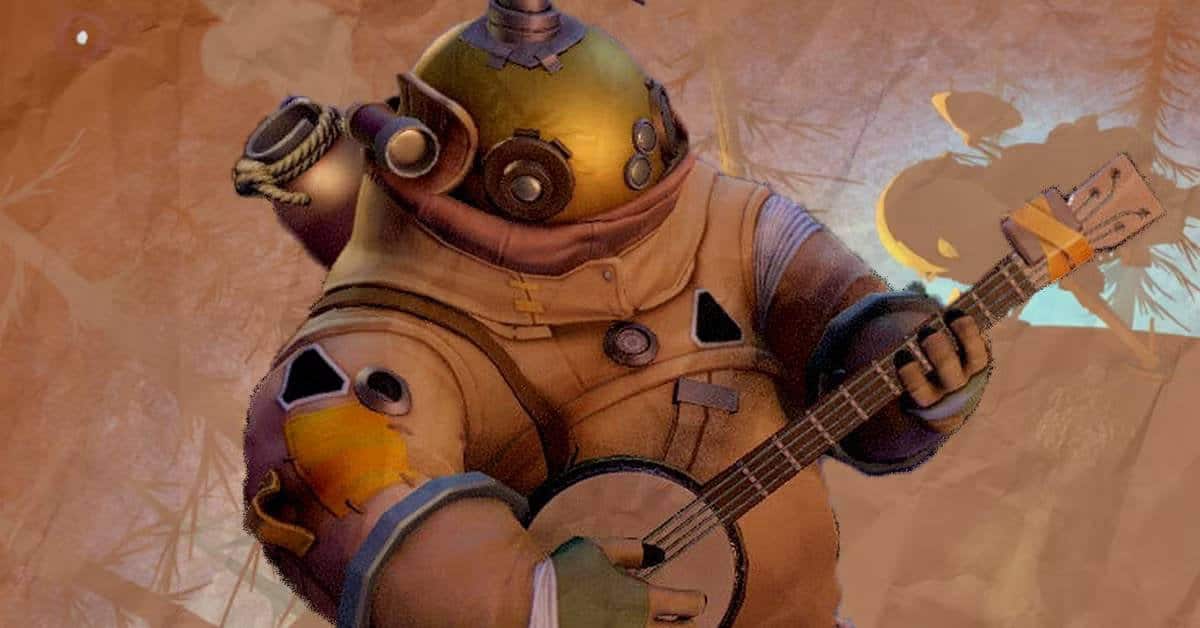
“Be curious on your journey,” says Bells, one of the ancient Nomai from Outer Wilds, the 2019 time-loop exploration game from Mobius Digital.
Read it cold and it’s nothing. A polite sign-off tacked onto the end of some practical instructions, the kind of thing you skim past on your way to the next puzzle.
But if you come across it early, and you might, because it’s exactly the sort of thing veteran players like to quote at newcomers, it stops being advice. It becomes permission.
In the first few hours you have no idea what’s going on. The game drops you into a story already well underway with almost no context, then nudges you gently toward the plot.
The developers, though, seem far more interested in getting you to mess with the time loop than in getting you to the next story beat.
Why nobody’s in a hurry to tell you the plot
Because you’re not immediately aware of any larger mission, you’re allowed, invited even, to be absorbed into the wonder of space. And into figuring out increasingly unhinged ways to break the game's mechanics.
Why bother working out what those harmonica tunes drifting from the crashed space plant mean when you could instead launch yourself directly into the sun, just to see if that’s anything interesting?
Here’s the thing about “be curious on your journey.” Only a time-loop game can actually mean it.
Living through one fragile human life comes with stakes. So does playing a game with a real game over screen. There are joys in the you-only-live-once arrangement we’re all stuck with, sure, but it does mean staying at least a little careful at all times.
You can’t deliberately let an anglerfish eat you in real life. Outer Wilds hands out rewards for exactly that kind of creative recklessness.
Twenty-two minutes and a clean slate
Every loop resets you completely. Twenty-two minutes, then memories wiped, consequences erased, freedom restored.
Die in a black hole. Fling yourself off a cliff because you need to know what’s down there. You wake up at the campfire every time, no matter what.
Which reframes the Nomai’s line entirely. Less gently parental, less something you’d find stuck to a kid’s lunchbox, and more a dare wearing the costume of loving advice.
The achievement list is the real argument
Check what the game actually rewards. Almost all of it involves doing things no responsible astronaut would attempt.
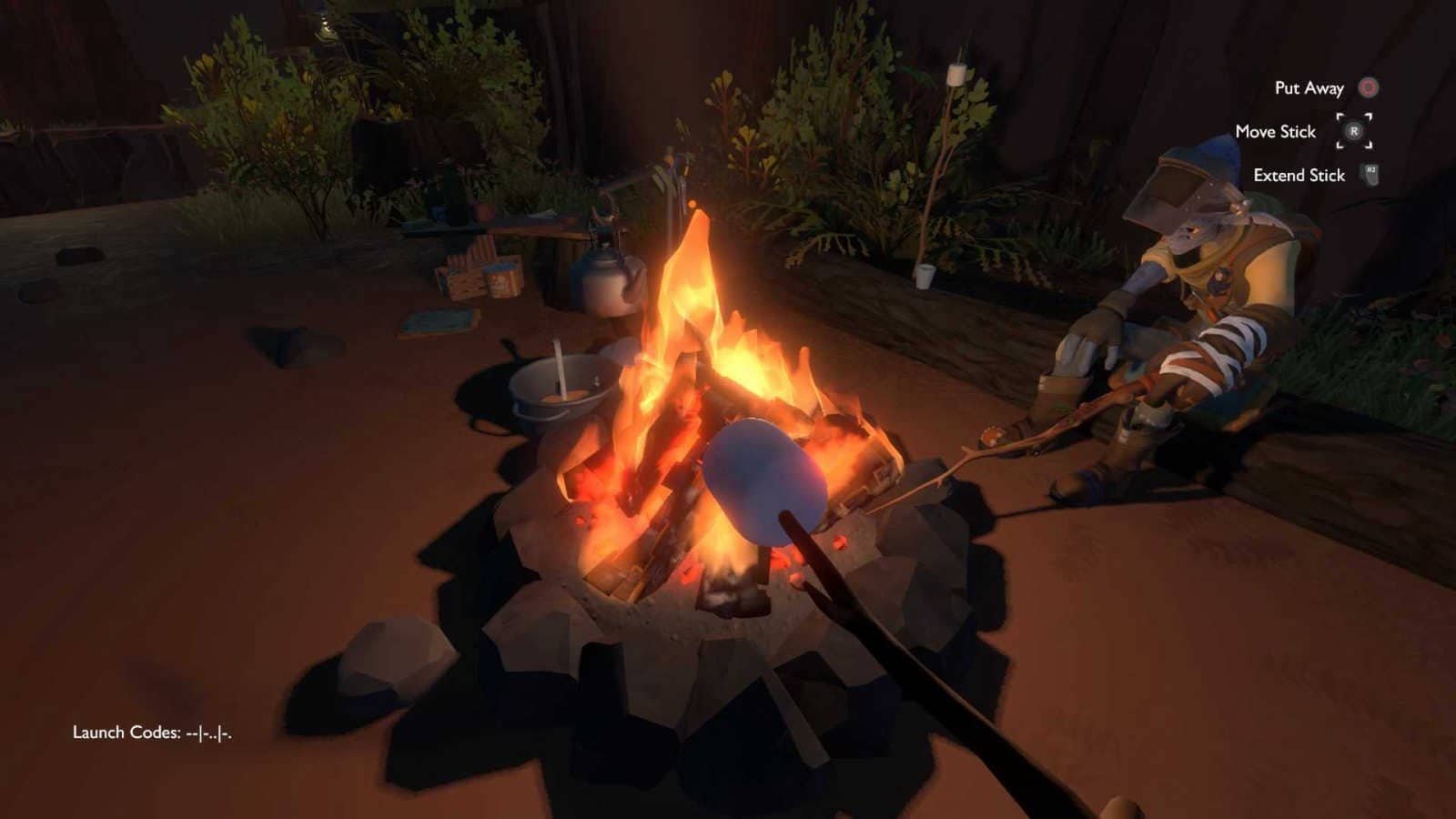
There’s one for eating a certain number of burnt marshmallows (“Mmmm, carcinogens!”). One for flying your ship as fast and as far as you can within 22 minutes to see whether anything exists outside the solar system (“It was worth a shot”). One for meticulously investigating the aggressively ordinary equipment at non-special campfires (“Well, that settles that”).
A gorgeous story sits at the center of all this, and the game is in no rush to get you to it. What you get instead are constant in-game reminders to push the environment to its limit.
It’s a lesson that only travels so far outside the screen. But in Outer Wilds, and in every other time-loop game worth loving, recklessness is the point, and so curiosity costs nothing.
There’s no version of “what if I mess this up” here. Messing up means trying again in 22 minutes. That’s it. That’s the whole penalty.
So I’ll be taking Bells up on that dare. One burnt marshmallow at a time, for as long as this time loop will have me.